
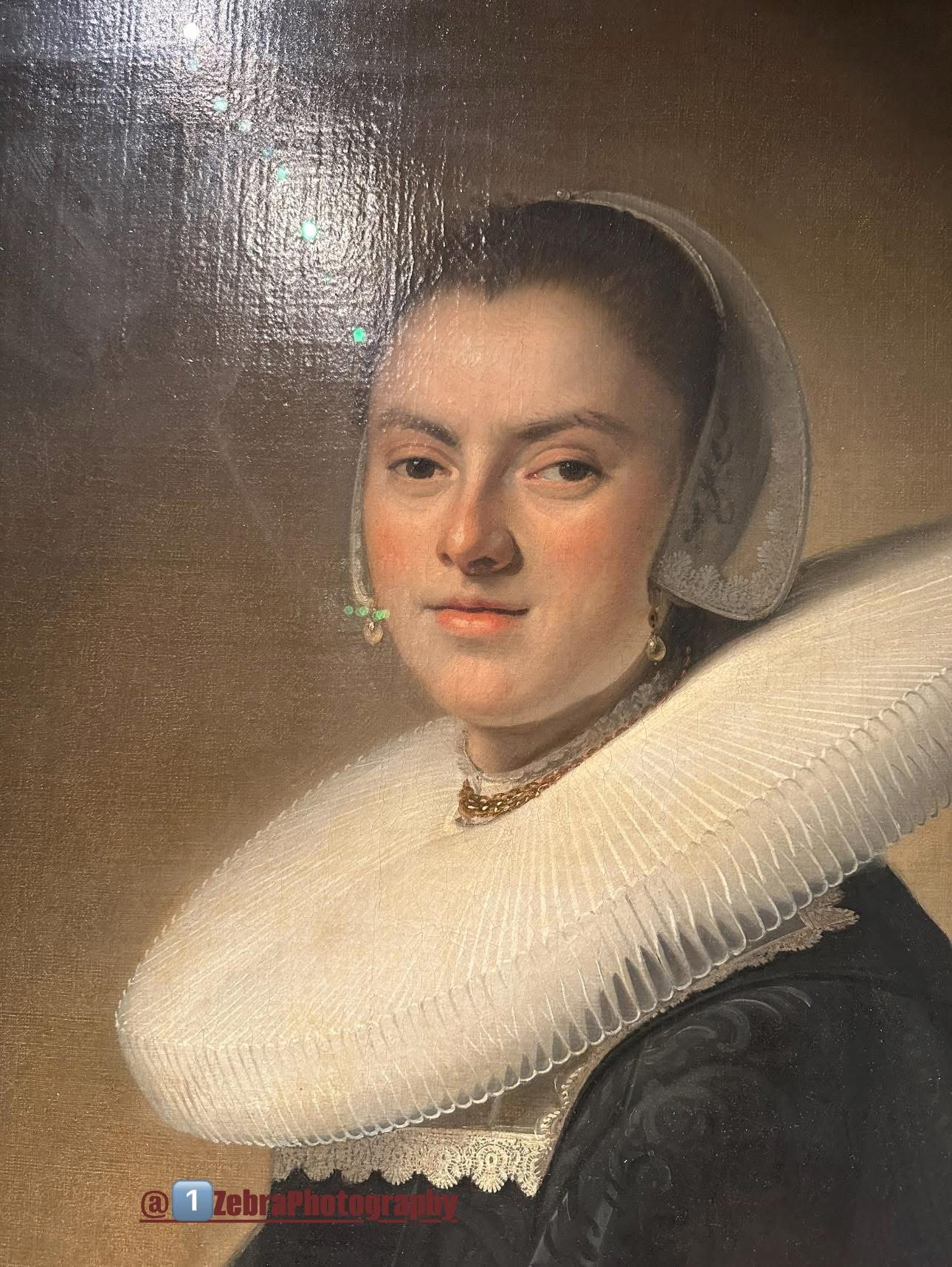
Giotto di Bondone Joachim Takes Refuge in the Wilderness c. 1303-1305 Fresco, c. 185 x 200 cm Padua, Arena Chapel 💒 (Capella degli Scrovegni all’Arena) ——————————- #1transcribedtextbydinescu #masterpiecesofwesternartandarchitecturegothic #masterpiecesofwesternartfrance30 —————————— GIOTTO DI BONDONE 1266 (?)-1337 ——————— This fresco might perhaps more accurately be called “Joachim Downcast”. Joachim, the future father of Mary, has been to the Temple, where his sacrifice was refused. Bitter and ashamed (owing to the disgrace of being child-less), he returns not to his home, but to the solitude of his flocks. He approaches slowly, sunk deep in thought; he sees neither the dog who greets him joyfully nor the shepherds before him, whose sympathy for him is plain to see. The rocks behind provide an almost architectural backdrop which concludes the group and subtly paraphrases the composition. An impression of three-dimensional space is created by the depth and rounding of the figures and the staggered organization of the three men. Indeed, such is his sense of spatial depth that Giotto even treats Joachim’s nimbus in three-dimensional terms. Source: @Masterpieces of Western Art and Architecture
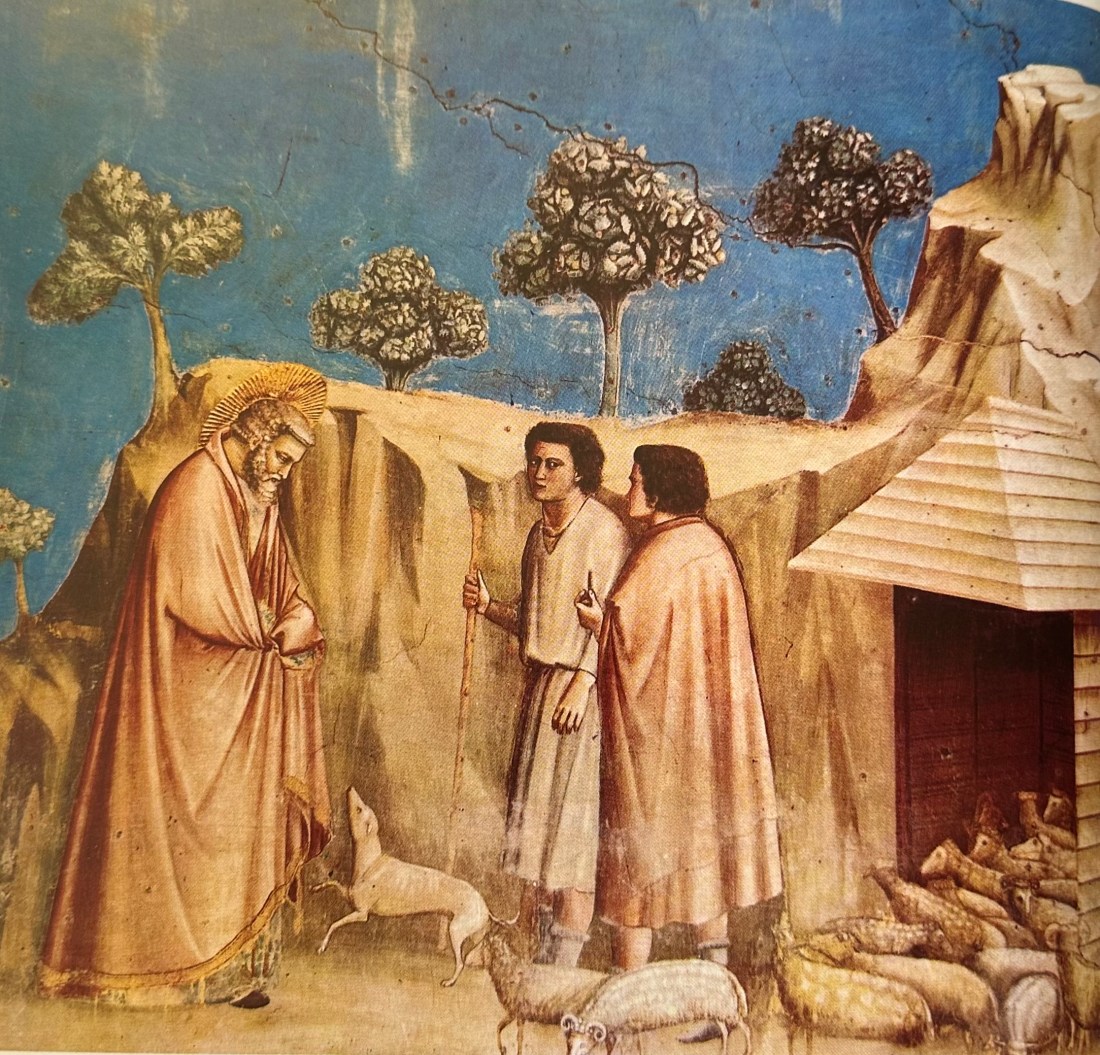
Double-sided portrait of the same woman
Double-sided portrait of the same woman
Holy Family Jesus, Mary and Saint Joseph
Artwork:
Saints Francis and Anthony
Artist:
Attributed to Lorenzo di Bicci (Italian painter, ca.1350-1427); Previously attributed to Italian (Bolognese) School; Previously attributed to Lorenzo di Bicci (Italian painter, ca.1350-1427
Earliest Date: about 1400
Latest Date: about 1400
Movement style:
Early Italian Renaissance
Measurements:
91.4 x 57.1 cm (estimate)
Medium and support:
tempera; gold on panel (hardwood {lime})
Collection:
National Inventory of Continental European Paintings
Museum location:
Bristol City Museum and Art Gallery
#europeanartandartistsreligious
Description:
This work has been attributed to Lorenzo di Bicci, the first known artist of an important Florentine artistic dynasty which operated its workshop over more than a century. It probably occupied the left side of a multi-panelled altarpiece, of which the remaining panels are lost or unidentified. The figures represented are the popular saints Anthony Abbot, considered the founder of monasticism and credited with miraculous powers of healing, and Francis, who founded the Franciscan order in the thirteenth century. Unusually, the stigmata of St Francis are pin-pointed with tiny gold rays.
Source of informations:
Museum, Bristol City Museum and Art Gallery (vads.ac.uk)
https://m.facebook.com/story.php?story_fbid=1433029914184498&id=100024325096915
Photography created: 1️⃣ZebraPhotography with me Constanta-Liliana Cld at Br1️⃣ZebraPhotographyGalleryConstanta-Liliana Cld
A Young Woman Seated Drawing
Artwork: Portrait of Eva Gonzales (1849-83)
Genre: Portrait
Movement style: Realism
🇫🇷Artist: Édouard Manet (French painter, 23 January 1832, Paris, France-30 April 1883, Paris, France)
Created: 1870
Medium: Oil on canvas
Dimensions: 191 x 133.4 cm
Location: National Gallery, London, UK 🇬🇧
#constancecldrhistoryofart #dadaisticumwithcldr
Édouard Manet was a French modernist painter. He was one of the first 19th-century artists to paint modern life, as well as a pivotal figure in the transition from Realism to Impressionism.
——————————————
Eva Gonzalès was a French Impressionist painter. She was one of the four most notable female Impressionists in the nineteenth century, along with Mary Cassatt, Berthe Morisot, and Marie
———————————————-
Photography credit: 1️⃣ZebraPhotography
Fountain, 1917, replica 1964
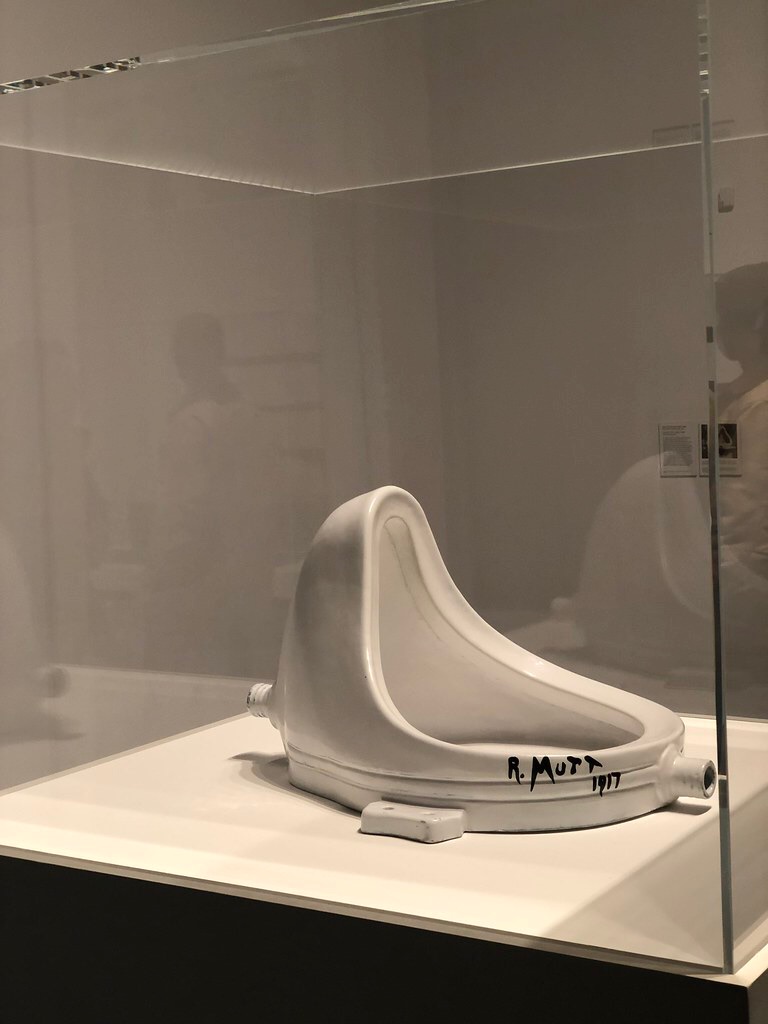 flic.kr/p/2oyYagW
Mars and Venus by Botticelli

Artwork: Mars and Venus (whole and details)
Artist: Alessandro di Mariano di Vanni Filipepi (c. 1445[1] – May 17, 1510 ) known as Sandro Botticelli
Venus and Mars is a panel painting of about 1485 by the Italian Renaissance painter Sandro Botticelli. It shows the Roman gods Venus, goddess of love, and Mars, god of war, in an allegory of beauty and valour. The youthful and voluptuous couple recline in a forest setting, surrounded by playful baby satyrs. Wikipedia
Artist: Sandro Botticelli
Dimensions: 69 cm x 1.73 m
Location: The National Gallery
Created: 1483
Medium: Tempera
Periods: Renaissance, Early renaissance
Subject: Venus, Mars
#TheRenaissanceExperience
Botticelli’s posthumous reputation suffered until the late 19th century, when he was rediscovered by the Pre-Raphaelites who stimulated a reappraisal of his work. Since then, his paintings have been seen to represent the linear grace of late Italian Gothic and some Early Renaissance painting, even though they date from the latter half of the Italian Renaissance period.
Source: Venus and Mars is a panel painting of about 1485 by the Italian Renaissance painter Sandro Botticelli. It shows the Roman gods Venus, goddess of love, and Mars, god of war, in an allegory of beauty and valour. The youthful and voluptuous couple recline in a forest setting, surrounded by playful baby satyrs. Wikipedia
Artist: Sandro Botticelli
Dimensions: 69 cm x 1.73 m
Location: The National Gallery
Created: 1483
Medium: Tempera
Periods: Renaissance, Early renaissance
Subject: Venus, Mars
Photographies credit 1️⃣ZebraPhotography
The Fall of Phaeton

Artwork: The Fall of Phaeton
Artist: Sir Peter Paul Rubens (Flemish, 1577-1640)
Created: between 1604/1605, probably reworked c. 1606/1608
Medium: Oil on Canvas
Dimensions: overall: 98.4 x 131.2 cm (38 3/4 x 51 5/8 in.)
framed: 125.4 x 159.4 x 5.7 cm (49 3/8 x 62 3/4 x 2 1/4 in.)
Location: National Gallery, Washington DC (https://www.nga.gov/collection/art-object-page.71349.html)
As a young artist, in Rome, Rubens painted this mythological masterpiece. It tells the story, from Ovid’s Metamorphosis, about the Sun God Apollo’s son Phaeton’s extreme desire to drive his father’s Chariot “through the heavens”. Apollo finally gives in and Phaeton trys desperately to control the chariot keeping it on its regular path across the sky. He loses control and Rubens shows us the exact moment of the action as the chariot plummets from the sky. On the left side of the work we see “winged” females who represent the seasons as order and “harmony”, and night and day are disrupted. The chariot’s horses are in violent freefall. Zeus is on the right throwing lightening bolts as Phaeton falls from the Chariot.
“The story of Phaeton’s hubris and subsequent destruction appealed to artists of the period not only for its drama character but also for its allegorical and moralizing implications. Generally, in 16th- and 17th-century publications of the Metamorphoses, the Phaeton legend was seen as a parable on the devastating consequences of pride and lack of moderation.” NGA
Water-Lilies

Artwork: Water-Lilies
Artist: Claude Monet (1840-1926)
Created: after 1916
Movement style: Impressionism
Medium: Oil on canvas
Dimensions: height: 200 cm (78.7 in); width: 427 cm (14 ft)
Source details: https://commons.wikimedia.org/wiki/File:Claude_Monet_044.jpg
Location: National Gallery of London, United Kingdom
Photography credit 1️⃣ZebraPhotography and My one regret in life is that I am not someone else
#frenchartandartists #essentialartmovementsandstylesimpressionism
—————————————
Water Lilies (or Nymphéas, French: [nɛ̃.fe.a]) is a series of approximately 250 oil paintings by French Impressionist Claude Monet (1840–1926). The paintings depict his flower garden at his home in Giverny, and were the main focus of his artistic production during the last thirty years of his life. Many of the works were painted while Monet suffered from cataracts.
Source Wikipedia: en.m.wikipedia.org
Water-Lilies, after 1916
 Artwork: Water-Lilies
Artist: Claude Monet (1840-1926)
Created: after 1916
Movement style: Impressionism
Medium: Oil on canvas
Dimensions: height: 200 cm (78.7 in); width: 427 cm (14 ft)
Source details: https://commons.wikimedia.org/wiki/File:Claude_Monet_044.jpg
Location: National Gallery of London, United Kingdom
Photography credit 1️⃣ZebraPhotography and My one regret in life is that I am not someone else
#frenchartandartists #essentialartmovementsandstylesimpressionism
—————————————
Water Lilies (or Nymphéas, French: [nɛ̃.fe.a]) is a series of approximately 250 oil paintings by French Impressionist Claude Monet (1840–1926). The paintings depict his flower garden at his home in Giverny, and were the main focus of his artistic production during the last thirty years of his life. Many of the works were painted while Monet suffered from cataracts.
Source Wikipedia: en.m.wikipedia.org
G. C. Hudson, Butcher and Postmaster at 90 High Street, Barnet, in the Early Seventeenth Century unknown artist Barnet
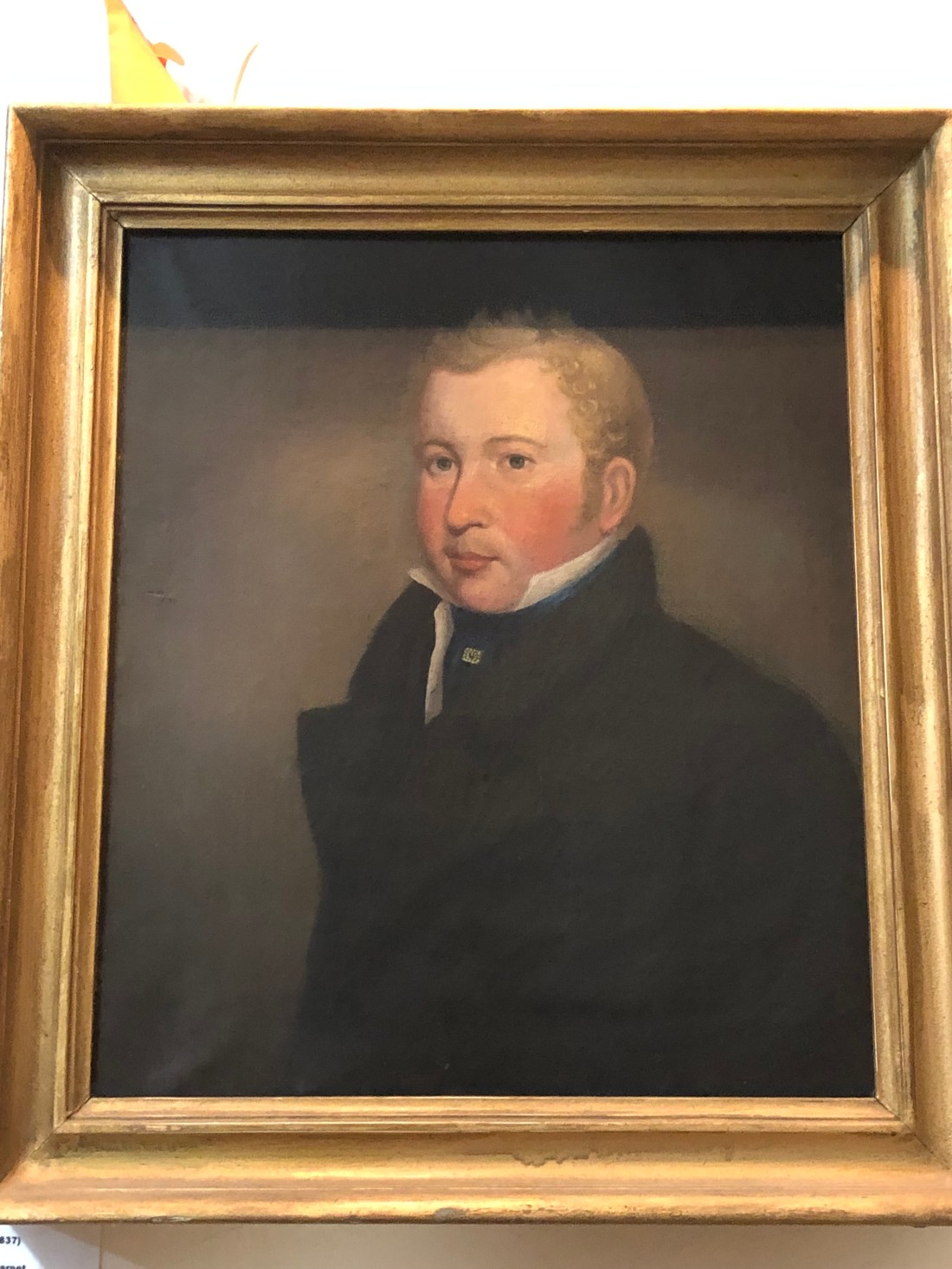
Title: G. C. Hudson, Butcher and
Postmaster at 90 High Street, Barnet, in the Early Seventeenth Century
Genre: Portrait
Medium: oil on canvas
Measurements: H 36 x W 31 cm
Accession number
2006.003
Acquisition method
gift from Mr Holton, 1957
Photography by 1️⃣ZebraPhotography
Source description: https://artuk.org/discover/artworks/g-c-hudson-butcher-and-postmaster-at-90-high-street-barnet-in-the-early-seventeenth-century-15471
Maestà

Artwork: Maestà
Artist: Simone Martini – the first court painter
Created: 1315/16
Medium: Fresco (detail)
Dimensions: 10.58 x 9.77 m (total size)
Location: Siena, Palazzo Pubblico, Museo Civico
https://www.facebook.com/1religious.art
Simone’s assimilation of French Gothic (we can see that very well)
“Simone was particularly drawn to French art, more so than any other painter in Italy. French art and French courtly culture provided the models for the regal and dignified representation of the Madonna in his Maestà.” (Source #masterpiesesofeuropeanart)
A history of art in 900 individual studies-18 – #1transcribedtext – #surceourbookscollection
Gothic 1220-1450 – p-17
Source photography: wikimedia.org
Laocoon

Laocoon
Marble group
Hellenistic period
Musei Vaticani, Rome
#worldofsculpturee #repo_sts
“Since the eighteenth century, Greek sculpture has been the object of something akin to idolatry, and only recently have we been able to put it more in context. This is not to say that sculpture was the only form of Greek art generally appreciated: though in 1788, Abbé Barthélemy in France was content to depend on literary text to conjure up Classical Greece in describing the travels of the young Anacharsis; as early as 1750, Soufflot was drawing the temples of Paestum and Stuart and Revertt were discovering the architectural monuments of Athens.”(text from: #SculpturefromAntiquitytotheMiddleAge

Artwork: The Magpie
Artist: Oscar-Claude Monet (14 November 1840 – 5 December 1926) was a French painter and founder of impressionist painting who is seen as a key precursor to modernism, especially in his attempts to paint nature as he perceived it.)
Created: between 1868–1869
Medium and Support: Oil on canvas
Dimensions: 89 cm × 130 cm (35 in × 51 in)
Location: Musée d’Orsay, Paris
#essentialartandmovementsandstylesimpressionism
The Magpie is created during the winter of 1868 – 1869 near the commune of Étretat in Normandy. Monet’s patron, Louis Joachim Gaudibert, helped arrange a house in Étretat for Monet’s girlfriend Camille Doncieux and their newborn son, allowing Monet to paint in relative comfort, surrounded by his family.
#1sourcewikipedia
Between 1867 and 1893, Monet and fellow Impressionists Alfred Sisley and Pissarro painted hundreds of landscapes illustrating the natural effect of snow (effet de neige). Similar winter paintings of lesser quantity were produced by Pierre-Auguste Renoir, Gustave Caillebotte, and Gauguin.
This exquisite snowscape came as a result of success with snow scenes by Gustave Courbet. Monet takes the simple theme of a single magpie sitting on the gate for the focus of his piece. The bird sits as if in contemplative mood in the idyllic landscape setting. The shadows and the light contrast beautifully against the background of trees, ice sky, and snowcovered buildings. There are those that advocate that this is the first “true” Impressionist painting, created five years before the movement was given its name.
#frenchartandartists #europeanartandartists

Artwork: Dancer (Danseuse)
Artist: Matisse (1869-1954)
#hebmatisse #moijesuismatisse
About: between 1931-1933
Medium: #1Pastel
Dimensions: 32.2 x 25.7 cm
Location: Musée National d’Art Moderne, Centre Georges Pompidou, Paris
#frenchartandartists #nakedwomenandmaleinart
“Matisse himself did much to cultivate this upper-class, even professional, air (his fellow students even nicknamed him “the doctor”). The nickname stuck, a cross between Socrates and Pasteur, and he even bore a physical resemblance to the latter. When, in 1813, Clara MacChesney expressed surprise 😦 that such an “abnormal” work of art had been produced by a man who looked so “ordinary and sane”, Matisse replied: “Oh, be sure to tell the Americans that I am a normal person, that I am devoted father and husband, that I have three beautiful children, that I attended the theatre 🎭, ride horses 🐎, that I have a comfortable home 🏡 and a beautiful garden 🪴 I love, with flowers 💐, etc., just like everyone else.”
#MoiJeSuisMatisse
Source: #1TASCHEN (Matisse – #GillesNeret/#Simplifyingpainting/pg #seven)#sourceourcollectionofbook #sourceourbookcollection
————————
#1transcribedtext
https://m.facebook.com/story.php?story_fbid=392465059735314&id=100069154698673
By Giotto

Artwork: Crucifixion (detail)
Artist: Giotto di Bondone (c. 1266-1337)
About: 1303-1305
Medium and Support: #Fresco
Location: Padua, Arena Chapel (Capella degli Scrovegni all’ Arena, Italy
#italuanartandartusts #a1religiousart
#giottodibondone
“In the Arena Chapel in Padua, his masterpiece, the painter become the designer of space, walls and vault – he placed himself in the position of architect. But he also thought like an architect: his scenes and architectural details are painted as illuminated by a single light source, one identical with the main window in the west wall.
There is something paradoxical about the changes which Giotto wrought vis-à-vis the painting of the past. Figures in earlier frescoes appeared distanced and unfamiliar, lined up as if a shop window with no real eye contact or interaction.”(#ourcollectionofbooks|page#13)
#sourceourbookscollection #1TASCHEN
#1transcribedtext
Child Angel Playing a Flute

Artwork: Child Angel Playing a Flute
Artist: Bernardino Luini (c.1480–c.1532, Italian, Lombard) – (attributed to)
About: c. 1500 ? (probably)
Genre: #a1religiousart
Medium and Support: #Oil on #canvas
Dimensions: 35.4 x 28 cm
Location: The Fitzwilliam Museum, Cambridge
#europeanartandartists #italianartandartists
Bernardino Luini (c.1480–c.1532)
The Wallace Collection
(b ?Luino, Lake Maggiore, ?c.1480; d ?Lugano, 1532). Milanese painter, one of the most notable of Leonardo’s followers in Lombardy. Little is known of his life (estimates of his birthdate have ranged from 1460 to 1490), but his large output indicates that he must have enjoyed a successful career (he was unusual among Leonardo’s followers in that he painted numerous frescos as well as easel pictures). His work is well represented in the Brera in Milan and many of his frescos and altarpieces are in Lombard churches. He also painted mythological subjects (Cephalus and Procris, c.1522, NG, Washington). Luini adapted Leonardo’s style to conservative taste; he also sentimentalized it, and this helps account for his great popularity with the Victorians.
His best work is of high quality, but he ran a busy workshop and some of his followers and copyists vulgarized his style into almost a parody of Leonardo, with sickly smirks and exaggerated chiaroscuro.
Read lessText source: The Oxford Dictionary of Art and Artists (Oxford University Press)
#TheRenaissanceExperience
Source text: https://artuk.org/discover/artists/luini-bernardino-c-1480c-1532
#selfportraitsandportraits
Violette Heyman
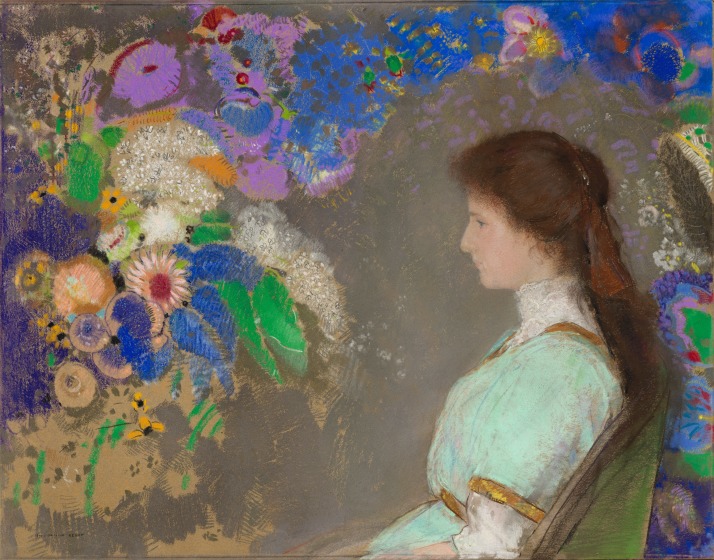

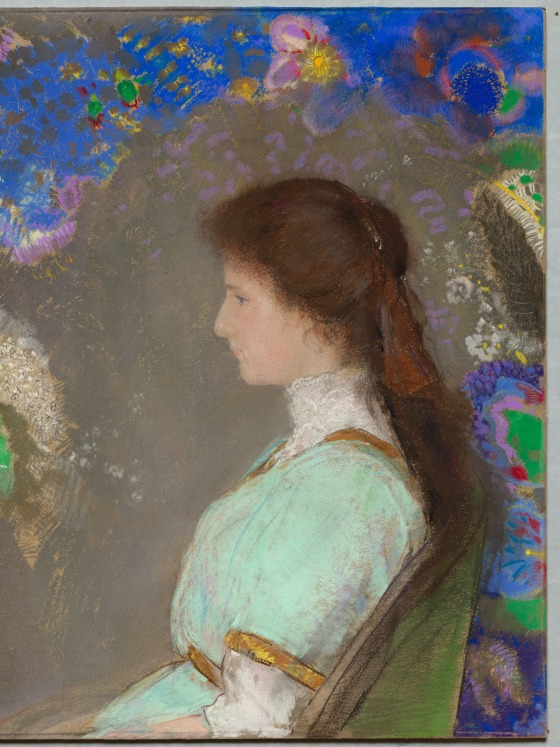
Movement: Symbolism
Artwork: Violette Heymann (#details and whole)
Genre: Self-Portrait & Portraits
#selfportraitsandportraits
Artist: Odilon Redon; (French, 1840-1916)
About: France, early 20th Century
Medium and Support: #Pastel on #gray #wove #paper
Dimensions: Unframed: 72 x 92 cm (28 3/8 x 36 1/4 in.)
Framed: 80 x 100 cm ✍️(#sourceourcollectionofbooks)
Hinman B. Hurlbut Collection 1926.1976
Location: Cleveland Museum, United State
Source:
#sourceourcollectionofbooks #frenchartandartists
DID YOU KNOW?
This pastel was acquired by the Cleveland Museum of Art in the same year as several other works by Redon, leading arts writers to describe Cleveland as holding the most important works by the artist outside of Paris at the time.
#sourceourbookscollection #essentialartmovementsandstyles
DESCRIPTION
Although he was known early in his career for works primarily in black and white, such as charcoal drawings and lithographs, Odilon Redon turned to more colorful media, including pastel, later on. In particular, he focused on commissioned pastel portraits of women with flowers, such as this one. Here, the young niece of the Parisian collector Marcel Kapferer appears alongside colorful blossoms as she looks forward, focused as if in the dreamlike state evoked by her surroundings.
Source photographs and text: https://www.clevelandart.org/art/1926.1976
VERROCCHIO RECOGNISES THE GREATER TALENT OF HIS PUPIL LEONARDO

Artist: JEAN GIGOUX
VERROCCHIO RECOGNISES THE GREATER TALENT OF HIS PUPIL LEONARDO
About: 1835
Medium and Support: Lithograph
Dimensions: 293 x 233 mm (29.3 x 23.3 cm)
Location: No card described
Source: #ourcollectionofbooks #1TASCHEN
#leonardosmagic

Artwork: Saint George and the Dragon
Artist: Paolo Uccello (1397 – 10 December 1475), born Paolo di Dono
About: between 1455-1460
Medium and Support: #Oil on #canvas
Dimensions: 56.5 x 74 cm
Location: National Gallery of London, London
Photography credit: 1️⃣ZebraPhotography
——————————
#europeanartandartists #italianartandartists #1zebraphotography #a1culturel #1wikimediacommons
——————————-
Paolo Uccello Italian; 1397 – 10 December 1475), born Paolo di Dono, was a Florentine painter and mathematician who was notable for his pioneering work on visual perspective in art. In his book Lives of the Most Excellent Painters, Sculptors, and Architects, Giorgio Vasari wrote that Uccello was obsessed by his interest in perspective and would stay up all night in his study trying to grasp the exact vanishing point. While his contemporaries used perspective to narrate different or succeeding stories, Uccello used perspective to create a feeling of depth in his paintings. His best known works are the three paintings representing the battle of San Romano, which were wrongly entitled the Battle of Sant’Egidio of 1416 for a long period of time.
Source Wikipedia https://en.wikipedia.org/wiki/Paolo_Uccello

The 7th Ecumenical Council, detail from:
The Saints and Feast of the Church Calendar
About: 1st half of 16th century
Medium and Support: Egg tempera on wood
Dimensions: 157.9 x 90.5 cm
Location: Recklinghausen, Ikonen-Museum, Germany
#a1religiousart #ourbookscollection Source photography from #ourcollectionofbooks
“. . . incarnation, also truly human. This meant that Christ, if He is recognized as consubstantial with the Father, was the image of God in human form, and that His human nature could thus be depicted in images. It was the incarnation of God in Christ that made possible God’s pictorial depiction in the first place, and thus a rejection of images was, in this view, tantamount to a rejection of the Incarnation.
Those who venerated images countered the accusations of idolatry with the argument that it was not the physical matter of the image that was venerated, but the holy prototype, or, as the theologian Basil the Great put it: “The honour given the image passes to the prototype.” The images of Christ and the Saint may and should be venerated, with kisses, candles, incense, song etc., but they must not be worshipped, for worship is due to God alone.” (cited from TASCHEN/ICONS)
#1transcribedtext
Still Life

#Artwork: Still-life with Parrot 🦜
#Artist: Georg Flegel (1566–1638)
Movement: Baroque
Created: Undated (probably 1630 – source WikimediaCommons)
Medium and Support: #Oil on #copper
Dimensions: 78 x 67 cm
Location: Bayerische Staatsgemäldesammlungen (German); Alte Pinakothek, Munich, Germany
Sources: #Taschen (#ourbookscollection) and https://commons.wikimedia.org/wiki/File:Flegel,_Georg_-_Still-life_with_Parrot.jpg (photography)
#europeanartandartists #webgalleryoffineart
—————————
“Nothing is known of Flegel’s beginnings, but presumably he received his training in the Netherlands. There is evidence that he worked at least from 1594 in Frankfurt am Main , at first as an assistant to the #Flemish #artist
Lucas von Valckenborch, whose painting he adorned with fruit, metalware and flowers.”
#1transcribedtext
L’Historie Centrale, painted by Magritte

Source photography from Wikipedia
Artist: René Magritte (Belgian, 1898-1967)
Artwork: L’Historie Centrale
Created: 1928
Medium and Support: Oil on canvas
Dimensions: 116 x 81 cm
Location: Probably – ?Private Collection or Banque Paribas, Bruxelles, Belgium
#webgalleryoffineart
#homageofthegreatpainters
Regina Bertinchamps, Magritte’s mother, committed suicide by throwing herself into the Sambre River on the night of February 24, 1912, after many months of depression. Her body was discovered only a few weeks later.
At the age of only thirteen, René is deeply moved by his mother’s last image – the woman’s face is covered with her shirt.
#a1arthistory
Magritte will never talk about his mother’s suicide, but his works are suggestive enough.
#a1culturel
In the last of them he describes death by drowning, in others he presents the body covered by a shroud or characters whose faces remain unseen.(#a1translatetext)


Sculpture name: Torso in Metal from Rock Drill
Artist: Jacob Epstein
———————————
Sir Jacob Epstein KBE was an American-British sculptor who helped pioneer modern sculpture. He was born in the United States, and moved to Europe in 1902, becoming a British subject in 1911. He often produced controversial works which challenged ideas on what was appropriate subject matter for public artworks. Wikipedia
Born: 10 November 1880, New York, New York, United States
Died: 19 August 1959, Kensington, London
Children: Kitty Garman, Theodore Garman, Esther Garman
Spouse: Kathleen Garman (m. 1955–1959), Margaret Epstein (m. 1906–1947)
Grandchildren: Annie Freud, Annabel Freud, Eve Godley
Parents: Max Epstein, Mary Epstein
——————————
Created: between 1913-14-15
Material and Techniques: Bronze
Dimensions: 705 × 584 × 445 mm
Location: Tate Britain, London, UK
#a1arthistory #worldofsculpturee
COLLECTION
Tate
ACQUISITION
Purchased 1960
#webgalleryoffineart #ukfootwalk
Photography credit 1️⃣ZebraPhotography
——————————
Writing in 1940, Epstein described this sculpture as ‘a machine-like robot, visored, menacing’. He originally set a plaster figure on top of a real industrial rock drill as a symbol of the machine age. Epstein’s attitude to machines changed as the mechanised warfare of the First World War caused vast numbers of casualties. After it was first exhibited in 1915, he removed the drill and cut the figure down at the waist. The left hand and right arm were taken off. It was then cast in bronze. The once-threatening figure appears vulnerable, more a victim than a perpetrator of violence.
#1zebraphotography
Gallery label, October 2020


Sculpture name: Amy Winehouse
Artist: Scott Eaton (Scott Eaton is an American artist,[1] designer,[2][3][better source needed][4][5] and photographer. His work explores the representation of the human figure through various mediums – drawing, sculpture, photography, and generative AI. Eaton received his master’s degree from the MIT Media Lab and subsequently studied academic drawing and sculpture in Florence, Italy.
Subject: Amy Winehouse
Created: 2014
Medium and Techniques: Bronze
Dimensions: 175 cm (69 in)
Location: Camden Town, London, NW1, London, UK
Photography credit 1️⃣ZebraPhotography (December 27, 2021)
———————————
Amy Jade Winehouse (14 September 1983 – 23 July 2011) was an English singer and songwriter. She is known for her deep, expressive contralto vocals and her eclectic mix of musical genres, including soul, rhythm and blues and jazz.
#a1arthistory #worldofsculpturee
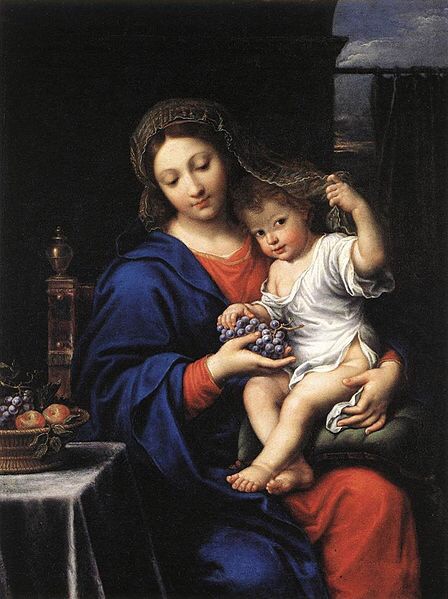
The Virgin with the Grapes

Artwork: The Virgin with the grapes
Artist: Pierre Mignard or Pierre Mignard I (17 November 1612 – 30 May 1695)
Created: 1640
Genre: Religious art
Medium and Support: Oil on canvas
Dimensions: Height: 121 cm (47.6 in); Width: 94 cm (37 in
Location: Louvre Museum, Paris, France
Source: WikimediaCommons
———————————
#a1religiousart #frenchartandartists #a1culturel #homagetothegreatpainters #webgalleryoffineart
Self-Portrait
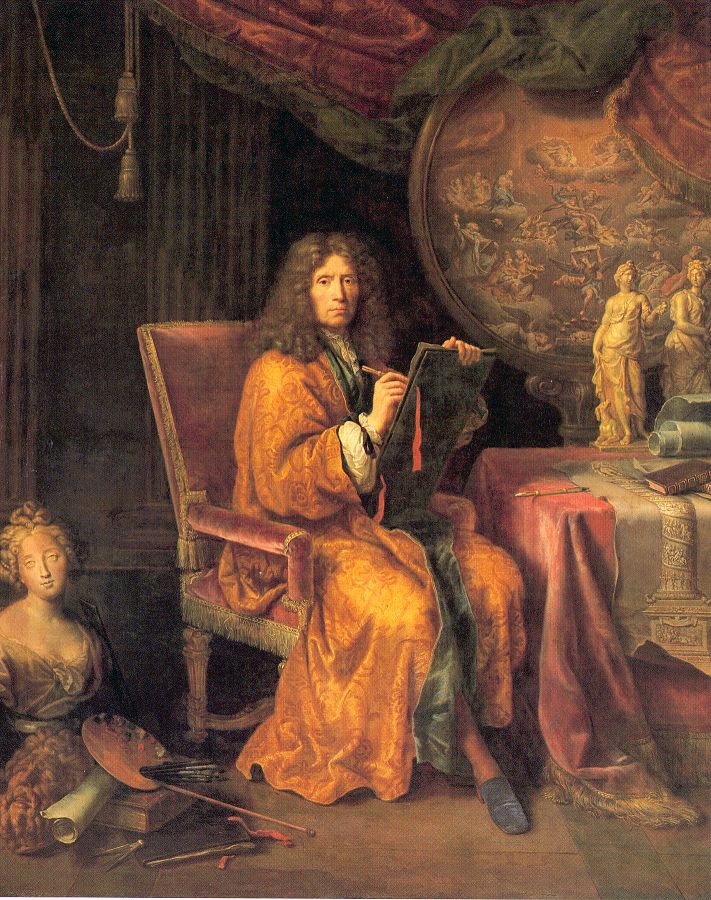
Biography:
Pierre Mignard was born at Troyes in 1612 as the son of Pierre and Marie Gallois. He came from a family of artisans. He was the younger brother of Nicolas, who became a painter and etcher who was mainly active in Avignon and was known as Mignard d’Avignon.[2] Nicolas had two sons, Paul who became a painter and etcher and Pierre who became a painter and architect. To distinguish his nephew Pierre from his uncle, the nephew was called “Pierre II” or “Le Chevalier”.
Pierre Mignard trained in Bourges with the Mannerist painter Jean Boucher. He later spent time making copies of the Mannerist works in the château of Fontainebleau. He then studied for a period in the studio of Simon Vouet. Mignard left for Rome in 1635 where he would stay about 22 years. It is because of his long residence in Rome that he got the nickname ‘Mignard le Romaine’.
In Rome he painted religious commissions. He was particularly known for his many images of the Madonna and Child. They were so popular that they were referred to as “Mignardises.” He also painted altarpieces. Compatriot Nicolas Poussin hired Mignard to make copies of his works. He was also active as a reproductive engraver making copies after Annibale Carracci. Mignard also developed his lifelong interest in portraiture at this time, and he painted portraits of subsequent popes, cardinals, and prominent members of the Italian nobility. He also travelled to Northern Italy where he visited Bologna, Parma, Mantua, Florence and Venice.
His reputation was such that he was summoned to Paris in 1657, probably by Cardinal Mazarin. He travelled back via Avignon where his brother Nicolas worked. Here he met the dramatist Molière, who became a close friend and of whom he painted several portraits. In Paris he became a popular portrait painter. He found favor with king Louis XIV who sat for many portraits. Mignard became a rival of the leading French painter of that time and first painter to the King, Charles Le Brun.[1] He declined to enter the Academy of which Le Brun was the head. Mignard also opposed the authority of the Academy. His brother Nicolas and his nephew Paul, who was his pupil, chose the side of Le Brun against Pierre, which led to a break in the relationship.
With the death of Le Brun in 1690, the situation changed. Mignard succeeded to all the posts held by his opponent. He died in 1695 at Paris as he was about to begin work on the cupola of Les Invalides.(https://en.wikipedia.org/wiki/Pierre_Mignard)
———————————
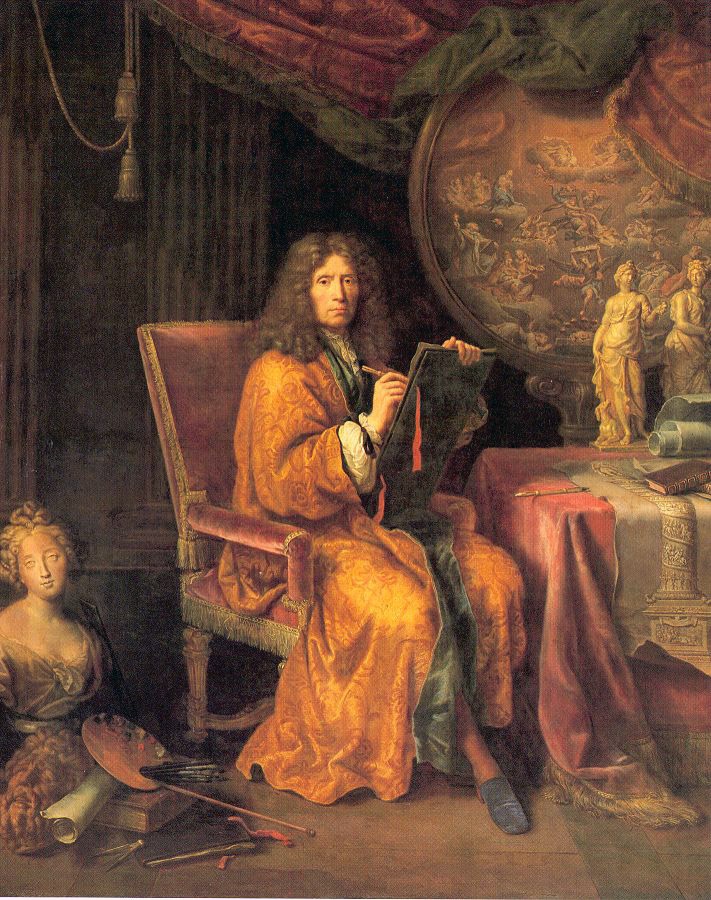
Artwork: Self-Portrait
Genre self-portrait
Artist: Pierre Mignard or Pierre Mignard I (17 November 1612 – 30 May 1695), called “Mignard le Romain”
Created: between 1670 and 1690 (engraving dated 1690)
Medium and Support: oil on canvas
Dimensions Height: 235 cm (92.5 in) Edit this at Wikidata; Width: 188 cm (74 in) (Wikidata)
Location: Louvre Museum, Paris, France
a1culturel #homagetothegreatpainters #webgalleryoffineart #frenchartandartists
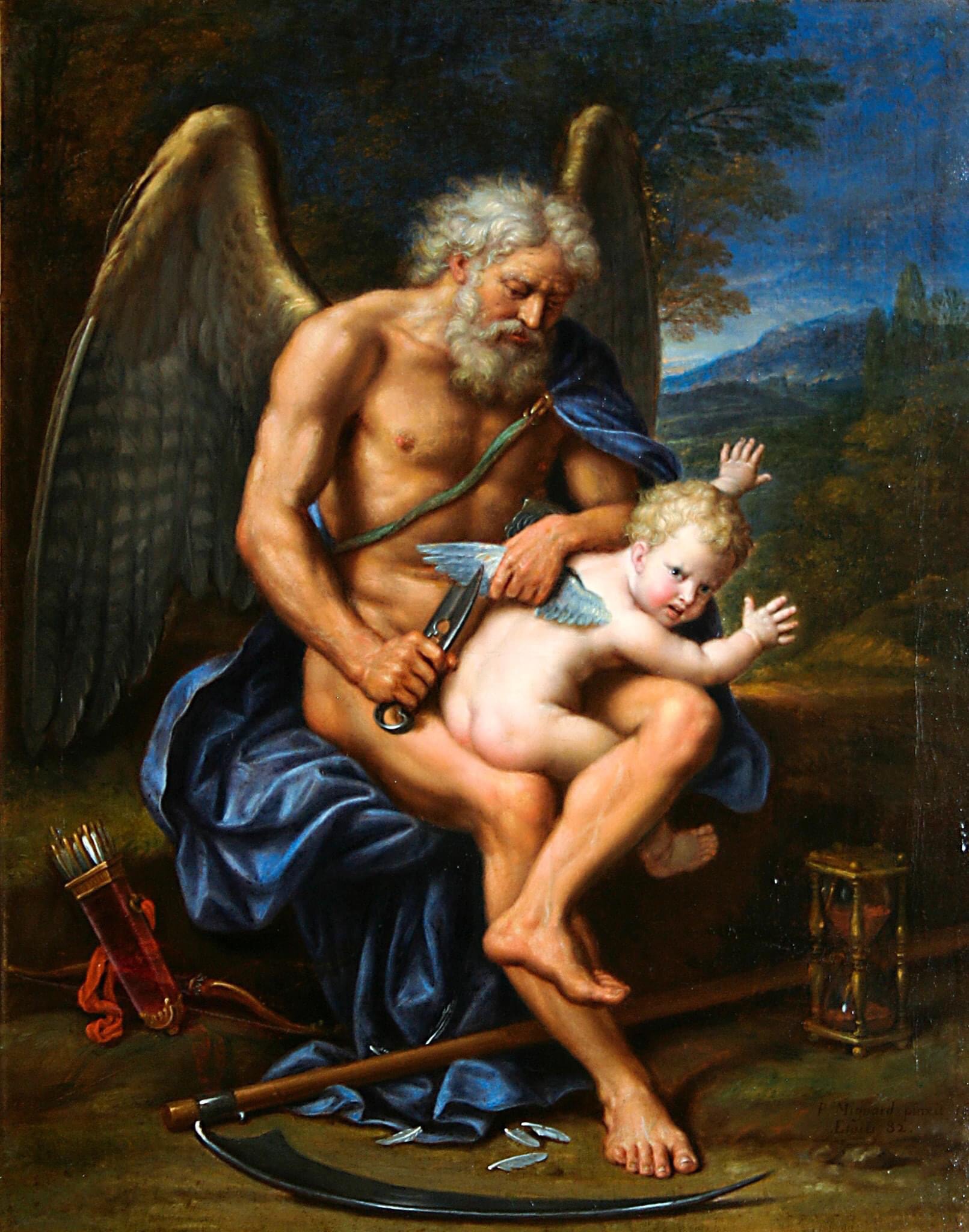
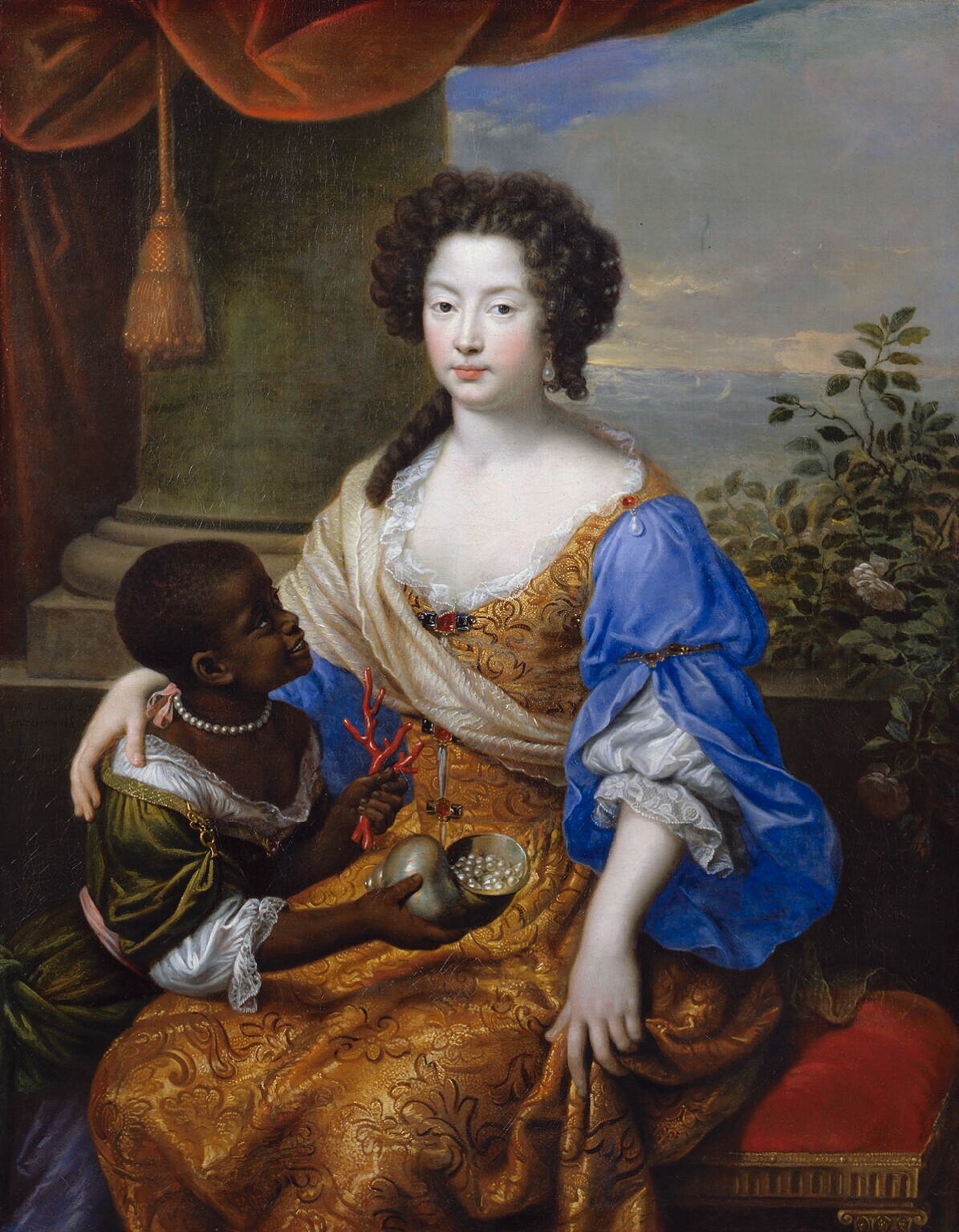
Genre: Portrait
Depicted people: Louise de Keroual, Duchess of Portsmouth Edit this at Wikidata
Artist: Pierre Mignard I (1612–1695)
Created: 1682
Medium and Support: Oil on canvas
Dimensions: Height: 120.7 cm (47.5 in)
Width: 95.3 cm (37.5 in)
Location: National Portrait Gallery, London, United Kingdom
frenchartandartists #a1culturel
—————————-
Louise Renée de Penancoët de Kéroualle, Duchess of Portsmouth (5 September 1649 – 14 November 1734) was a mistress of Charles II of England. (Source Wikipedia)
————————-
Mistress to Charles II
Louise was early introduced to the household of Henrietta Anne Stuart, Duchess of Orléans, sister of Charles II of Great Britain, and sister-in-law of Louis XIV of France. Louis de Rouvroy, duc de Saint-Simon, asserts that her family threw her in the way of Louis XIV in the hope that she would become a royal mistress. In 1670, she accompanied Henrietta on a visit to Charles II at Dover. The sudden death of Henrietta left her unprovided for, but Charles II appointed her as a lady-in-waiting to his own queen, Catherine of Braganza. Unlike her predecessor Barbara Palmer, who had openly insulted the Queen, Louise was careful to show her every respect, and relations between the two women were never less than amicable.
——————————————-
selfportraitsandportraits #wikimediacommons #Wikipedia
The Carnation
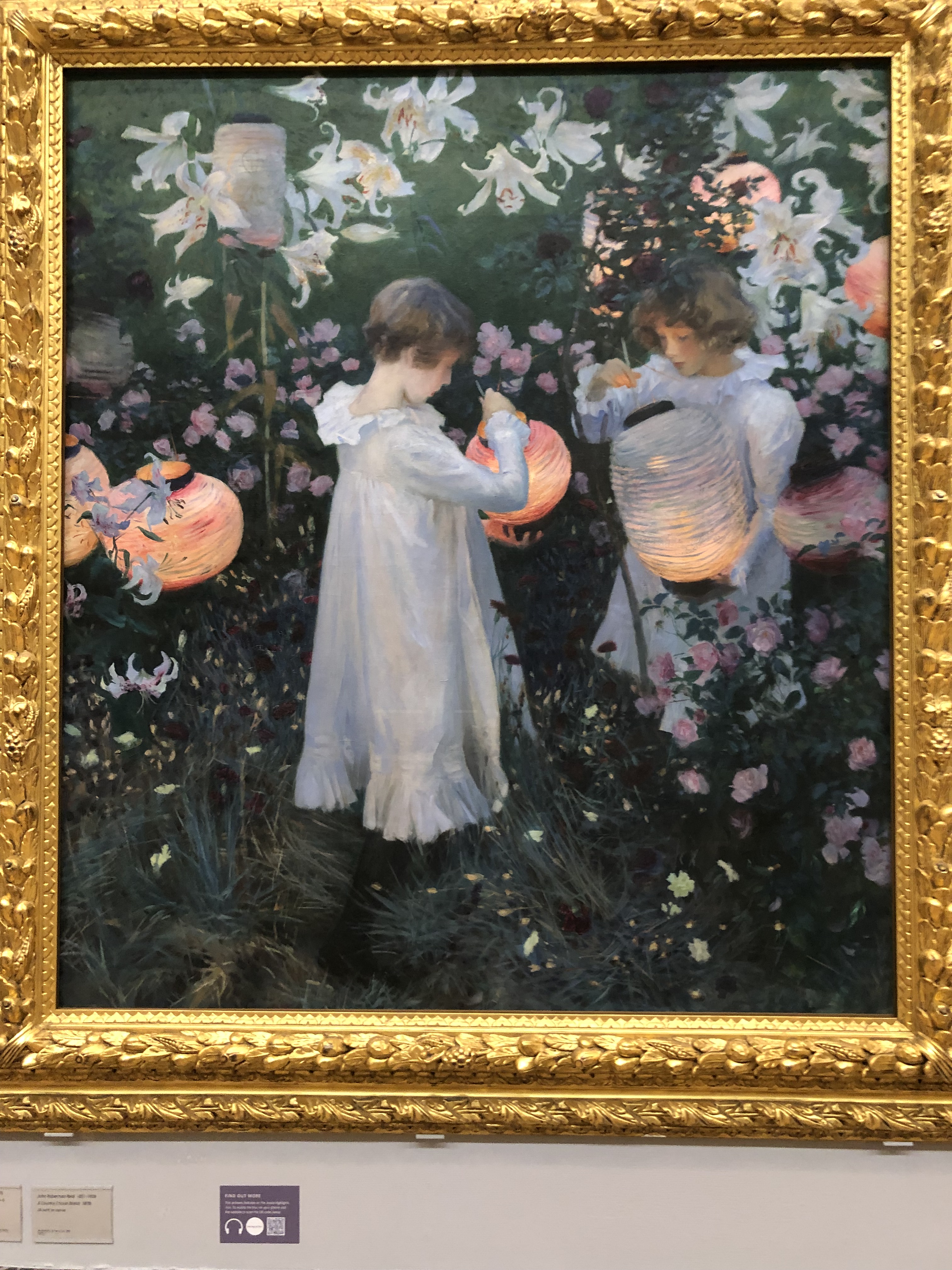

Artwork: Carnation, Lily, Lily, Rose
Artist: John Singer Sargent 1856–1925
Created: 1885–1886
MEDIUM:
Oil paint on canvas
DIMENSIONS:
Support: 1740 × 1537 mm
frame: 2185 × 1970 × 130 mm
COLLECTION
Tate
ACQUISITION
Presented by the Trustees of the Chantrey Bequest 1887
Photography credit 1️⃣ZebraPhotography
———————————
#a1friendsofmuseums #a1culturel
The inspiration for this picture came during a boating expedition Sargent took on the Thames at Pangbourne in September 1885, with the American artist Edwin Austin Abbey, during which he saw Chinese lanterns hanging among trees and lilies. He began the picture while staying at the home of the painter F.D. Millet at Broadway, Worcestershire, shortly after his move to Britain from Paris. At first he used the Millets’s five-year-old daughter Katharine as his model, but she was soon replaced by Polly and Dorothy (Dolly) Barnard, the daughters of the illustrator Frederick Barnard, because they had the exact haircolour Sargent was seeking. Dolly, aged eleven, is on the left; Polly, aged seven, is on the right. A sketchbook at the Fogg Museum, Cambridge, includes Sargent’s outline designs for the painting, and two drawings at the Tate (Tate Gallery A00850-1) record the precise poses he required for the girls’ profiles.
#homageofthegreatpainters #homagetothegreatpainters
He worked on the picture, one of the few figure compositions he ever made out of doors in the Impressionist manner, from September to early November 1885, and again at the Millets’s new home, Russell House, Broadway, during the summer of 1886, completing it some time in October. Sargent was able to work for only a few minutes each evening when the light was exactly right. He would place his easel and paints beforehand, and pose his models in anticipation of the few moments when he could paint the mauvish light of dusk. As autumn came and the flowers died, he was forced to replace the blossoms with artificial flowers. His friend Edmund Gosse recorded Sargent’s working method:
#1zebraphotography #Wikipedia
Instantly, he took up his place at a distance from the canvas, and at a certain notation of the light ran forward over the lawn with the action of a wag-tail, planting at the same time, rapid dabs of paint on the picture, and then retiring again, only, with equal suddenness, to repeat the wag-tail action. All this occupied but two or three minutes, the light rapidly declining, and then, while he left the young ladies to remove his machinery, Sargent would join us again, so long as the twilight permitted, in a last turn at lawn tennis.
(quoted in Charteris, pp.74-5)
Edwin Howland Blashfield, a member of the artists’ colony at Broadway that year, recalled that when he saw the canvas each morning, the previous evening’s work seemed to have been scraped off, and that this happened repeatedly at each stage. Sargent cut two feet off the left side of the canvas, leaving it approximately square, in order to concentrate the composition.
The picture was both acclaimed and decried at the 1887 Royal Academy exhibition. The title comes from the song ‘The Wreath’, by the eighteenth-century composer of operas Joseph Mazzinghi, which was popular in the 1880s. Sargent and his circle frequently sang around the piano at Broadway. The refrain of the song asks the question ‘Have you seen my Flora pass this way?’ to which the answer is ‘Carnation, Lily, Lily, Rose’.
The picture was bought for the Tate Gallery in 1887, under the terms of the Chantrey bequest, largely at the insistence of the Royal Academy President, Sir Frederic Leighton. A portrait by Sargent of Mrs Barnard (1885).
Terry Riggs
February 1998
Photo 1- Framed
Photo 2- Unframed
A Man in a Black Cap


Artwork: A Man in a Black Cap
Genre: Portrait
Artist: John Bettes active 1531–1570 (John Bettes the Elder (active c. 1531–1570) was an English artist whose few known paintings date from between about 1543 and 1550. His most famous work is his Portrait of a Man in a Black Cap. His son John Bettes the Younger, with whom he is sometimes confused, was a pupil of Nicholas Hilliard who painted portraits during the reign of Elizabeth I and James I.[1]
———————-
Created: 1545
MEDIUM:
Oil paint on oak
DIMENSIONS:
Support: 470 × 410 mm
frame: 750 × 628 × 100 mm
COLLECTION:
Tate
ACQUISITION:
Purchased 1897
Photographies credits: 1️⃣ZebraPhotography
————————————
Currently the earliest work in the Tate collection, this subtle portrait is particularly significant in the study of British art, because the name of the artist is recorded on the back. Signatures or inscriptions that identify the artist are very rare on British paintings of this period.
#1zebraphotography #selfportraitsandportraits
Painted on oak panel, the work was cut down, at the sides and along the bottom, at some time prior to its acquisition by the National Gallery in 1897. It was transferred to the Tate Gallery in 1949. The section bearing the repeated French inscriptions ‘faict par Johan Bettes Anglois’ (‘done by John Bettes, Englishman’) was evidently retained when the panel was cut down, and affixed to the back. On the front of the painting, the shadows of duplicate inscriptions ‘ANNO D[OMIN]I 1545’ and ‘XXVI’ can be seen behind the present ones: ‘[�]1. 1545’ and ‘AETATIS . SV[..]’. Taken together, these indicate in translation that the work was painted in ‘the year of our Lord’1545 and that the sitter was either aged 26 or in his 26th year.
The portrait bears resemblances to the work of Hans Holbein the Younger (1497 or 9-1543), the great German artist who had redefined the public images of Henry VIII and his Court. Bettes may have worked with Holbein, but had first been recorded as carrying out decorative work for the Court as early as 1531-3. In 1546-7 he was paid for making portraits, possibly in miniature form, of Henry VIII and his last queen, Catherine Parr, works which do not survive.
#a1culturel #artandartistsinuk
The background of this picture, now ginger-brown in colour, was originally a deep blue – a hue often used by Holbein for his backgrounds. Bettes, however, used here a pigment called smalt, which is composed, broadly speaking, of ground glass, and tends to change colour irreversibly to brown or grey under the effect of light.
#a1friendsofmuseums
In the eighteenth century, this portrait was recorded in the collection at Brome Hall, Suffolk, which had descended from the family of Henry VIII’s physician William Butts (c.1485-1545) – a gentleman who, with his wife, had been portrayed by Holbein himself. It has been suggested that the present sitter may be Butts’s third son, Edmund, who was born after 1516 and who inherited property from his father in 1545, the year inscribed on this painting.
Further reading:
Karen Hearn (ed.), Dynasties: Painting in Tudor and Jacobean England 1530-1630, exhibition catalogue, Tate Gallery 1995, p.46, cat. no. 10, reproduced in colour
Rica Jones, ‘The Methods and Materials of Three Tudor Artists: Bettes, Hilliard and Ketel’, in Karen Hearn (ed.), Dynasties: Painting in Tudor and Jacobean England 1530-1630, exhibition catalogue, Tate Gallery 1995, pp.231-5.
Karen Hearn
October 2000
Source Tate, London
————————
#Wikipedia #webgalleryofvisualart
1-Whole
2-Detail
Le Passeur
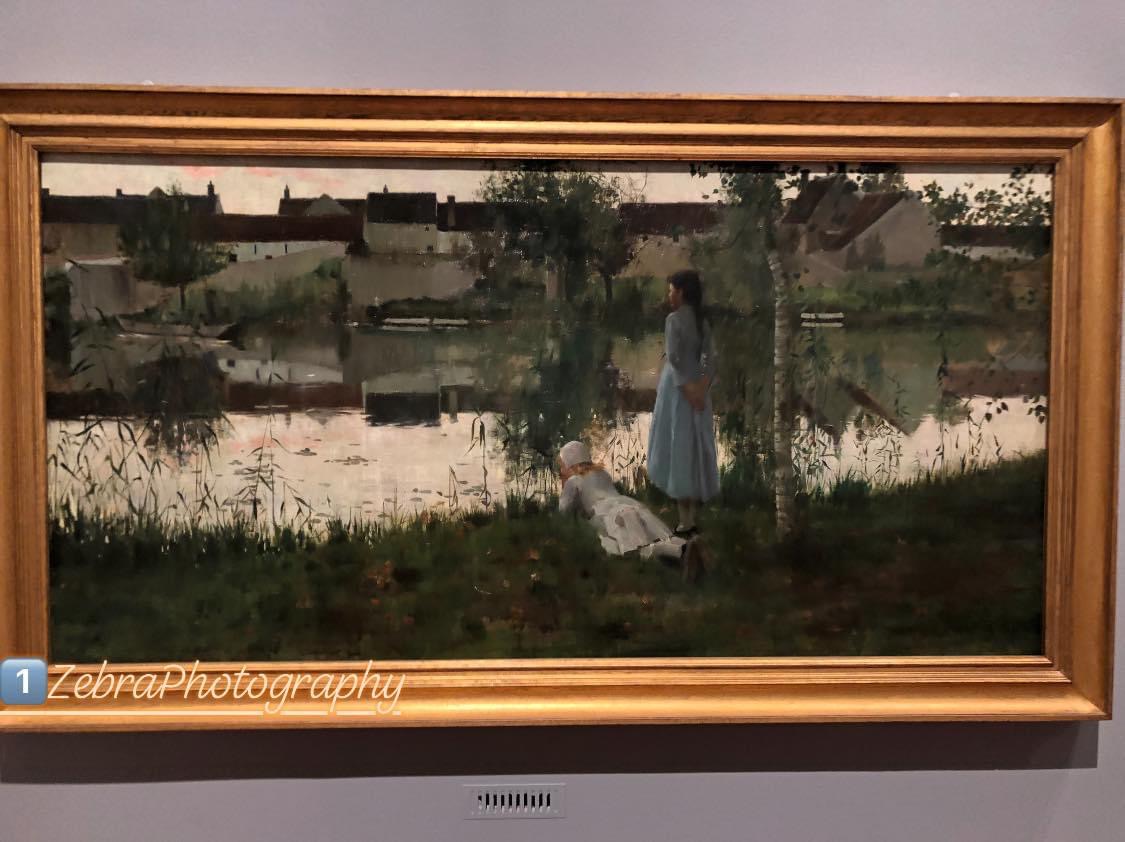
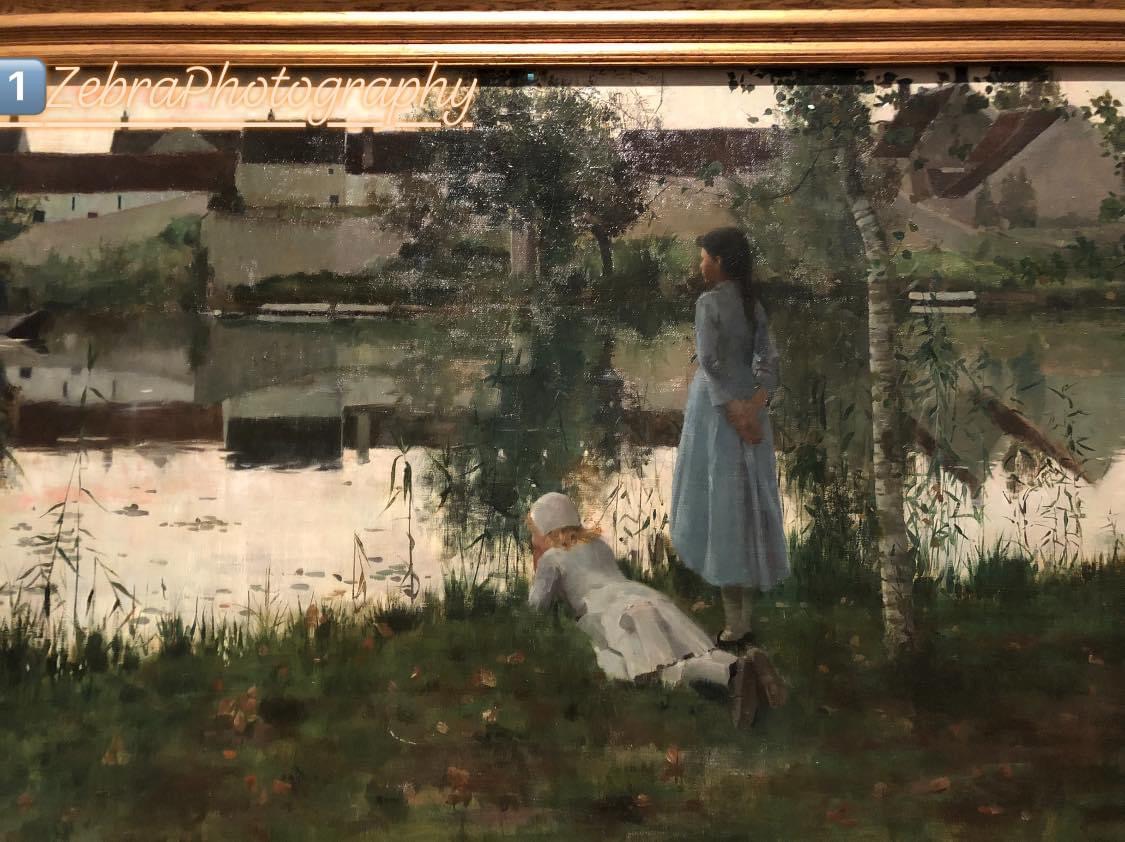
Artwork: Le Passeur (The Ferryman)
Artist: William Stott (1857–1900) was a painter born in Oldham, Lancashire, England.
About: 1881
Medium: Oil on canvas
Dimensions: Support: 1092 × 2153 mm
Framed: 1327 × 2384 × 98 mm (132.7 x 238.4 x 9.8 cm)
Location: Tate
Photography credit 1️⃣ZebraPhotography
—————————————
#artandartistsinuk #webgalleryofvisualarr #1zebraphotography #webgalleryoffineart
“Le Passeur (The Ferryman) 1881 is an oil painting on canvas by the British painter William Stott. The painting depicts a rural scene with two young female figures in the foreground in contemporary dress. The girls have their backs to the viewer and appear to look across an expanse of water that stretches across the middle section of the canvas. A cluster of buildings borders the water in the background and is reflected in it along with the dusky sky. The stretch of water that mirrors the sky appears to glow in contrast with the duller colours of the buildings and foliage, and the girls’ dresses in blue and white seem to borrow some of this radiant effect.”(Source Tate)
Sir Brooke Boothby landscape painting


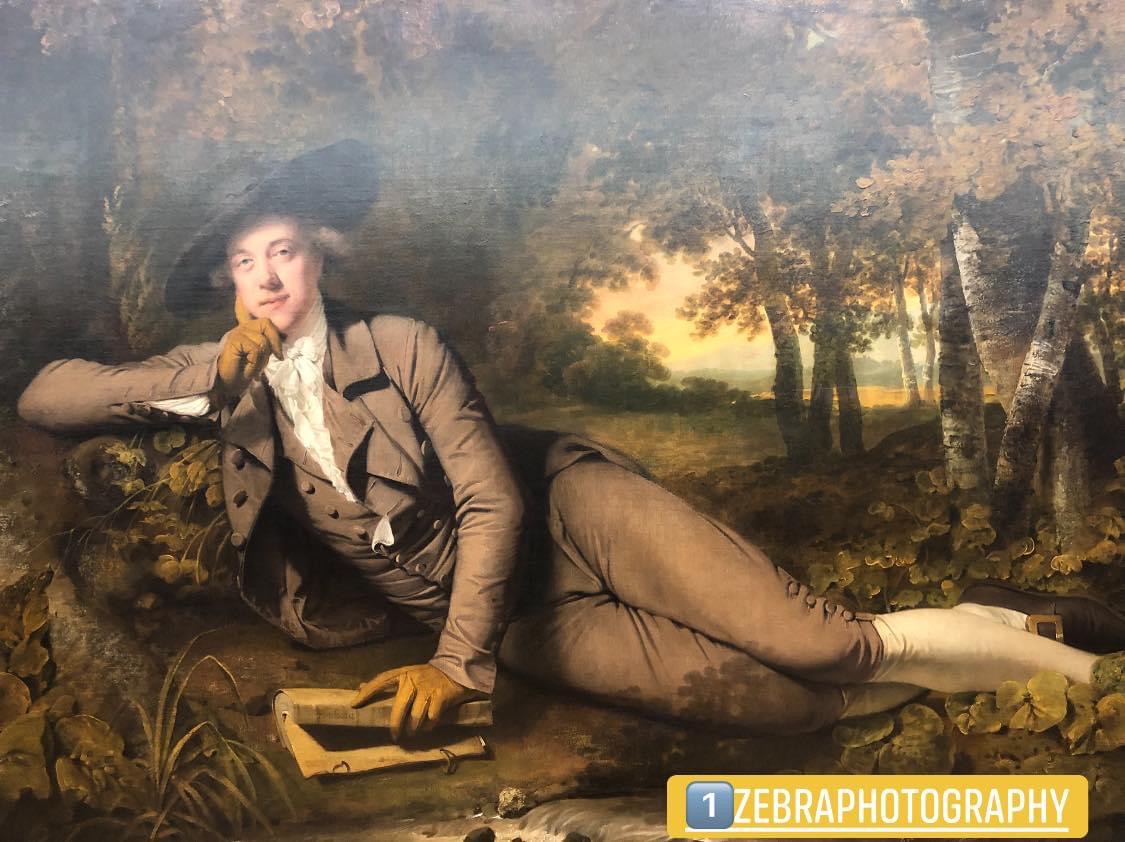
Artwork: Sir Brooke Boothby
Artist: Joseph Wright of Derby (1734–1797)
About: 1781
MEDIUM
Oil paint on canvas
DIMENSIONS
Support: 1486 × 2076 mm
frame: 1740 × 2315 × 90 mm
COLLECTION
Tate
ACQUISITION
Bequeathed by Miss Agnes Ann Best 1925
Description:
Brooke Boothby (c.1744-1824) was an amateur poet and philosopher and eldest son of Sir Brooke Boothby of Ashbourne Hall, Derbyshire. As a young man he was a prominent figure in London society and a member of the literary circle at Lichfield which included Dr Erasmus Darwin, Thomas Day and Miss Anna Seward. At the age of 22 he became acquainted with the French philosopher Jean-Jacques Rousseau, who spent fifteen months from 1776-7 at Wootton Lodge, Staffordshire, not far from Boothby’s home. Nearly ten years later, Boothby called on Rousseau in Paris and the philosopher entrusted him with the manuscript for the first volume of his autobiographical Dialogues, which he was anxious to have published, preferably in England. As a result, Rousseau, Juge de Jean Jacques was published in 1780, two years after the philosopher’s death and at Boothby’s expense. Boothby was delighted with his success and so proud of his associations with Rousseau, that he commissioned Wright to paint his portrait as an illustration of Rousseau’s philosophy.
Wright has attempted to convey in the portrait Rousseau’s belief in the importance of man living in harmony with nature. He has deliberately chosen a landscape format, depicting the poet lying by a stream in a woodland setting. The key to the work is the vellum-bound volume, which Boothby is holding. The poet indicates with his left forefinger the name ROUfSEAU, inscribed on the spine. His pose looks back to the melancholy tradition in Elizabethan portraiture: he lies full length on the ground, propping up his head on his right hand, in a setting of trees which obscure the light. The implication is not that Boothby is in a state of depression, but that his mind is distracted by more elevated concerns than the humdrum preoccupations of this world. His unbuttoned waistcoat and sleeves give him a deliberately dishevelled appearance, and yet Wright has dressed him in the double-breasted frock coat, wide-brimmed hat and plain muslin cravat then in fashion.
Boothby admired Wright’s work and bought a number of landscapes and a small portrait from him. He also used his influence to attract visitors to Wright’s one-man exhibition at Robin’s Rooms, Covent Garden in 1785. In later life, Boothby contented himself with writing poetry and political essays, and also published his own translation of Racine’s Britannicus. He married and had one daughter, Penelope, who died at the age of five. Boothby commissioned Thomas Banks to sculpt a monument for the chapel of Ashbourne Church, which shows the child lying full-length, just as her father appears in Wright’s portrait.
Further reading:
Judy Egerton, Wright of Derby, Tate Gallery 1990, pp.116-118, reproduced p.116.
Frederick Cummings, ‘Boothby, Rousseau and the Romantic Malady’, Burlington Magazine, vol.110, no.789, 1968, pp.659-66.
Frances Fowle
November 2000
————————-
Photography credit: 1️⃣ZebraPhotography
#selfportraitandportraits #1001andmore #artandartistsinuk #webgalleryofvisualarr
#1zebraphotography
Unknown Lady in Spanish Costume
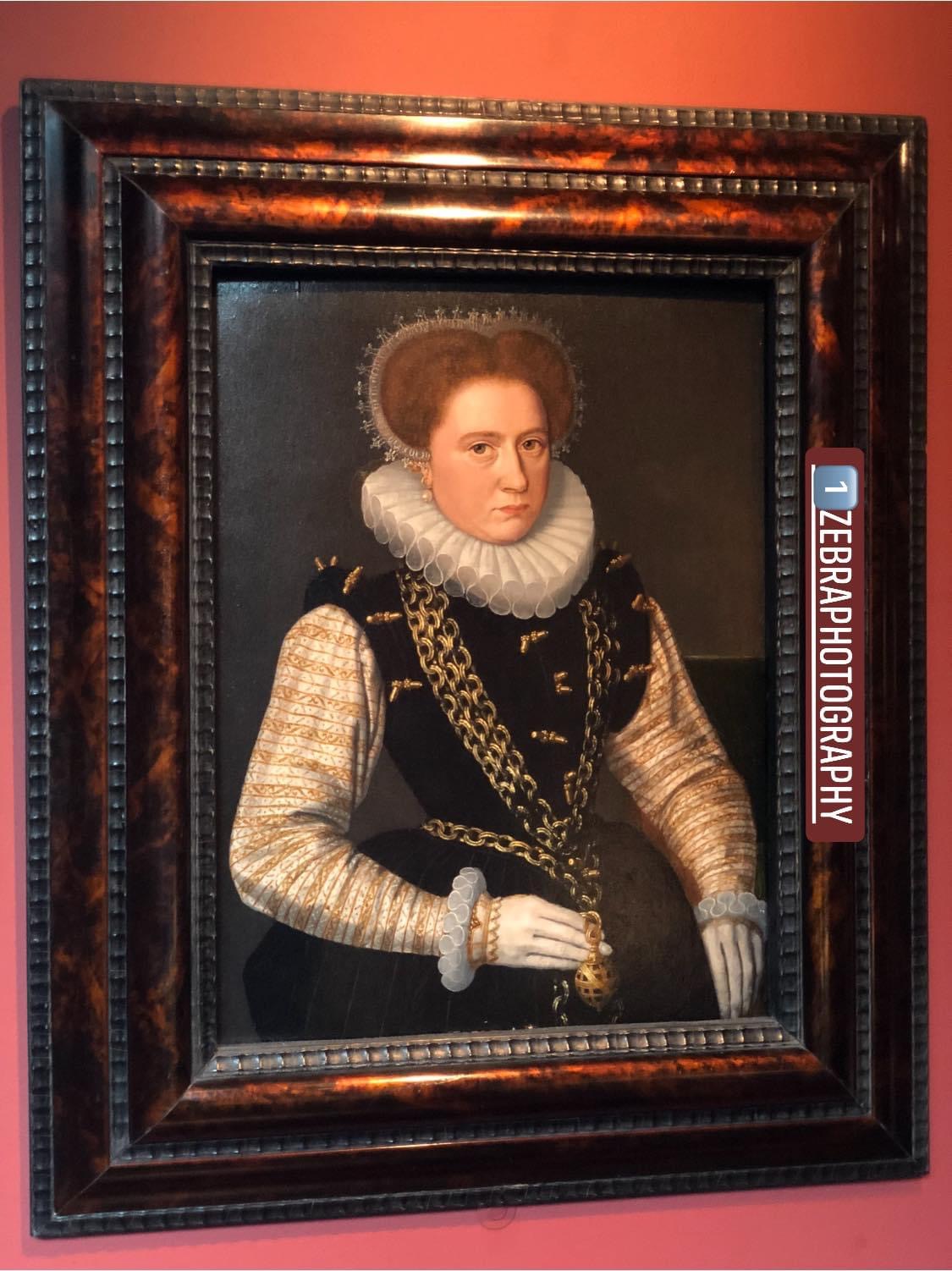
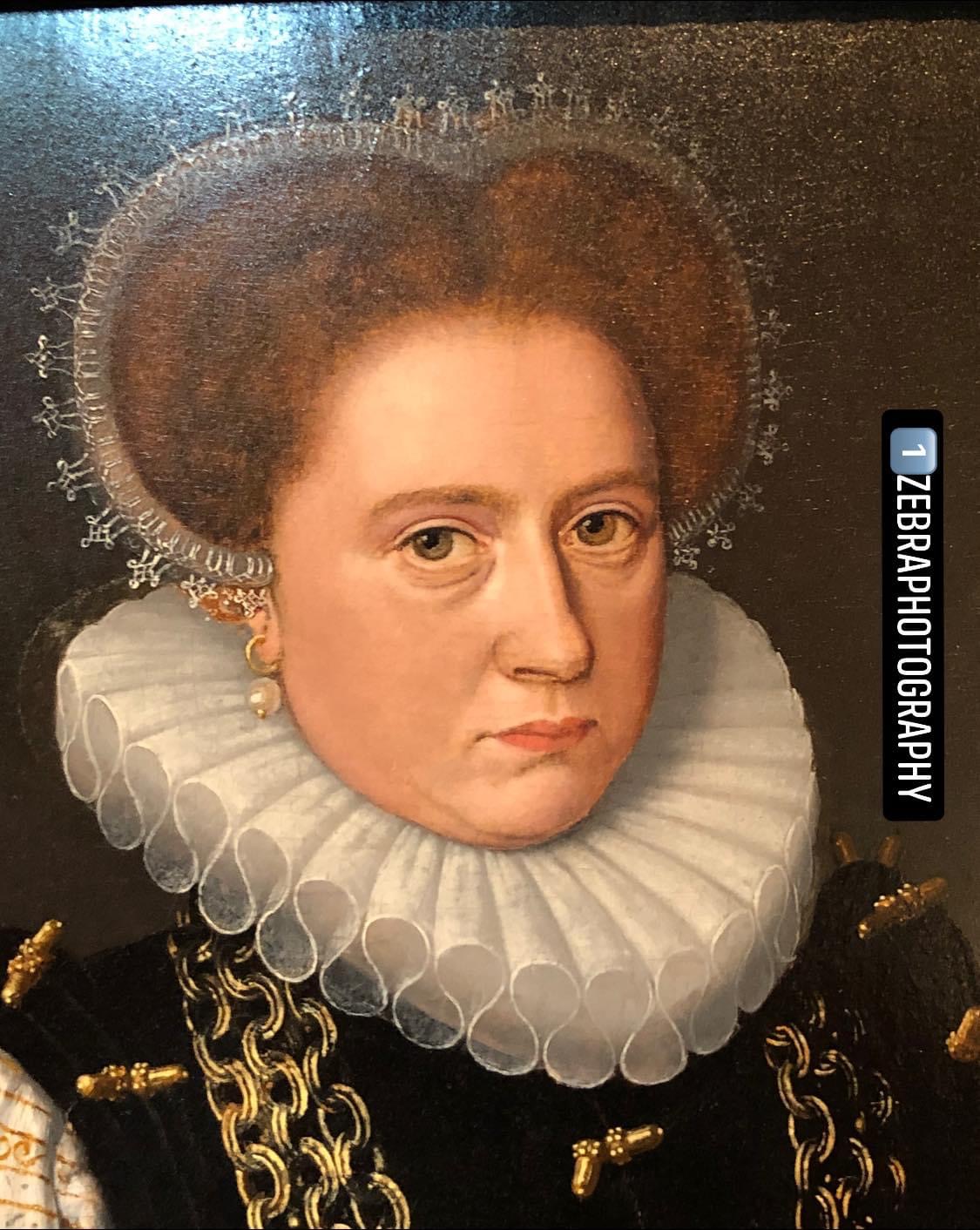
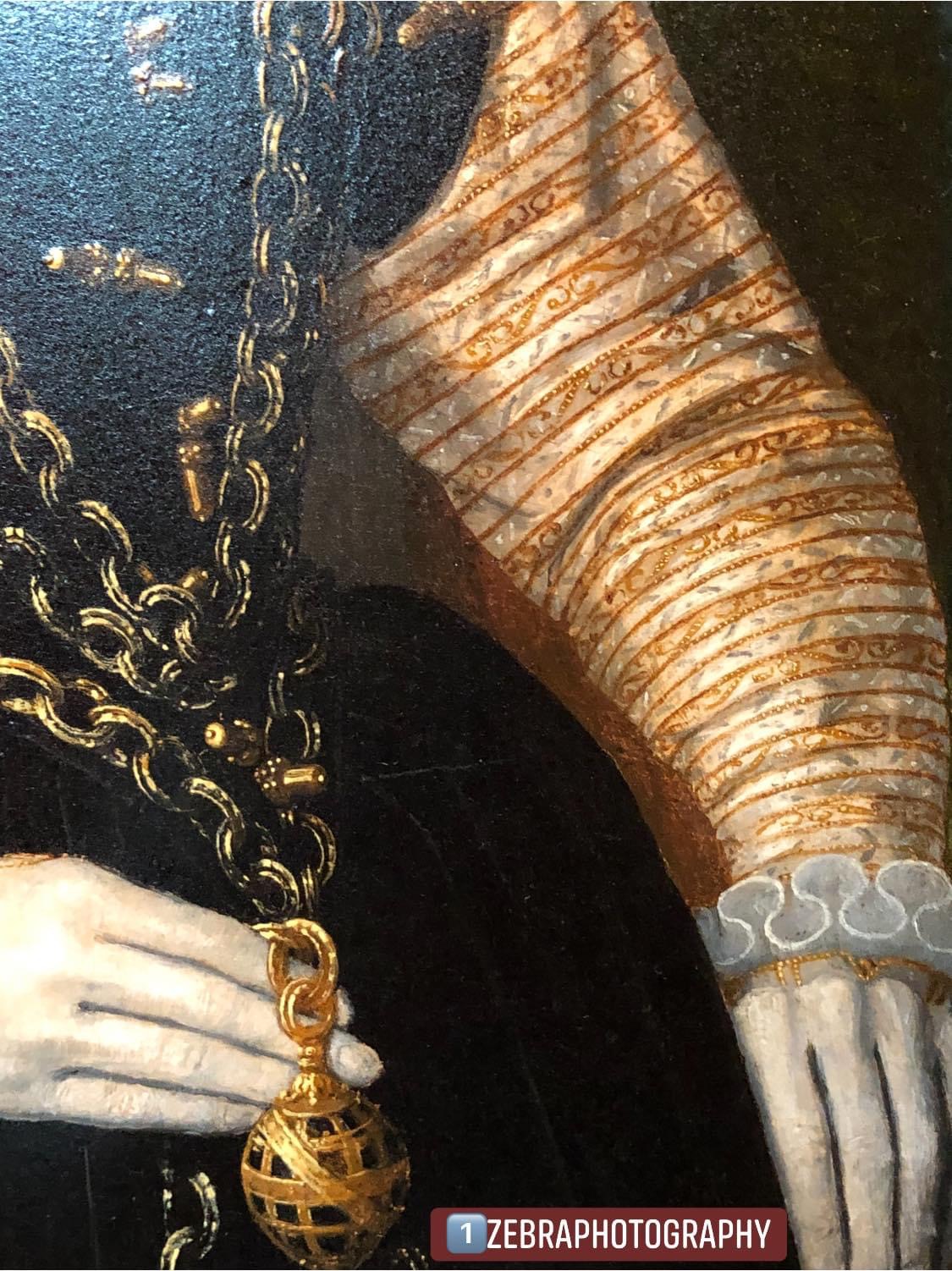
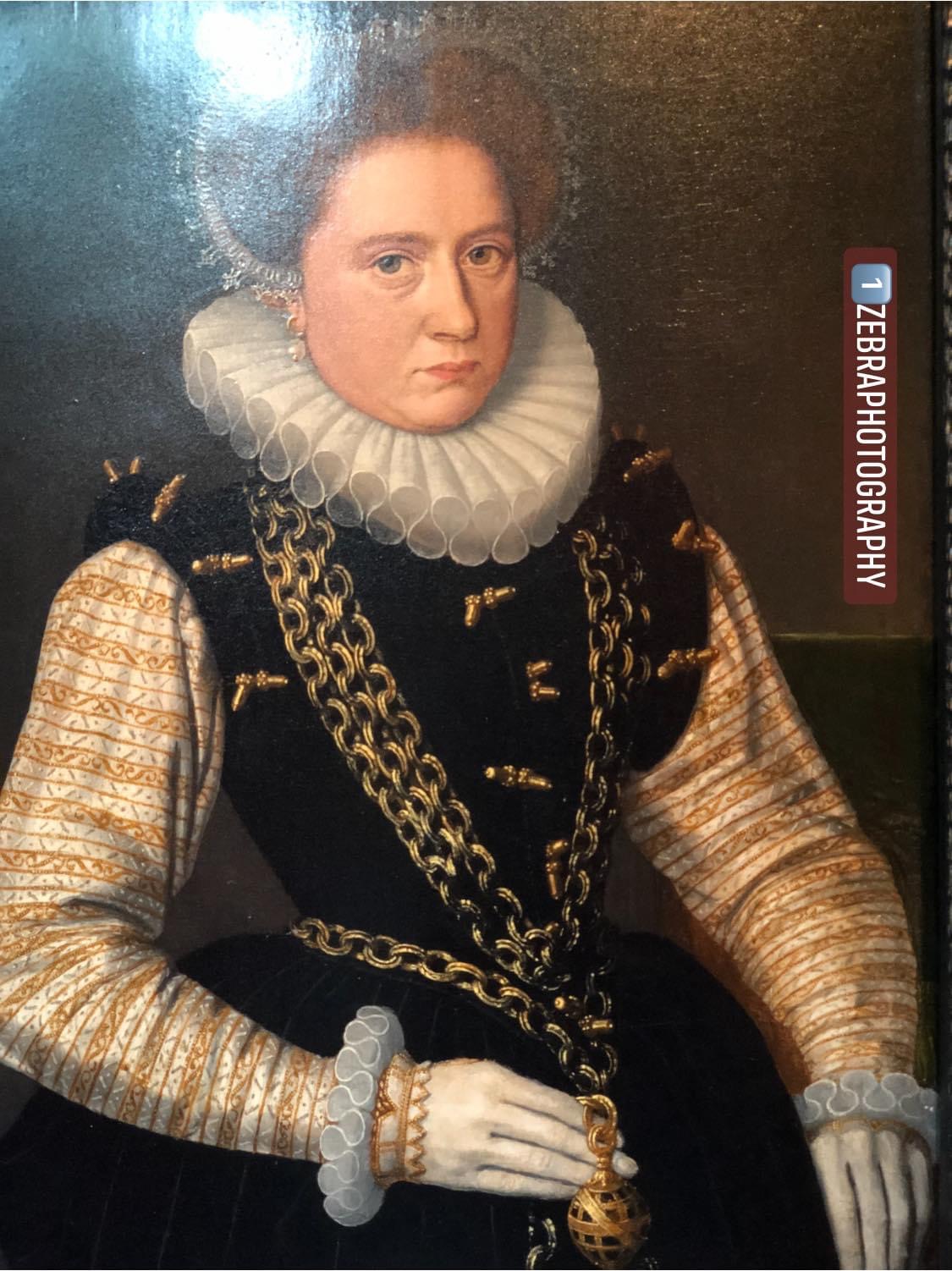
Artwork: Portrait of an Unknown Lady in Spanish Costume
Artist: Dutch School
About: 1580s
Medium and Support: Oil on panel
Dimensions: H 36.8 x W 27.9 cm
Current location: The Holburne Museum, Bath Spa
Photographies by 1️⃣ZebraPhotography
——————————-
“The painter has depicted this unidentified woman of wealth and fashion with heavy gold jewellery. Her rich dress is decorated with gold fastenings (known as aigles) in the shape of acorns. Her right hand, clothed in a fine leather glove, holds up an aromatic pomander box to ward of bad odours.”(The Holburne Museum)
#selfportraitandportraits #artloveenjoylife #webgalleryoffineart #webgalleryofvisualarr #webgalleryofvisualart #1zebraphotography
#1transcribedtext
Self-Portrait in Profile

Self-Portrait in Profile
Marcel Duchamp
About: 1960
Medium and Support: “rupture” of colored paper on a black background
Dimensions: 14.3 x 12.5 cm
Robert Lebel Collection, Paris, France
—————————
Duchamp was never interested in realistic painting, so this strange portrait is explained.
—————————-
#webgalleryofvisualarr #dadathemovementoflegacy #selfportraitandportraits #artloveenjoylife
Self-Portrait

Self-Portrait
Tristan Tzara
Dada Mouvement
About: 1928
Collection Schwartz, Milan, Italy
—————————-
#dadathemovementoflegacy
#webgalleryofvisualarr
#selfportraitandportraits
Homage to a Poet
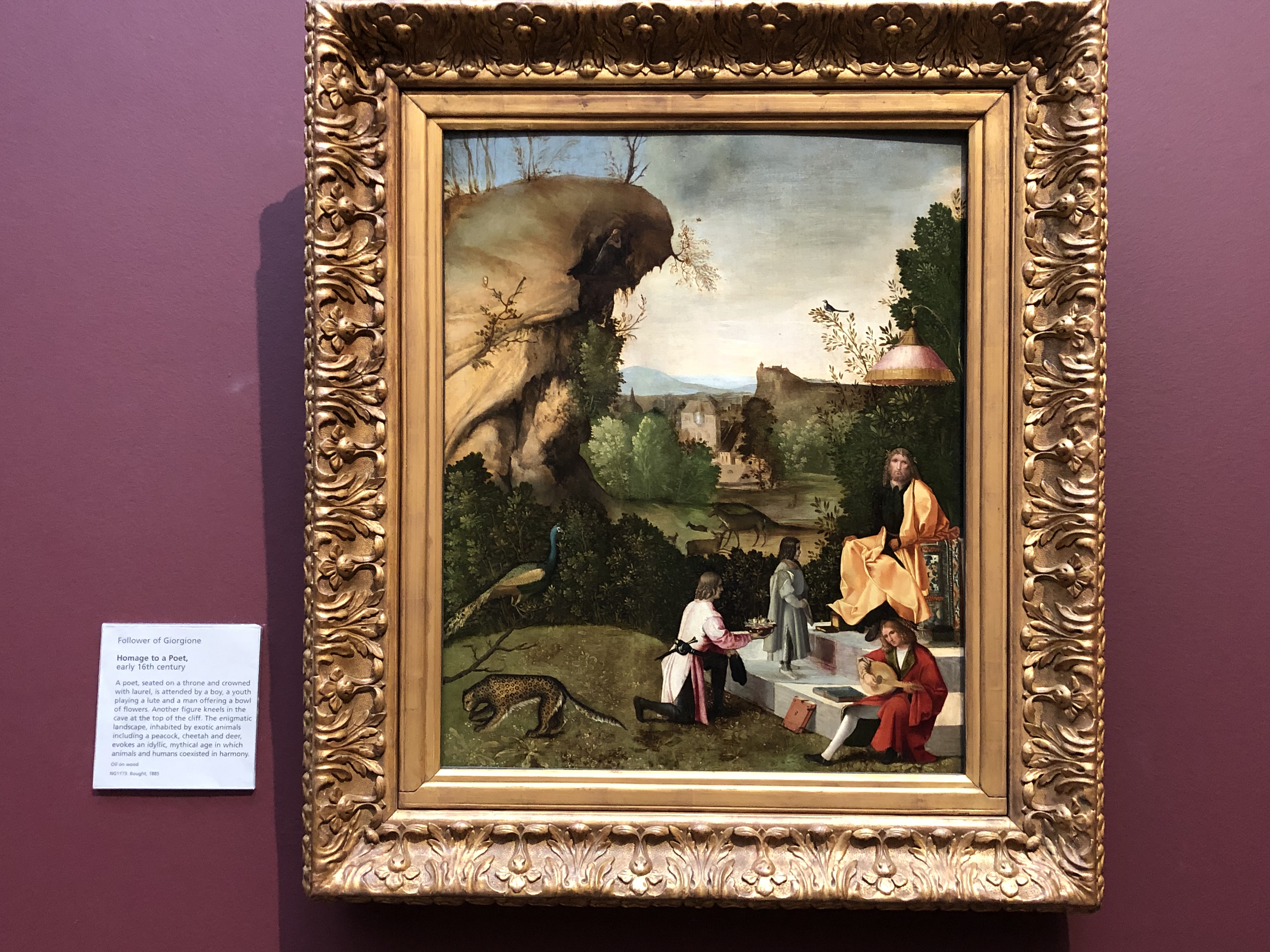
“Giorgione the Great”
Italian painter;
Giorgio Barbarelli da Castelfranco – Born:1470s-Died: 1510 (30-36 age)?
Education: Giovanni Bellini (another great artist)
Movement: High Renaissance
It is said of him as painted, without drawing in advance.
Medium: Oil on panel
Dimensions: 59.7 x 48.9 cm
Location: National Gallery, London UK
🔹🔹🔹🔹🔹🔹🔹🔹🔹🔹🔹🔹🔹🔹
He was very beautiful.
Some say they would have died of “Black Death “,
others claim they would have died of syphilis.
The painting here is:
“Homage to a Poet”
(early 16th century)
Photography by 1️⃣ZebraPhotography
#landscapedesign #londonmuseum #webgalleryoffineart #webgalleryofvisualart #londonfootwalk #artloveenjoylife #1zebraphotography #italianartandartists
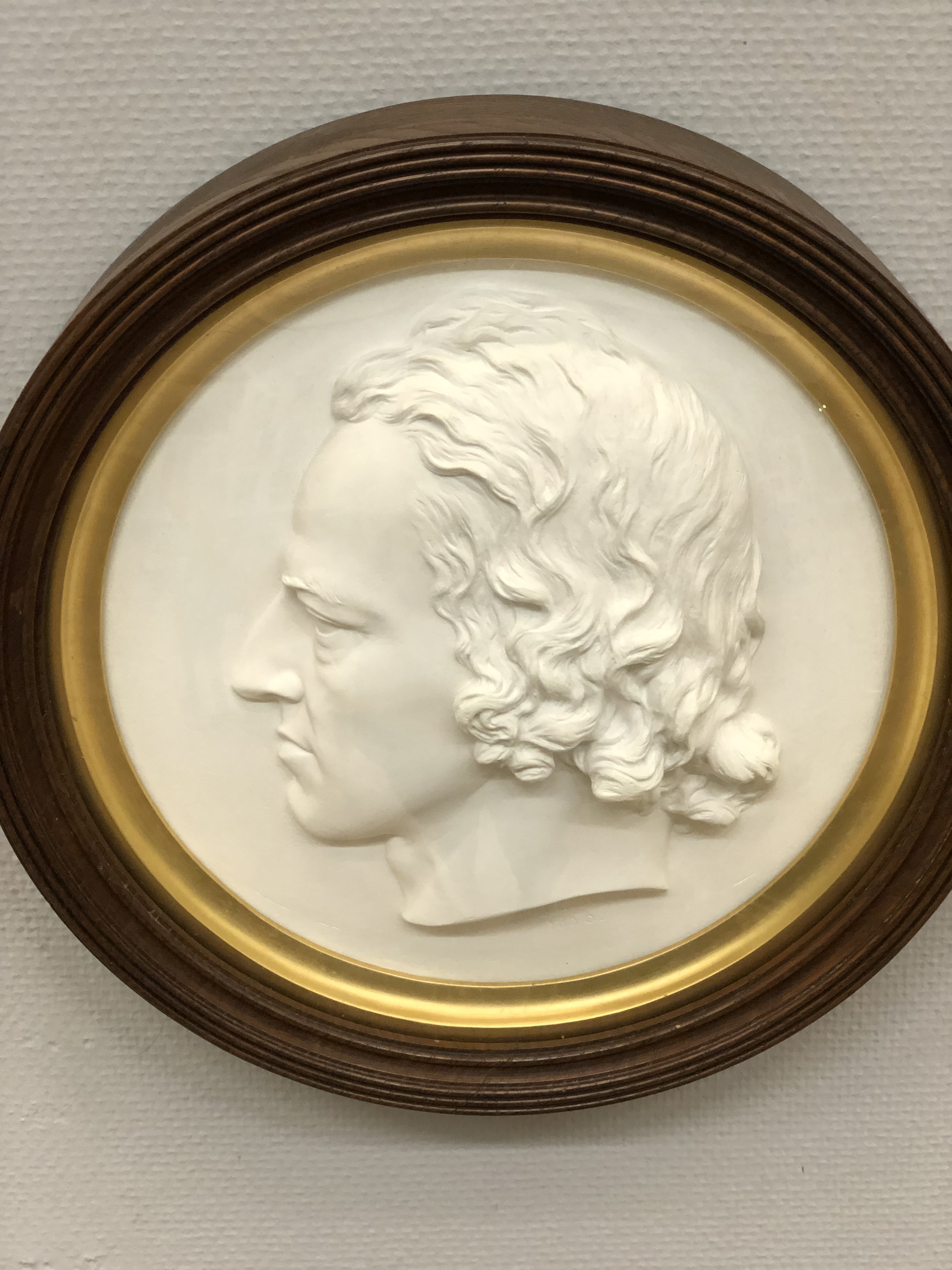

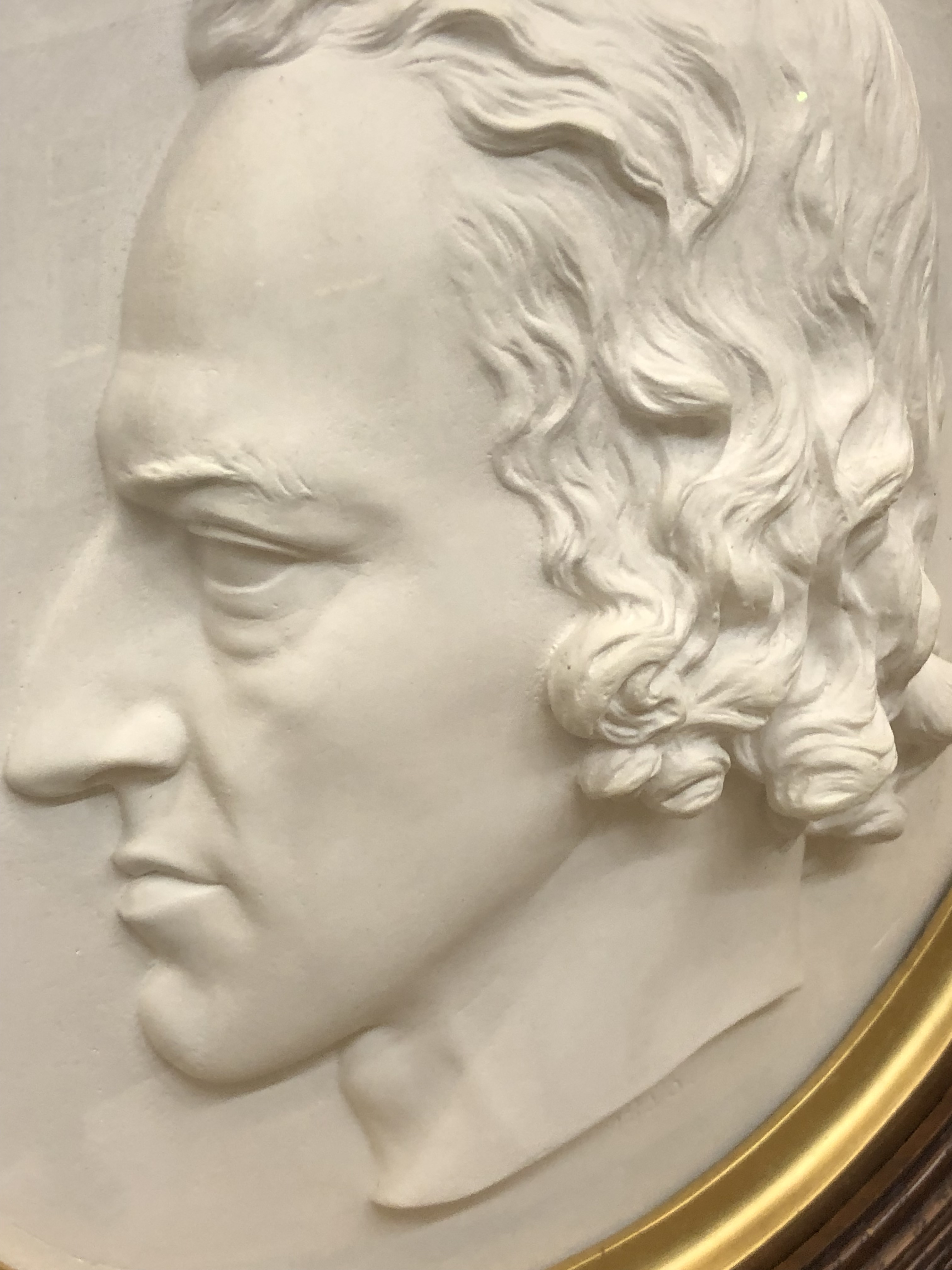
Artwork: Alfred Tennyson
Artist: Thomas Woolner (17 December 1825 – 7 October 1892) was an English sculptor and poet who was one of the founder-members of the Pre-Raphaelite Brotherhood. He was the only sculptor among the original members).
Material: Plaster sculpture
About: 1856
Dimensions: Support, circular: 260 × 260 mm
Location: Tate Britain in London, UK
Photography credit: 1️⃣ZebraPhotography
——————————-
Thomas Woolner considered this plaster relief of England’s poet laureate Lord Alfred Tennyson to be the best portrait roundel he’d made, though Tennyson’s wife requested he shorten the poet’s nose.
#webgalleryoffineart #webgalleryofvisualart #artloveenjoylife #worldofsculpturee #lillynisthartistconcept #1zebraphotography


Santa Maria degli Angeli
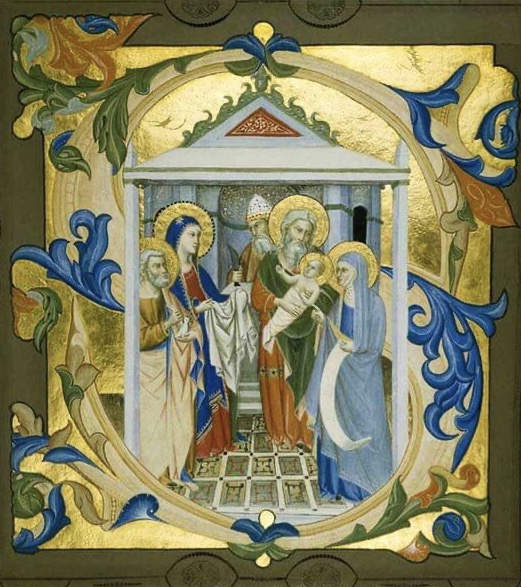
Don Silvestro dei Gherarducci (1339-1399)
Gradual de Santa Maria degli Angeli
Presentation in the Temple , Historiated initial S from a Gradual,
About: 1370-1375 , Choir Book
Period: Pre-Renaissance
Tempera and Gold on parchment 18.9 x 17.4 cm
Fitzwilliam Museum , Cambridge, United Kingdom
—————————
Whilst discussing the life and work of the painter-monk Lorenzo Monaco, Giorgio Vasari, the fifteenth-century writer on art, praises twenty choir books produced in the Florentine monastery of Santa Maria degli Angeli:
‘I, who have seen them many times, am lost in astonishment that they should have been executed with such good design and with so much diligence at a time when all the arts of design were little better than lost …’
He singles out for particular praise a scribe, Don Jacopo, and an illuminator, Don Silvestro, whose right hands were venerated as relics in the monastery after their deaths. The illumination here is thought to be the work of Don Silvestro’s revered fingers.
Choir books needed to be big, so that a single copy could be viewed by a group of singers. Large pages provided room for large pictures, and many finely illuminated choir books were cut up by art dealers and collectors in the nineteenth century. This painting is taken from the second volume of the series that had so impressed Vasari.
———————————
#christianart #italianartandartists #webgalleryoffineart #vasari #musée #artgalieries
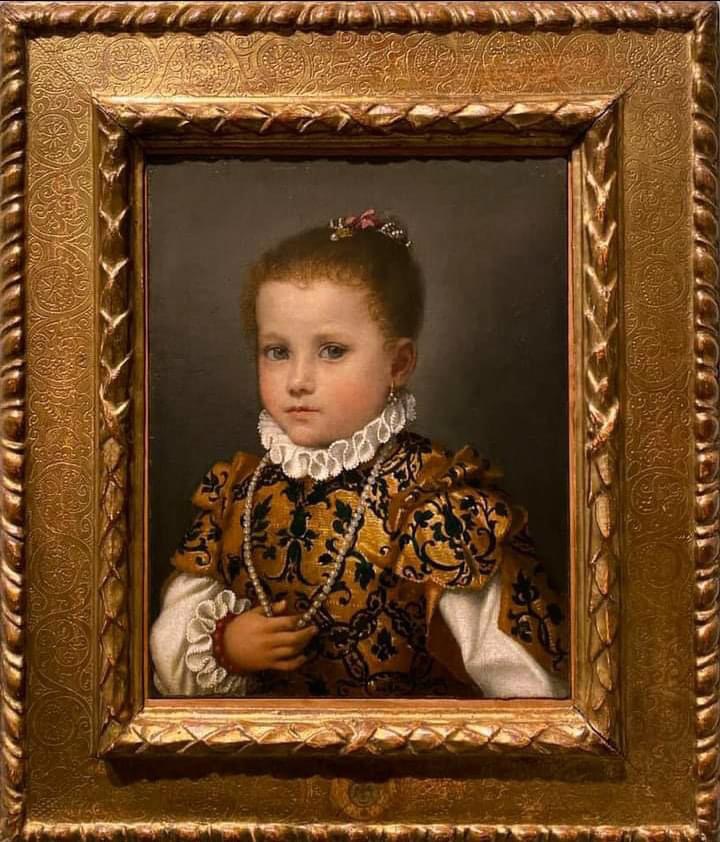
Giovan Battista Moroni (1520/24- 1579)
Portrait of a little girl from the Redetti family
Genre: Portrait
1570-1573 Oil on canvas 43.3 x 33.2 cm
Accademia Carrara , Bergamo.
The little girl is dressed like a lady of her time, with an elegant brocade surcoat and a precious pearl necklace, but she doesn’t seem too intimidated by the role she is forced to play. Her intense gaze, in which melancholy and pride are mixed, remains one of the most famous and powerful details of Moroni’s painting, acclaimed interpreter, already in her time, of a similar portraiture .
—————————-
#webgalleryofvisualart #lepetitemuseum #artloveenjoylife #italianartandartists

Virgin with Child

Artist: Sandro Botticelli (1445–1510)
Artwork: The Virgin and Child (The Madonna of the Book)
About: between 1480/1481
Medium and Support: Tempera on panel
Dimensions: 58 cm x 39.6 cm
Current location: Museo Poldi Pezzoli , Milan, Italy
Also known as the Madonna of the book, this painting depicts the Virgin and Child reading a book that is only partially visible. The layout and decoration of the sheets made it possible to formulate the hypothesis that it is a Book of Hours, that is, one of those devotional manuals intended for the laity that had great circulation between the thirteenth and sixteenth centuries. Next to the open volume, on which Mary’s hand is delicately resting, there are other books and some simple objects that contribute to giving the image a familiar tone. The pyramidal composition of the two sacred figures leaves ample space, on the right side of the painting, to a window opening onto the landscape, from which a warm and crepuscular light comes. The light that pervades the Madonna and Child, however, does not seem to have a naturalistic origin: it seems rather to emanate from the figures themselves, spreading into the surrounding space and transforming the simple domestic interior into a mystical setting. appear on the left probably have a symbolic meaning: cherries allude to the blood of Christ, plums to the sweetness of the affection of the Virgin and Child, figs to the Salvation or Resurrection of Christ. The three nails of the cross in the hand of little Jesus and the crown of thorns on his arm were doubtfully considered later and not autograph additions, but in their direct allusion to a foreshadowing of the Passion of Christ they contribute in any case to make the truth more explicit. meaning of the painting. Although this work can be dated to around 1480, when the painter had already reached his full artistic maturity, it is still influenced by Filippo Lippi, Botticelli’s first master and author of refined sacred images. In any case, all the elements of Botticelli’s poetics of this particular artistic moment are present in the painting, characterized by a soft and elegant linearity, and by a calm and precious style, still far from the intense pathetism that will permeate the late artistic production of the Florentine master.
#webgalleryoffineart #italianartandartists
Self-Portrait
The Adoration of the Shepherds
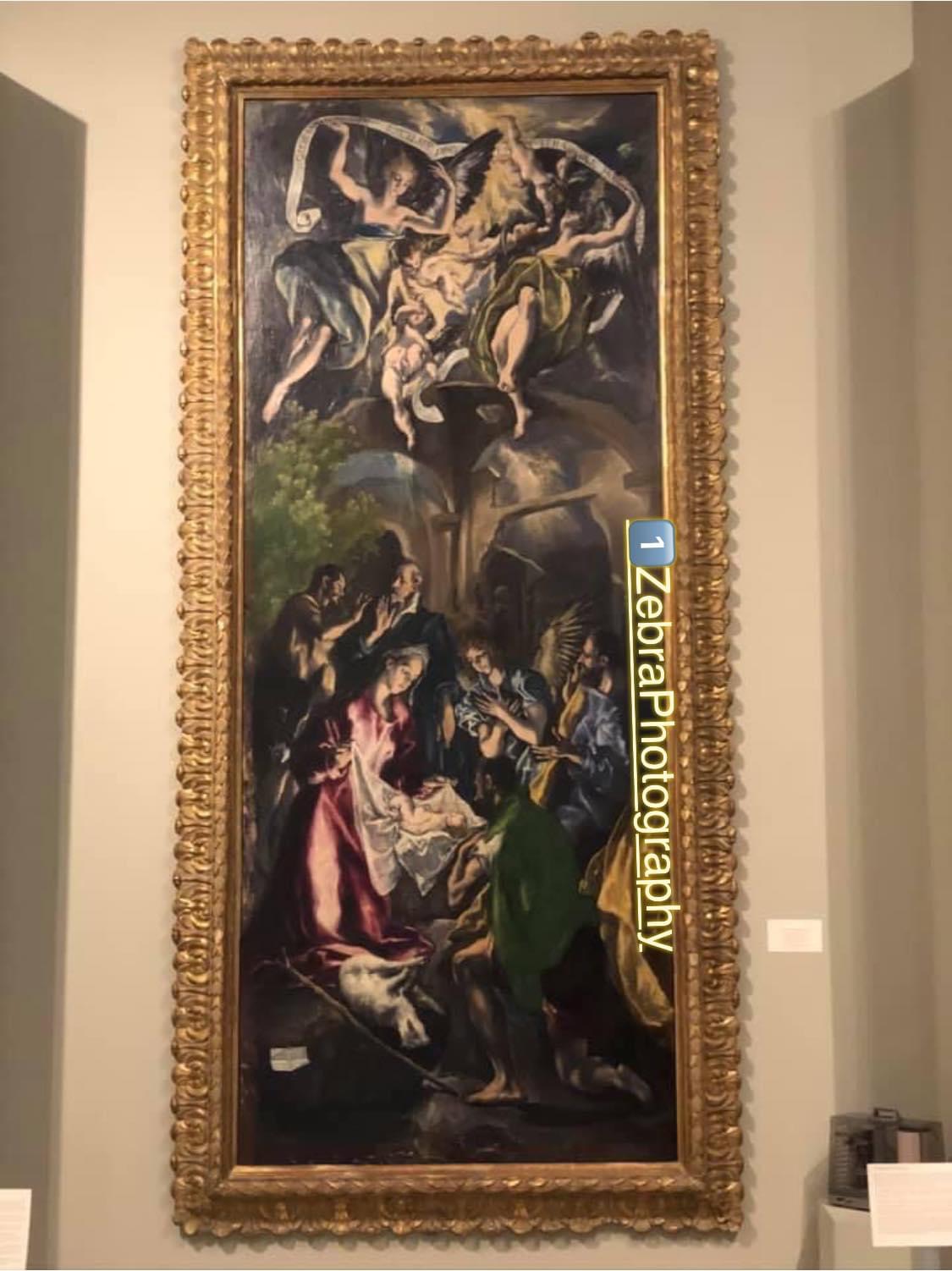
Artwork: The Adoration of the Shepherds
Artist: El Greco
Created: 1596 – 1600
Medium: Oil on canvas
Dimensions: 364 x 137 cm
Location: European Art Gallery
Photo: @art_love_enjoy_life Doménikos Theotokópoulos (1541 – 1614), most widely known as El Greco, was a Greek painter, sculptor and architect of the Spanish Renaissance. The Adoration of the Shepherds was part of the high altar of the Dona María de Aragón collegiate church in Madrid. The scene of the painting is set at night, and on the lower part of artwork features the secular while the upper half represents the Divine world, angels singing songs of praise to the Lord. El Greco focuses on the moment when shepherds kneel in front of the infant Jesus, venerating Him. The white lamb, the gift they brought Him, foretells Christ’s sacrifice.
#elgreco #greek #repostlillynisth #newconceptofphoto #spanish #painter #historyofart #arthistorian #muzeum #greatpainting #europeanart #artistsoninstagram #lillynisth #lillynisthabrtistconcept #facebookpage #facebookpages #spanishartist #theadorationoftheshepherds
#virtualmuzeum #total_art_gallery #webgalleryofvisualart

Artist: Raphael (1483-1520)
Artwork: Portrait of Young Woman
About: 1503
Medium: Black chalk on paper
H.: 25.7 cm
W.: 18.2 cm
Current location: British Museum, London, UK
————————
#italianartandartists #webgalleryofvisualart #webgalleryofineart #lillynisthartistconcept

Artist: Fray Juan Bautista Maíno (1581 – 1649)
Artwork: Adoration of the Shepherds
About: 1612 – 1614
Medium: Oil Canvas
Dimensions: 314.4 x 174.4 x 7 cm
Altarpiece of the Four Easter. Church of San Pedro Mártir, Toledo
Current location: Prado Museum, Madrid, Spain
—————————-
On February 14, 1612, Juan Bautista Maíno signed the contract in Toledo to make the paintings that would make up the main altarpiece of the Conventual Church of San Pedro Mártir, in the same city. Maíno promised to make the altarpiece within eight months, painting the stories or subjects required by the prior of the convent. Despite the commitment established in the contract, the paintings were not completed until December 1614. Between those two dates the artist entered the Order and the convent itself, after making his profession on July 27, 1613.
The main themes were the most important representations of the life of Jesus, from his birth to his glorious resurrection, and for this they were conformed in basic images of the Catholic world, the major holidays of the ecclesiastical year, known as the Four Passovers. The rest of the works that made up the ensemble, made in a smaller format, were also quite popular, but were above all examples of the stillness and worldly detachment to which monastic life aspired.
Faithfully following the Gospel of Saint Luke (2, 7-14), the composition illustrates the moment when a group of shepherds and angels contemplate and venerate the Child Jesus . The scene takes place in a ruined building, at a time of dusk in the light of twilight that can be seen in the background. The figures are arranged in three well differentiated spatial levels, although the X-ray has shown that this triple composition was not the one initially devised by the painter. Maíno abandoned the initial composition and gave prominence to the longitudinal vision of the work, bringing it closer to works by Tintoretto and El Greco that were in areas close to Toledo.but revised by the novelties learned in Rome , highlighting those of Caravaggist roots, with an appreciation of the clear and enameled color that also links with Orazio Gentileschi.
———————-
#peritemuseum #webgalleryoffineart #artloveenjoylife #1001andmore #webgalleryofvisualart


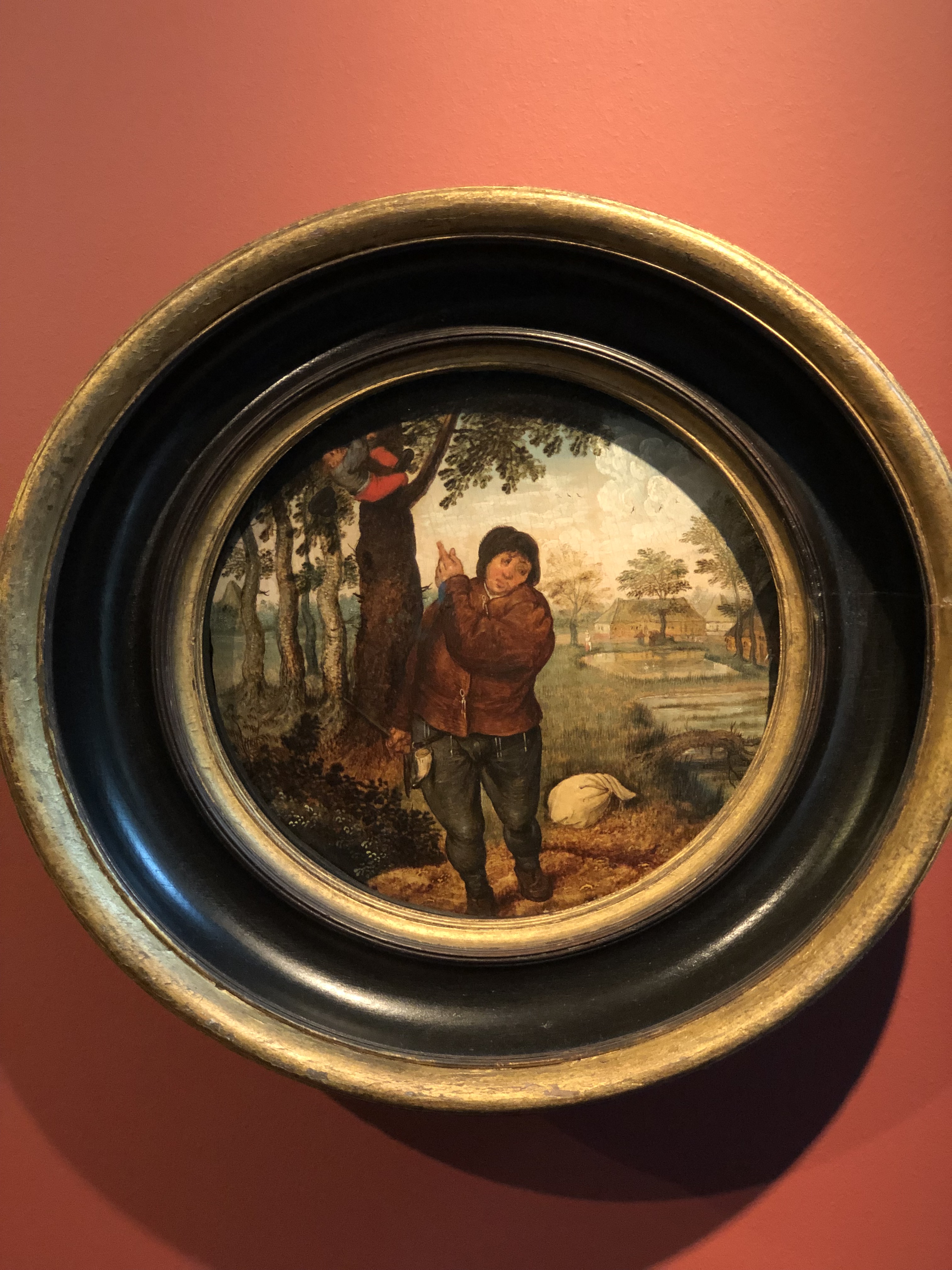


Artwork: Robbing the Bird’s Nest (whole and two details)
Artist: Pieter Brueghel the Younger (1565-1638)
Medium: Oil on panel
Created: Unknown
Dimensions: 17.3 x 18 cm
Location: The Holburne Museum, Bath Spa, UK
Photography credit by 1️⃣ZebraPhotography
——————————————
“The Bruegel (later Brueghel) family of Antwerp produced four generations of artists. The dynasty’s founder was Pieter Bruegel the Elder, whose much-loved scenes of peasant life, religious subjects and intricate landscapes were made for the bourgeois and courtly collectors of Brussels and Antwerp. His humours depictions of country folk and their foibles carry allegorical and moralising messages, sometimes illustrating traditional proverbs. Bruegel’s son Pieter Brueghel the Younger always remained in the shadow of his father; he run a busy studio that mostly produced copies or imitation of his celebrated compositions.
This little oval painting is based on a lager, rectangular original painted by Pieter Bruegel the Elder in 1568 and now in the Kunsthistorisches Museum in Vienna. A stout peasant, a sack by his feet and a stick in his hand, points upwards to the nearest tree, where a man clings to a brunch as his hat falls off. He is a thief intent on robbing a bird’s nest. In the background, women go about their business among fish ponds and thatched houses, while a minute pair of white swans floats on the water. This minor incident is made telling because every detail has been depicted with such loving realism. It probably illustrates the proverb’He who knows where the nest is has the knowledge. He who robs it has the nest.’ It contrasts the restraint of one man, set firmly on the ground, with the precarious position of the thief.” Source from a book of The Holburne Museum,now in our collection after visited the museum)
—————————————-
#webgalleryoffineart #peritemuseum #webgalleryofvisualarr #ukfootwalk #1001andmore #artlover #lillynisthartistconcept #webgalleryofvisualart #theholburn
Christ the Redeemer

Artwork: Christ the Redeemer (Gèsu Redentore)
Sandro BOTTICELLI (1444 /1445 – 1510)
c.1495-1505
Medium: tempera and gold on wood panel
Dimensions: 47.6 (h) x 32.3  cm
cm
Current location: Accademia Carrara, Bergamo, Italy
(Bequest of Giovanni Morelli 1891)
————————————
#lillynisthartistconcept #webgalleryofineart #webgalleryofvisualart #christian
Embarkation for Cythera

Artwork: Embarkation for Cythera
Artist: Jean-Antoine Watteau, French painter (Born: 10 October 1684-Died: 18 July 1721)
Created: 1717
Period: Rocco
Subject: Fête galante
Medium: Oil on canvas
Dimensions: 129-194 cm
Current location: Louvre Museum, Paris, France
Source photography, Wikipedia
—————————
“Peinture, to whom he presented as morceau de réception in 1717 the so-called Embarkation for Cythera which really shows pilgrim lovers leaving Cythera after having paid their vows at the island shrine of Venus.
A chain of paired-off lovers links the rose-hung term to the waiting boat, but the woman turns back sadly. Time is inexorable. The boat waits; and the lovers’ pilgrimage is over.
The handling of the paint is like that of Rubens turned miniaturist, with its nervously silken touch on the clothes, the foliage, the Claude-like mists which swirl about the distant sea and peaks. Elegant, artificial and half sad, the picture is yet as it were the rosiest possible view of eighteenth-century society.”(ML)
——————
#1transcribedtext #lillynisthartistconcept #1essco #oiloncanvas #louvremuseum #rocco #1001andmore
The Supper at Emmaus

Artwork: The Supper at Emmaus
Artist: Caravaggio (Michelangelo Mersi)
Created: 1606
Medium: Oil on canvas
Dimensions: 141 x 175 cm
Description: In collection from 1939
Current location: Pinacoteca di Brera, Milan, Italy
————————-
Author: STEFANO ZUFFI E DAVIDE TORTORELLA
English / USA Language: English / USA
The painting Supper at Emmaus has been in this new location of the Art Gallery since the end of 2016, placed here carefully with special lighting that enhances it perfectly. This masterpiece is by Caravaggio, the great Lombard artist; in Milan you can also admire his magnificent early work, Basket of Fruit, which is displayed at the Ambrosiana Art Gallery.
This work coincides with a delicate moment in the painter’s life: it was the summer of 1606. At the age of 35 years, Caravaggio was living in Rome, where he was finally reaching fame and success, when suddenly everything changed. The painter was involved in a fight during which he killed a rival and was forced to flee. Moreover, he was in turn badly wounded in the fight as well. From this moment on he was sought after as a murderer and was forced to live as a fugitive. Caravaggio probably worked on the painting when he was hiding in the country estates of the Colonna princes, his protectors, while waiting to heal and move to Naples….
———————
#italianartandartists #webgalleryoffineart #webgalleryofvisualart #pinacoteca #wikipedia #oiloncanvas #culture #education #lillynisthartistconcept
Christ and the Samaritan Woman

Artwork: Christ and the Samaritan Woman
Artist: Annibale Carracci
Created: between 1593-1594
Medium: Oil on canvas
Dimensions: 170 x 225 cm
Description: In collection from 1811
Location: Pinacoteca di Brera, Milan, Italy
Photography from Pinacoteca di Brera
————————
“Francesco Sampieri, a resident of Bologna who had fallen on hard times, sold the family picture gallery in 1811. The seven masterpieces that were the pride of the collection were bought by the Kingdom of Italy’s interior minister for the Brera. This picture, together with Agostino’s Christ and the Woman Taken in Adultery and Ludovico’s Christ and the Canaanite Woman, belonged to a small series commissioned by Abbot Astorre Sampieri. Annibale painted the picture before going to Rome in 1595.(Pinacoteca di Brera)
————————
#pinacotecadibrera #wikipedia #lillynisthartistconcept #artloveenjoylife #museum #webgalleryofvisualart #webgalleryoffineart #italianartandartists
Paleolithic Cave Art

C. 40,000 BCE
Paleolithic Cave Art
Unknown
————————
Powerful works of art drawn by prehistoric humans
————————
“Paleolithic cave art is a form of art dating back at least 40,000 years and distributed over a vast geographical area, from Europe, to India, to the Americans. Most of the paintings, such as those found in the cave of Lascaux in France, depict large equine animals: horses, cows, aurochs, and deer, as well as outlines of human hands. Curiously, full depictions of humans are absent in European cave art, but prevalent in African cave art.
The caves themselves tend to be in places that are not easily accessible.
There are many theories about the origin of cave art.
Henri Breuil (1877-1961) theorized that, given the number of large animals depicted in the artworks it was likely an instance of “hunting magic” intended to increase the number of wild game hunted by early humans and
“Seeing [the paintings] was startlingly intense . . . there was much . . . I hadn’t expected.”
Gregory Curtis, The Cave Painters (2006)
Neanderthals. Another theory identifies cave art with early shamanistic rituals, perhaps, in some locations, involving the use of hallucinogenic substances. And some researchers have suggested that art may even have been an early form of animation.
Cave art seems to have emerged at the same time as modern Homo sapiens. However, we must not be too quick to attribute its existence to this development.
Evidence suggests that at least some of the cave art in Europe was produced by Neanderthals. The art is a powerful visual link to our prehistory. And, as noted by Pablo Picasso, it tells us something about the art and culture.
It is the art that humans produced when there were no traditions or rules of representation to tell them how art and culture must be produced.” (APT)
———————-
#1transcribedtext #prehistory #1001beforeyoudiecollection #1001beforeyoudiecollections #1001andmore
—————————-
⬆️The paintings in the Lascaux caves in France are estimated to be 16,000 years old.
Withypool Triptych

Artwork: Withypool Triptych
Artist: Antonio da Solario
Created: 1514
Medium: Oil on canvas & oil on panel
Dimensions: No description
Location: Bristol Museum and Art Gallery
Photography by @art_love_enjoy_life
——————————
“The English merchant Paul Withypool ( died 1547) may have commissioned this altarpiece from Antonio Solario while he was on business in Italy. In the centre the Holy Family are depicted with Withypool inside a simple chamber with two windows operating the view on to a distant landscape. Clutching a goldfinch, symbolic of ‘the Passion’, the Christ child lies on a marble slab. In the right bottom corner a painted piece of parchment reads: “Orate pro anima Pauli Withipol” (Pray for the Soul of Paul Withypool).(NGAL)
——————————-
#bristol #webgalleryofvisualart #webgalleryoffineart #lillynisthartistconcept #ukfootwalk🇬🇧 #bristolmuseum #bristolmuseumandartgallery #culture #education
The Little Cooks
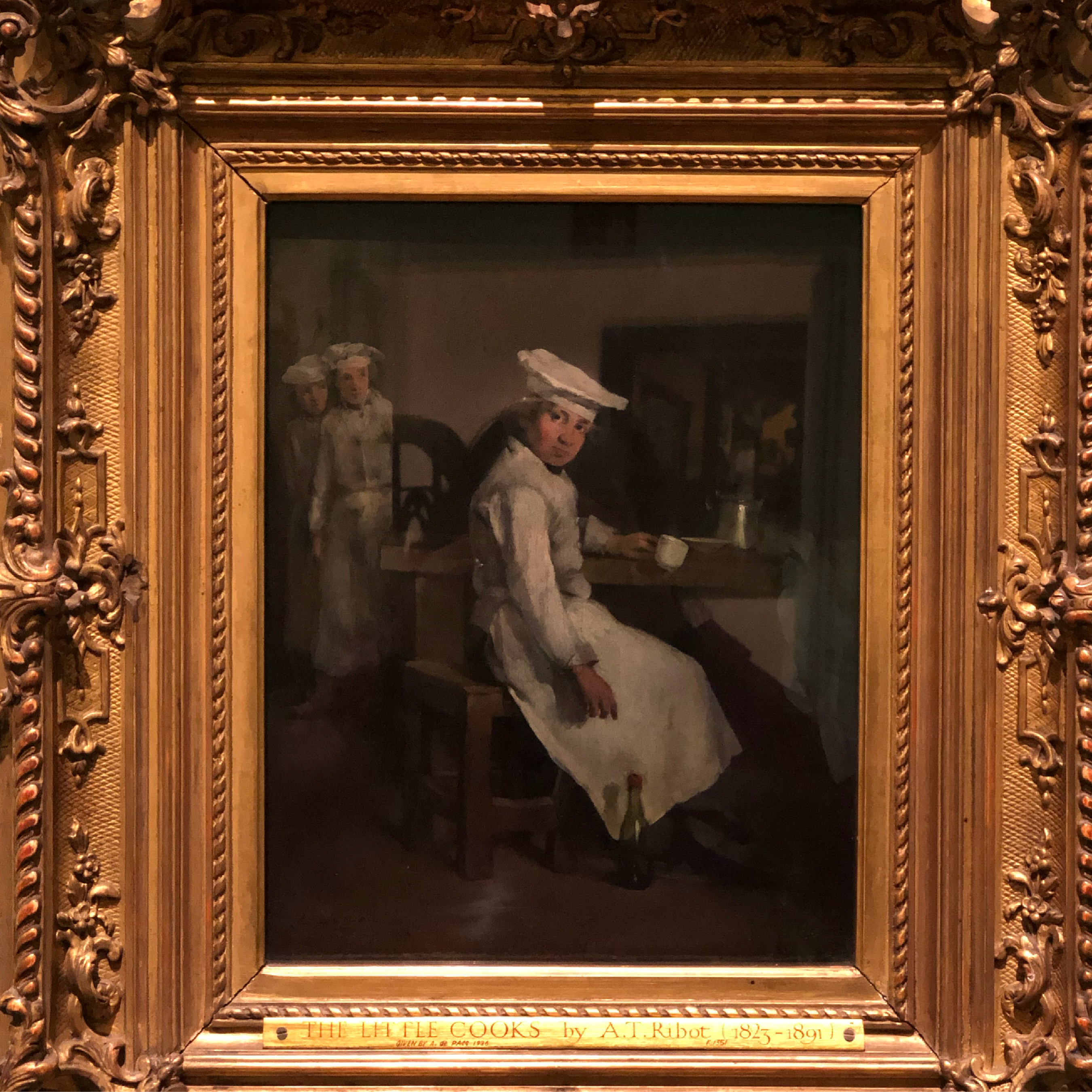
Artwork: The Little Cooks
Artist: Augustin Théodule Ribot (French artist, 1823–1891)
Created: 1870
Medium: Oil on oak panel
Dimensions: H 27.7 x W 21.5 cm
Location: Bristol Museum and Art Gallery
Photography by LillynisthArtist’s
—————————
#artloveenjoylife #lillynisthartistconcept #webgalleryofvisualart #webgalleryofvisualarr #webgalleryoffineart #bristolmuseum #bristolmuseumandartgallery #bristol #ukfootwalk🇬🇧
The Wilton Diptych
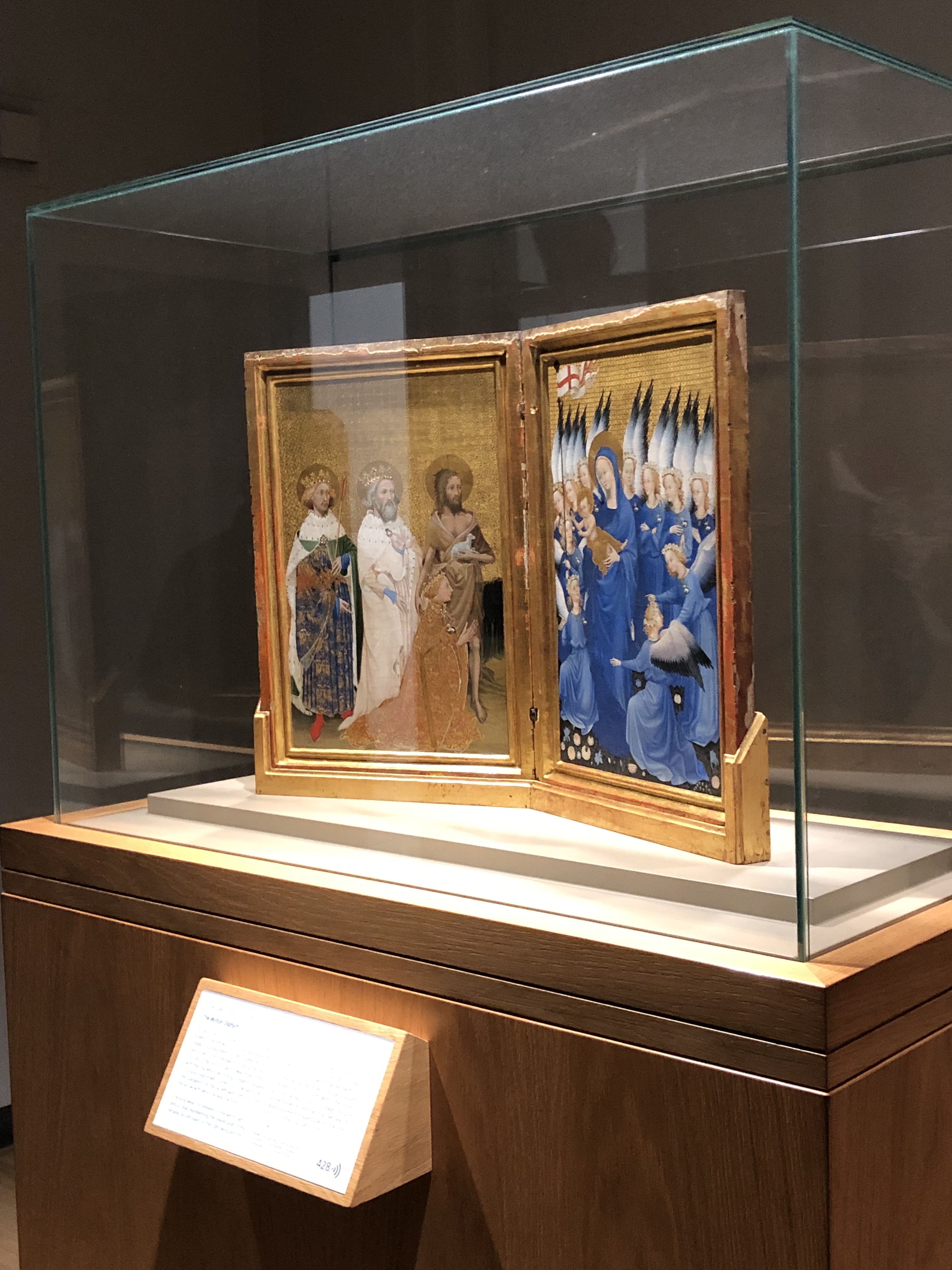
Artwork: The Wilton Diptych
————————
Artist: Unknown
Created: c. 1399
Medium and Techniques: Egg tempera on oak
Dimensions: 57 x 29 cm (each panel)
Location: National Gallery, London, UK
————————-
Photo ©️ Costanza-Lillyanne Essco (LillynisthArtist’s)
————————-
“Richard II Presented to the Virgin and Child by his Patron Saint John the Baptist and Saints Edward and Edmund is commonly known as The Wilton Diptych, which takes its name from Wilton House, the seat of the Earl of Pembroke, where the painting was once housed.
Consisting of two hinged panels, a diptych was a portable altarpiece, which its owner would carry on journeys and unfold as an aid to private prayer. This example was created for the ill-fated English monarch Richard II (reigned 1377-99). The unknown artist has represented the somewhat effeminate king kneeling, in the left hand panel. The figures behind him are recognizable by their emblems. John the Baptist, Richard’s patron saint, carries a lamb while Edmund the Martyr holds one of the Danish arrows that killed him, and Edward the Confessor has a ring. These holy men are presenting the king to the Virgin Mary, the infant Jesus, and the angels. The painting is scattered with the king’s personal emblem – the white stag – worn by the angels as well as the king himself. An angel holds what may be the banner of St. George, and in the silver globe atop the staff floats a tiny image of Britain. The diptych emphasized the sanctity bestowed on the monarch by God, but also provided a salutary warning against the vanity of kings. It is one of the finest examples of the graceful International Gothic style, prevalent in Europe at that time, and is a superb relic of a unique period in European art. It is also a very rare survivor of England’s lost Catholic heritage.”(RG)
———————————
#1001beforeyoudiecollections #1001beforeyoudiecollection #1transcribedtext #1essco #arthistory #webgalleryofvisualart #webgalleryoffineart #artloveenjoylife #nationalgallerylondon

Dada Influences
——————-
Sculpture name: Signe
Artist: Victor Brauner (Romanian, 1903–1966)
Created: 1942
Materials and Techniques: White marble sculpture
Dimensions: High 31 cm
Location: Cimetière de Montmartre, Paris
Victor Brauner was a Romanian sculptor and painter of surrealistic images. Upon settling in Paris in 1930, Victor Brauner established a deep friendship with the artist Yves Tanguy, who introduced him to the Surrealist circle. Three years later, Brauner joined the group with the support of Tanguy, and his 1934 solo show at the Galerie Pierre, for which André Breton wrote the catalogue introduction, solidified his position. Like other Surrealists of the period, such as Salvador Dalí and René Magritte, Brauner was inspired by dreams, the unconscious, and mysticism, as well as diverse religions and ancient mythologies.
This here is Brauner’s most famous surrealist sculpture, and the one which he chose to adorn his tombstone in Paris’ Montmartre Cemetery, where you can see it today.
——————————————–
#worldofsculpturee #webgalleryoffineart #webgalleryofvisualart #webgalleryofvisualarr #Wikipedia #dadalegacyinfluences
Portrait of a Russian Girl

Artwork: Portrait Of A Russian Girl In A Blue Dress And Headdress
Artist: Pietro Antonio Rotari (1707-1762)
Created: 1750s
Medium: Oil on canvas
Dimensions: 43 x 33 cm
Location: Private collection
—————————-
“During his stay in Vienna, Rotari was exposed to the work of Jean-Etienne Liotard, whose porcelain-like portrait style would influence his work for the rest of his career. This influence can be seen in the portrait of a Russian girl in a blue dress and headdress which he executed in Russia where he was employed as court painter to Empress Elizabeth I.”(© Web Gallery of Art)
—————
#webgalleryofvisualarr #webgalleryofvisualart #webgalleryoffineart #wikipedia #portraitpainting #privatecollection
Woman with Parasol

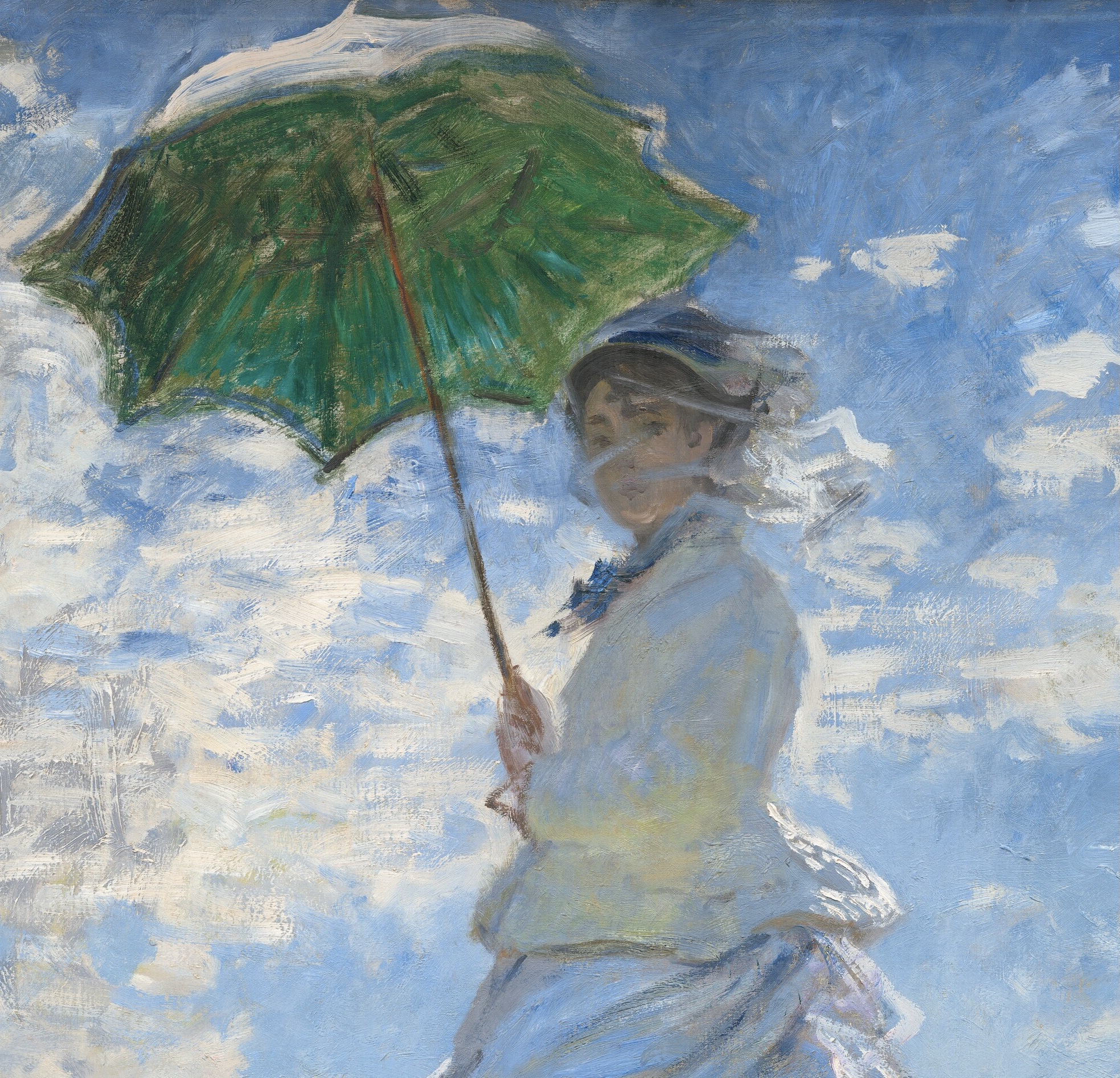
Artwork: Woman with a Parasol – Madame Monet and Her Son
Artist: Claude Monet
Created: 1875
Medium: Oil on canvas
Dimensions: overall: 100 x 81 cm (39 3/8 x 31 7/8 in.)
framed: 119.4 x 99.7 cm (47 x 39 1/4 in.)
Credit Line: Collection of Mr. and Mrs. Paul Mellon
Location: National Gallery of Art, Washington, D.C., USA
(Source image https://www.nga.gov/collection)
————————————
“With Manet’s assistance, Monet found lodging in suburban Argenteuil in late 1871, a move that initiated one of the most fertile phases of his career. Impressionism evolved in the late 1860s from a desire to create full–scale, multi–figure depictions of ordinary people in casual outdoor situations. At its purest, impressionism was attuned to landscape painting, a subject Monet favored. In Woman with a Parasol – Madame Monet and Her Son, his skill as a figure painter is equally evident. Contrary to the artificial conventions of academic portraiture, Monet delineated the features of his sitters as freely as their surroundings. The spontaneity and naturalness of the resulting image were praised when it appeared in the second impressionist exhibition in 1876.
Woman with a Parasol was painted outdoors, probably in a single session of several hours’ duration. The artist intended the work to convey the feeling of a casual family outing rather than a formal portrait, and used pose and placement to suggest that his wife and son interrupted their stroll while he captured their likenesses. The brevity of the moment portrayed here is conveyed by a repertory of animated brushstrokes of vibrant color, hallmarks of the style Monet was instrumental in forming. Bright sunlight shines from behind Camille to whiten the top of her parasol and the flowing cloth at her back, while colored reflections from the wildflowers below touch her front with yellow.”(Source NGA)
#wikipedia #webgalleryofvisualarr #webgalleryofvisualart #webgalleryoffineart #museum #nationalgalleryofart #artloveenjoylife #lillynisthartistconcept #lillynistart
Oba with Animals

Sculpture name: Oba with Animals
Artist: Benin Kingdom (Nigeria, 1180-1897)
Created: c. 1800
Materials and Technique: Brass sculpture
Dimensions: 33 x 33 cm
Location: The Metropolitan Museum of Art, New York (Gift of Mr. & Mrs. Klaus Perls), NY, USA
“In the kingdom of Benin, ikegobo, or “altars to the hand,” celebrate the accomplishments of exceptional individuals. The hand is associated with action and productivity, and is considered the source of wealth, status, and success for all those who depend on manual skill and physical strength. Altars of this kind are commissioned in terracotta, wood, or brass, depending on the status of the patron.
This ikegobo is an important historical document associated with the reign of Akenzua I. In the early eighteenth century, rebellious chiefs challenged Akenzua’s leadership and threatened the unity and stability of the kingdom. Ehenua, Akenzua’s ezomo or military commander, played a central role in defeating these forces and restoring order to the kingdom. In recognition of his heroism and service, Akenzua presented Ehenua with an ikegobo illustrating his military triumph.
The artist who created this work, composed of a series of units, used costume, scale, and composition to denote the relative status of the figures depicted on the frieze. A monumental image of Ehenua, dressed in full military regalia and clutching trophies of war, appears at the center of a group of diminutive soldiers, attendants, and priests. Two rows of musketeers above the frieze include Portuguese soldiers, an indication of the degree to which European powers were engaged in the support of Benin’s leadership at this time. A separately cast sculptural group sitting in front of these soldiers portrays Oba Akenzua in the act of performing sacrifices to his ancestors so that Ehenua will prevail and triumph over his adversaries. Finally, a carved ivory tusk, now missing, was fitted onto the brass peg between the soldiers.
While most Benin art left the kingdom as a result of the British Punitive Expedition of 1897, Ehenua’s ikegobo remained in Benin in the possession of his descendants, who inherited the ezomo title. Its regular use across generations is a testament to its continued relevance and vitality.” (Source from the MMA website)
—————————
#worldofsculpturee #webgalleryoffineart #webgalleryofvisualart #webgalleryofvisualarr #artloveenjoylife #sculpturelovers #lillynisthartistconcept #metropolitanmuseumofart #Wikipedia
The Betrayal of Christ

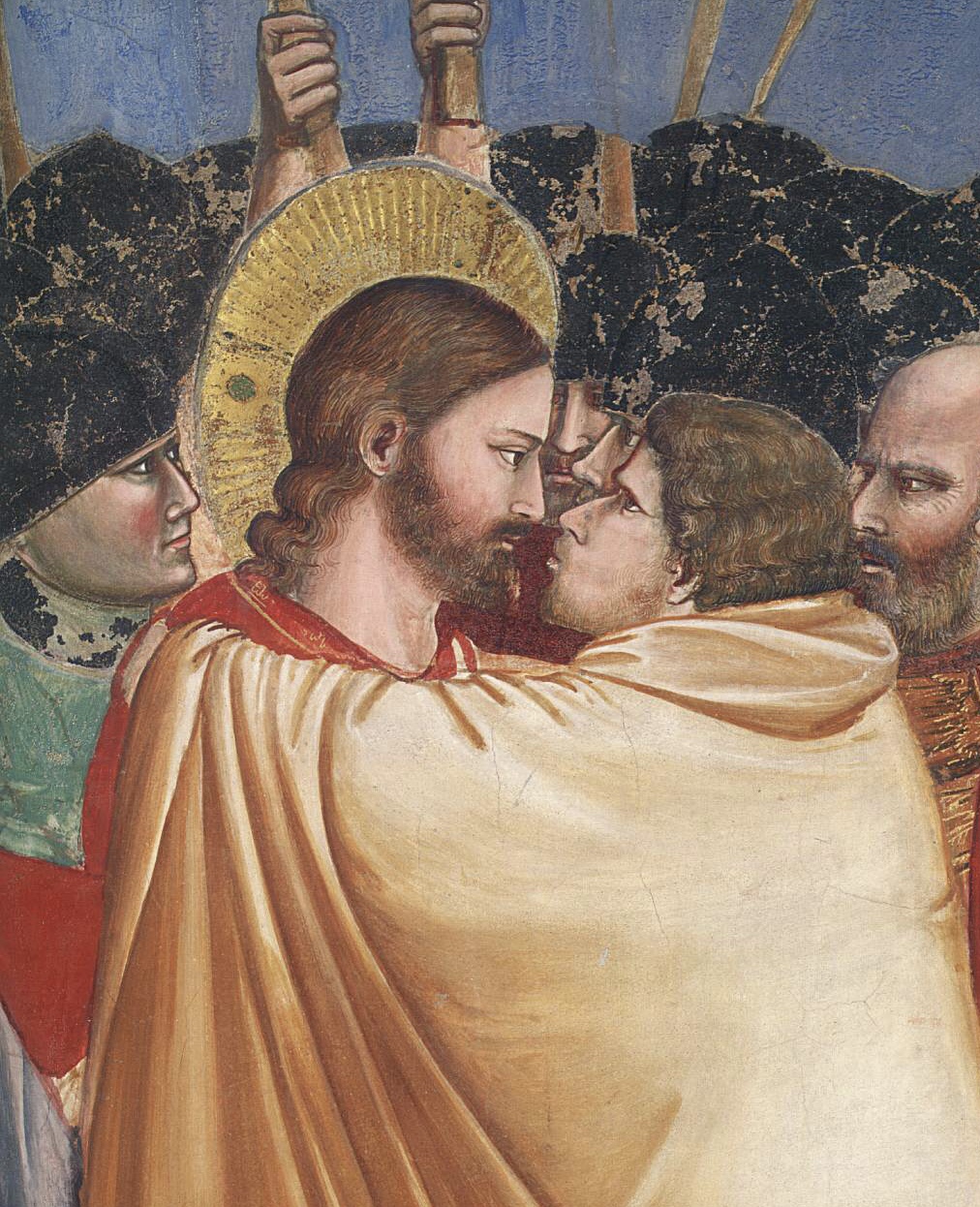
Artwork: The Betrayal of Christ (whole and detail)
Artist: Giotto
Created: 1304-06
Medium: Fresco
Dimensions: 200 x 185 cm
Location: Capella degli Scrovegni (Arena Chapel), Padua, Italy
——————-
“The fresco cycle by Giotto di Bondone (c. 1270-1337) in the Capella degli Scrovegni is one of the most important masterpieces of Western art. While the upper register depicts the story of Joachim and Anna, the parents of the Virgin Mary, the lower two registers the chapel narrate the life and Passion of Christ. Giotto’s Betrayal of Christ is on the the south wall.
What perhaps distinguishes The Betrayal of Christ is Giotto’s singular emphasis upon the confrontation between Christ and Judas. Directly to the left of the two protagonists, Giotto places the figures of Peter and the soldier Malchus. According to scripture, Peter cut off Malchus’s ear in an uncharacteristic moment of rage. Christ having miraculously healed the soldier, warned that those who live by the sword will ultimately perish by it. However, this scene assumes a secondary role in relation to the meeting between Christ and his traitor. As with the artist’s treatment of other episodes in Christ’s life the emotional gravitas of this scene appears to hinge upon a psychologically charged moment between two people. According to the Gospels, Judas identified Christ to the soldiers by means of a kiss. The two figures are shown in profile; while Judas looks directly up into the eyes of Christ, Christ reciprocates Judas’s stare with an unflinching look that shows neither indifference nor revulsion but humility – even compassion – for his betrayer.
By depicting Christ this way, Giotto ensures that he remains a steadfast symbol of moral certitude amid the clamor of accusation, deceit, and betrayal.”(CS)
——————-
#1001beforeyoudiecollection #1001beforeyoudiecollections #1transcribedtext #lillynisthartistconcept #artloveenjoylife #christ #giotto #betrayal #wikipedia #detail #webgalleryofvisualart #webgalleryoffineart
The Lament of Icarus

Look at how beautifully, these wings are represented!
Artwork: The Lament for Icarus
Artist: Herbert James Draper
Created: 1898
Medium: Oil on canvas
Dimensions: Support: 1829 × 1556 mm (182.9 x 155.6 cm)
frame: 2400 × 2185 × 240 mm (240 x 218.5 x 24 cm)
Location: Tate Britain, Location, UK
——————————-
“Icarus’s father, the inventor Daedalus, made wings that allowed them to fly away from their island prison. The exhilarated Icarus forgot warnings and soared too close to the sun, melting the wax that secured the feathers, and he fell to his death. Charles Darwin’s publication of On the Origin of Species in 1859 gave an optimistic picture of the present and future evolution of humankind, but it also introduced ideas of a deep and obscure past. Art and literature took up this theme of origins, man’s mythical history and struggles between animal and human nature.”
Gallery label, February 2016
———————————————-
(Source photography Tate-Wikipedia)
#nakedwomenandmaleinart #webgalleryofvisualarr #webgalleryofvisualart #lillynisthartistconcept #artloveenjoylife #wikipedia
The Meeting at the Golden Gate
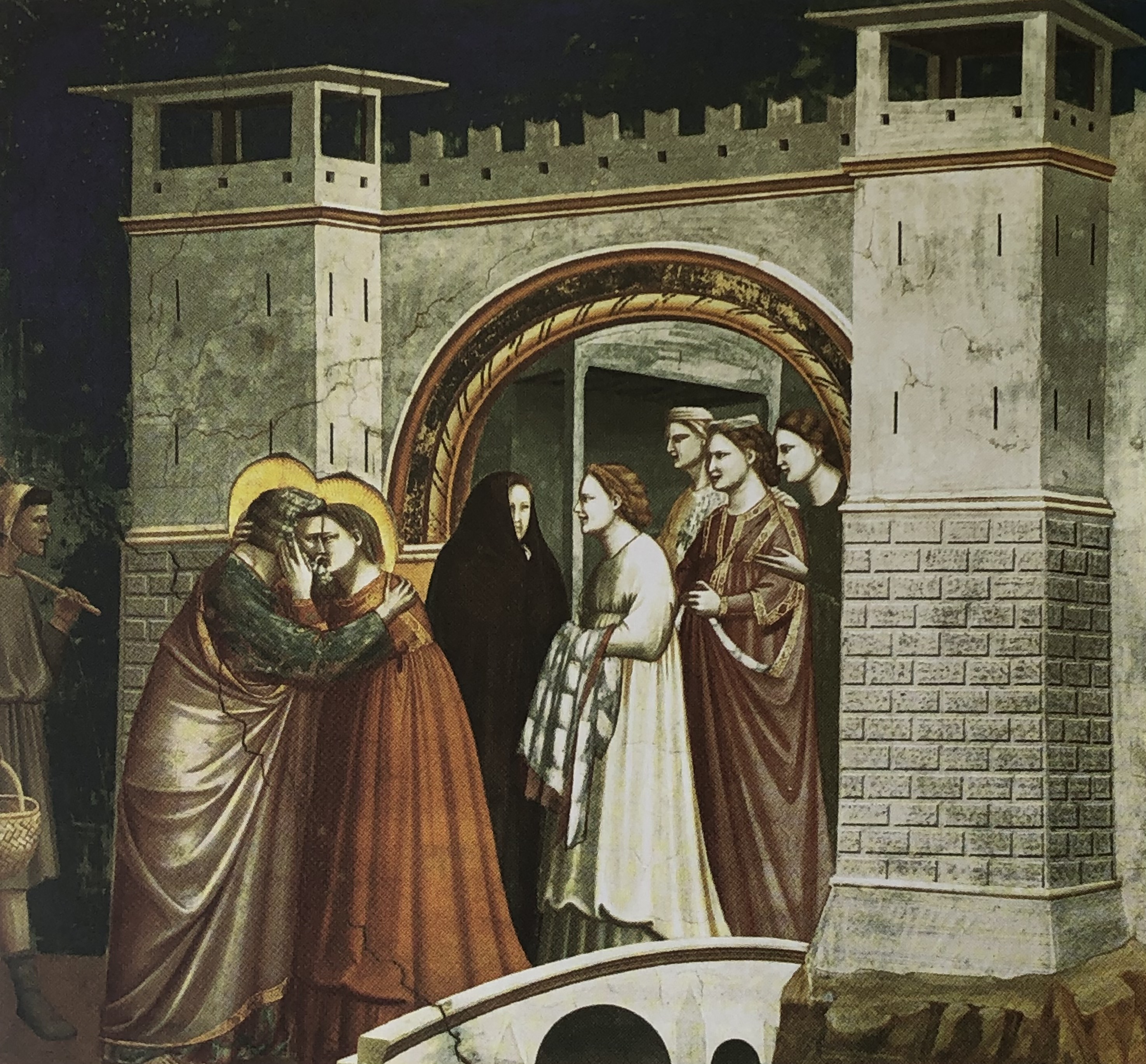
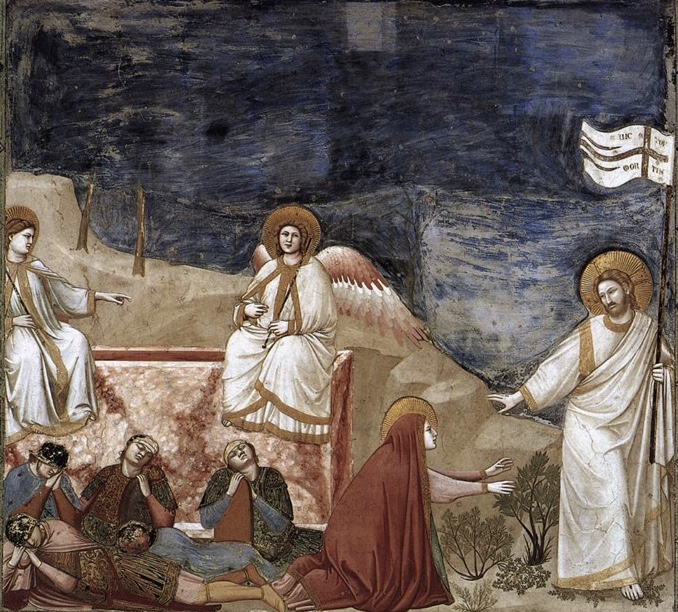

Artwork: The Meeting at the Golden Gate (whole and detail)
Artist: Giotto
Created: 1304-06
Medium: Fresco
Dimensions: 200 x 185 cm
Location: Capella degli Scrovegni (Arena Chapel, Padua, Italy
——————
“Many of the episodes depicted within the Capella degli Scrovegni (Arena Chapel) fresco cycle hinge upon a moment of heightened emotional tension, either given in the context of some form of a departure, as in the case of The Expulsion of Joachim from the Temple, also by Giotto di Bondone (c. 1270-1337), or entailing some from of encounter or meeting. The Meeting at the Golden Gate, which forms the last episode in the top register on the south wall is an example of the latter and and what Giotto manages to achieve, in an exemplary manner, is to imbibe the scene with a sense of truthfulness and intimacy. Immediately prior to this moving meeting between Joachim and his wife Anna, Joachim, while sleeping, receives a vision from from an angel who had told him that his wife had convinced a daughter, Mary. That particular episode, The Vision of Joachim, is depicted immediately prior to The Meeting. Joachim is then told to go and meet his wife at the Golden Gate of Jerusalem. Giotto captures a powerful captivating sense of intimacy as Joachim confides in his wife the miraculous news he has recently been told. The two figures from a single, symmetrical pyramid as they embrace. As well as conveying a sense of stability, this also sets, Joachim and Anna, to a certain extent, apart from the group of onlookers immediately to their left. What is particularly impressive is Giotto’s ability to depict a powerful emotional scene while also foreshadowing the magnitude of events that are yet to come.”(CS)
—————————-
#1001beforeyoudiecollection #1001beforeyoudiecollections #1transcribedtext #giotto #artloveenjoylife #lillynisthartistconcept #biblical #wikipedia
Forest of Fontainebleau

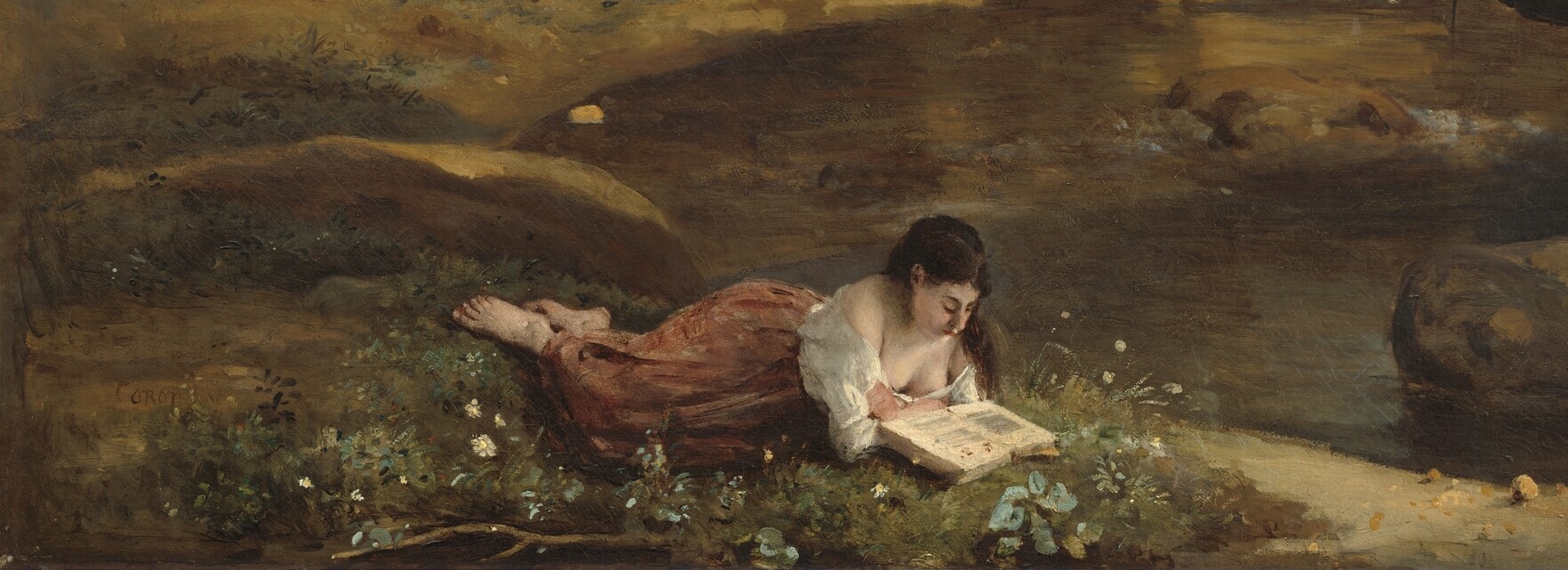

Artwork: Forest of Fontainebleau (whole and details)
Genre: Landscape
Artist: JEAN-BAPTISTE-CAMILLE COROT
Created: 1834
Medium:,Oil on canvas
Dimensions: 175.6 x 242.6 cm
Location: National Gallery of Art, Washington, D.C., USA
(Source photography Wikipedia)
—————————-
“The impressionist style developed as a method to render more accurately the appearance of the natural world, and was principally a technique for landscape painting. Corot, whose career began in the late 1820s when the academic tradition of landscape painting was being revived, was one of the most prolific and influential exponents of the genre. Forest of Fontainebleau, painted for and exhibited at the Salon of 1834, is a historic landscape, the hybrid category devised to elevate the status of landscape painting by combining with it the subjects of history painting. Although Corot’s principal subject here was landscape, contemporaries readily identified the reclining woman in the foreground as Mary Magdalene. Her unbound hair and peasant costume, the deer in the background, and her solitude in the wilderness are traditional attributes of the saint.
In accord with academic training, Forest of Fontainebleau was created in the studio on the basis of sketches and studies that had been painted outdoors. The artist’s humble attitude toward nature, unostentatious compositions, responsive paint handling, and conscientious clarity and freshness of vision distinguish his work from the formulaic landscapes of academic contemporaries. Corot declined to participate in the first impressionist exhibition, but his pervasive influence was manifest in works by pupils and followers including Pissarro, Morisot, Renoir, Monet, and Sisley.”(NGAW)
——————————-
#webgalleryofvisualart #webgalleryofvisualarr #webgalleryoffineart #artloveenjoylife #lillynisthartistconcept #wikipedia #landscapepainting
The Emperor Napoleon in his Study


Artwork: The Emperor Napoleon in his Study at the Tuileries (whole and detail)
Artist: Jacques-Louis David
Created: 1812
Medium: Oil on canvas
Dimensions: 203.9 x 125.1 cm
Location: National Gallery of Art, Washington, D.C., USA
————————————-
The entire portrait of Napoleon was commissioned by Alexander, Marquis de Douglas, aspirant to the throne of Scotland out of a desire to have a gallery of portraits of the crowned heads of Europe.
It is not known for sure that the painter did the work benefiting from meetings with Napoleon himself, but one thing is certain, this work is a masterpiece.
————————————-
#webgalleryofvisualart #webgalleryofvisualarr #webgalleryoffineart #artloveenjoylife #lillynisthartistconcept #museum #wikipedia
Soap Bubbles

Artwork: Soap Bubbles
Artist: Jean-Baptiste-Siméon Chardin
Created: ca. 1733-1734
Medium: Oil on canvas
Dimensions: 93 x 74.6 cm
Location: National Gallery of Art, Washington, D.C., USA
—————————
“The idle play of children was a favorite theme of Chardin, a naturalist among painters. Here he drew inspiration from the seventeenth-century Dutch genre tradition for both the format and the subject. While it is not certain that he intended the picture to carry a message, soap bubbles were then understood to allude to the transience of life. Chardin often painted successful compositions in multiples: later versions of Soap Bubbles belong to the Los Angeles County Museum and to the National Gallery of Art, Washington.”
Source photography: NGA
———————-
#webgalleryofvisualart #webgalleryofvisualarr #webgalleryoffineart #nationalgalleryofart #themet #artloveenjoylife #lillynisthartistconcept #wikipedia
St. Francis Receiving the Stigmata

Artwork: St. Francis Receiving the Stigmata
—————
Artist: Giotto
Created: 1297-99
Medium: Fresco
Dimensions: 270 x 230 cm
Location: Basilica di San Francesco, Assisi, Italy
——————
“Giotto di Bondone (c. 1270-1337) worked in Tuscany, Naples, northern Italy, and possibly in France. A friend of kings of popes, and Grand Master of Florence, his name was renowned. This is one of twenty-eight frescoes depicting the Legend of Saint Francis in the Upper Church in San Francesco, twenty-five of which were by Giotto. Initially an apparence of Cimabue, Giotto later took over the painting of the frescoes, which are his earliest known work in the medium.
Each fresco depicts an event in the saint’s life.
St. Francis Receiving the Stigmata shows the saints having an apparition of an angel with six wings, and the crucified figure. After the vision, his hands and feet received the stigmata — the marks of Christ’s crucifixion. In Giotto’s rendition of the scene, rays from the vision fall onto St. Francis’s hands and feet. The rocky landscape glows with the light of revelation.
Without a technical knowledge of perspective or anatomy, Giotto indicates space and, in the seated monk particularly, weight. In his later frescoes he fully explores the transmission of human emotions beyond the rhetoric of gesture, which inspired other Renaissance artists. Giotto left behind the rigid stylization of medieval art and broke new ground in terms of realism. In his fresco painting we can see an impetus, which developed during the Renaissance into a tradition that existed until twentieth-century Cubism. In his Decameron, written twenty-two years after Giotto’s death, Boccaccio recognized that the artist had resurrected the art of painting.”(WO)-Pre-Fifteenth century
———————————
#1001beforeyoudiecollection #1001beforeyoudiecollections #arthistory #lillynisthartistconcept #artloveenjoylife #frescoes #fresco #webgalleryofvisualart
The Last Judgement

Artwork: The Last Judgment
Artist: Pietro Cavallini
———————————-
Created: 1293 (fresco detail)
Dimensions: 126 x 551 in/ 320 x 1,400 cm (full size)
Location: Church of Santa Cecillia, Rome, Italy
——————————-
“Pietro Cavallini (c. 1260-1330) was a painter and mosaic designer who worked mostly in Rome.
Cavallini’s work marks a significant development in early Renaissance art, and signals a transition from the heavy stylization of Byzantine art toward a more naturalistic and three-dimensional interpretation of figures. This detail comes from The Last Judgment, which was part of a fresco cycle in the Church of Santa Cecillia in Trastevere, Rome, and is considered to be one of his most important surviving works. The fresco in its entirety demonstrates the artist’s grasp of three-dimensional figures, which are conceived in a monumental, almost sculptural manner, while retaining something of the Byzantine past in their arrangement. Significantly, Cavallini worked with the sculptor Arnolfo di Cambio on this fresco, which in part accounts for the sculptural quality of his figures and the convincing folds of drapery. This detail depicting angels demonstrates the particularly soft and colorful palette that the artist used in the cycle, especially through his treatment of their wings. He approached the angels’ wings in an innovative manner, building up layers of dense color from dark to light to create an overall sparkling and ethereal effect.
They appear fully three~dimensional, a fact that is further emphasizes by the flat orbs of the angels’ halos. The Last Judgement had a profound effect on Giotto, the Florentine master. His Last Judgment cycle in the Arena Chapel, Padua, from c. 1305, was clearly influenced by Cavallini’s fresco.”(TP)
————————————-
#1001beforeyoudiecollection #1001beforeyoudiecollections #artloveenjoylife #lillynisthartistconcept #chapel #italianpainter #arthistory
The Five Senses

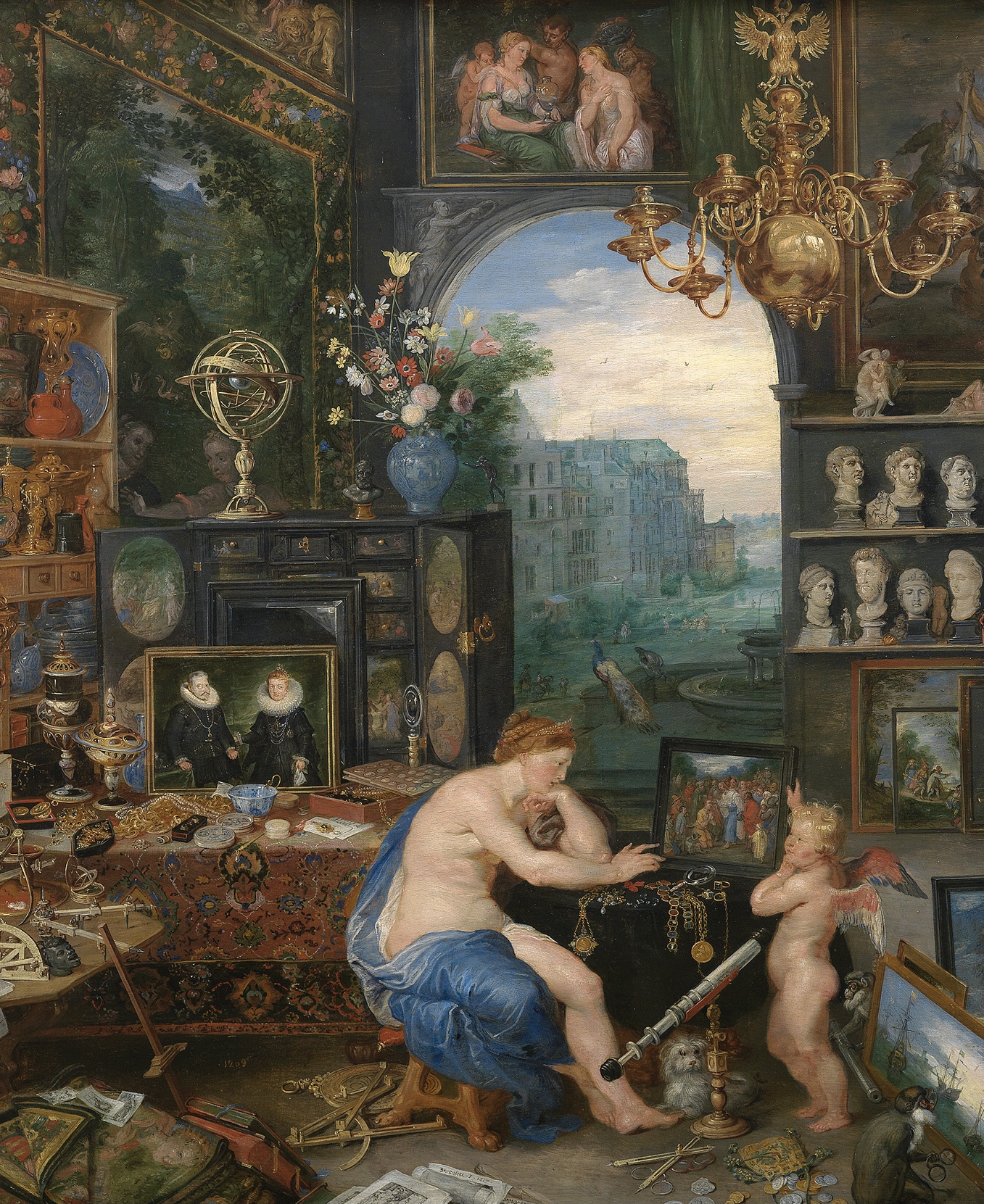
Artwork: The Five Senses (whole and detail)
Artists: Peter Paul Rubens and Jan Brueghel the Elder
Created: 1623
Medium: Oil on wood panel
Genre: Mythological painting
Dimensions: approx 65 x 110 cm (2 ft 2 in × 3 Fr 7 in)
Location: Prado Museum, Madrid, Spain
—————————————-
This painting was born with the collaboration of two great masters of Flemish painting: Peter Paul Rubens and Jan Brueghel the Elder in 1623.
The work is executed after Rubens’ return from Italy to Antwerp.
Art in Antwerp was not much changed from the time Rubens left for Italy, so Rubens is the one who revolutionized it with his ideas about painting in this city.
The style of Jan Bruegel the Elder is quite different from that of Rubens, Bruegel specializes in landscapes and still life with flowers.
——————————————
#prado #pradomuseum #webgalleryofvisualart #webgalleryofvisualarr #artloveenjoylife #nakedwomenandmaleinart #wikipedia #artlovers #rubens #bruegel
Jupiter of Smyrna

Sculpture name: Jupiter of Smyrna
Artist: Unknown
Depicted people
Created: circa 250 AD
Medium: marble
Dimensions: Height: 234 cm
Location: Louvre Museum, Paris, France
Photographer Jastrow (2006)
————————————-
Found in 1680 in Smyrna (now İzmir in Turkey), the statue was brought to Louis XIV and restored as a Zeus ca. 1686 by Pierre Granier, who added the arm raising the thunderbolt. Marble, middle 2nd century AD.
————————————-
#webgalleryofvisulart #lillynisth #artloveenjoylife #worldofsculpture #Wikipedia #louvremuseum
Video realised at Victoria And Albert Museum
Martyrdom of St. Catherine
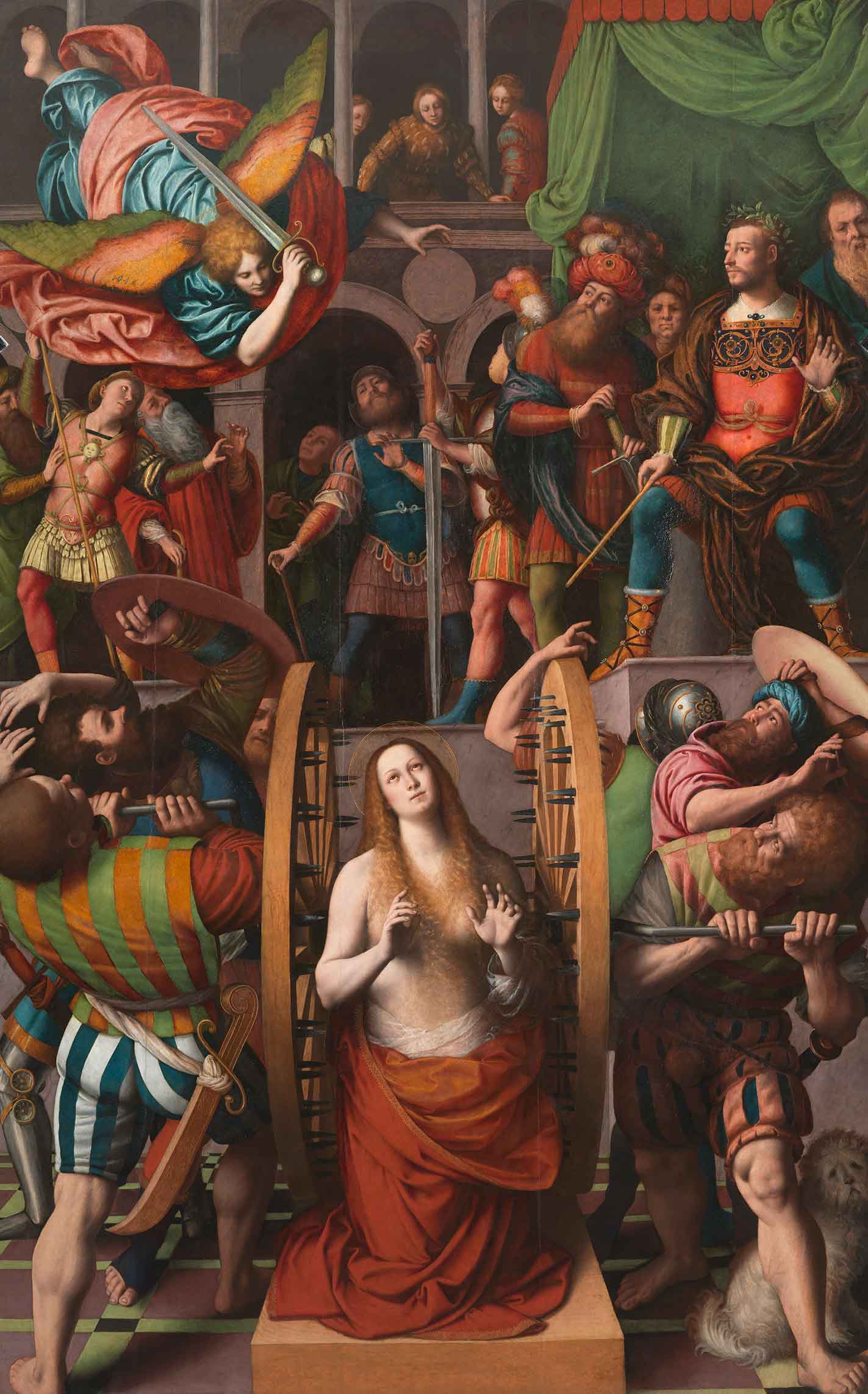
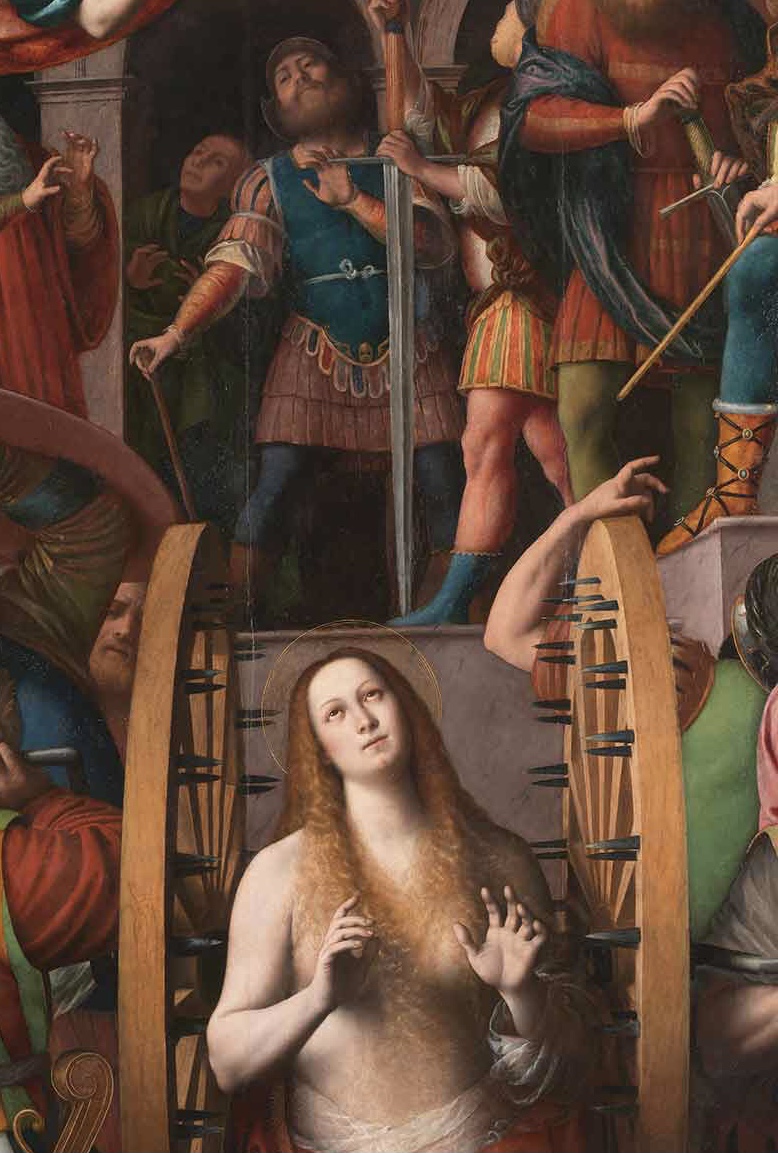
Artwork: Martyrdom of Saint Catherine (whole and detail)
Artist: Gaudenzio Ferrari
Created: between 1541-1543
Medium: Oil on panel
Dimensions: 334 x 210 cm
Location: Pinacoteca di Brera, Milan, Italy (in collection from 1829)
—————————-
“An angel descends from heaven to smash the breaking wheel torturing the saint, whom the Emperor sentenced to death for refusing to give up her Christian faith. Executioners and dignitaries in splendid clothing move with theatrical gesture in a scene set on several levels, the saint being watched by an Emperor astonished by the miracle taking place. Painted for Sant’Angelo in Milan, this is a late work by Gaudenzio revealing his overriding interest in achieving a spectacular effect.”(Pinacoteca Di Brera)
——————————-
#webgalleryofvisualart #artloveenjoylife #pinacoteca #pinacotecadibrera #musee #museum #art #painting
Portrait of Count Antonio

Artwork: Portrait of Count Antonio Porcia and Brugnera
Artist: Titian (Tiziano Vecellio)
Created: between 1535-1540
Medium: Oil on wood
Dimensions: 115 x 93 cm
Location: Pinacoteca di Brera (in collection from 1891), Milan, Italy
———————————-
“This painting, signed on the window ledge, depicts the noble Antonio di Porcia of Friuli, born c. 1508. It belongs to Titian’s mature phase as a portrait artist, a phase in which he underscored his sitters’ social status (the knight’s collar, sword and black attire) rather than highlighting only their ideal aspects as he had done in his youth. The window opens out onto a landscape with a river and mountains, a compositional formula which he had also adopted in earlier portraits. The work had been transferred from the ancestral castle of the Porcia at Pordenone to the residence of Alfonso Porcia in Milan. It was then inherited by Eugenia Litta Visconti Arese, who donated it to Brera in 1891.”(Pinacoteca di Brera)
——————————————
#webgalleryofvisualart #titian #pinacoteca #pinacotecadibrera #milano #milan #italy #artloveenjoylife
The Tribuna of the Uffizi


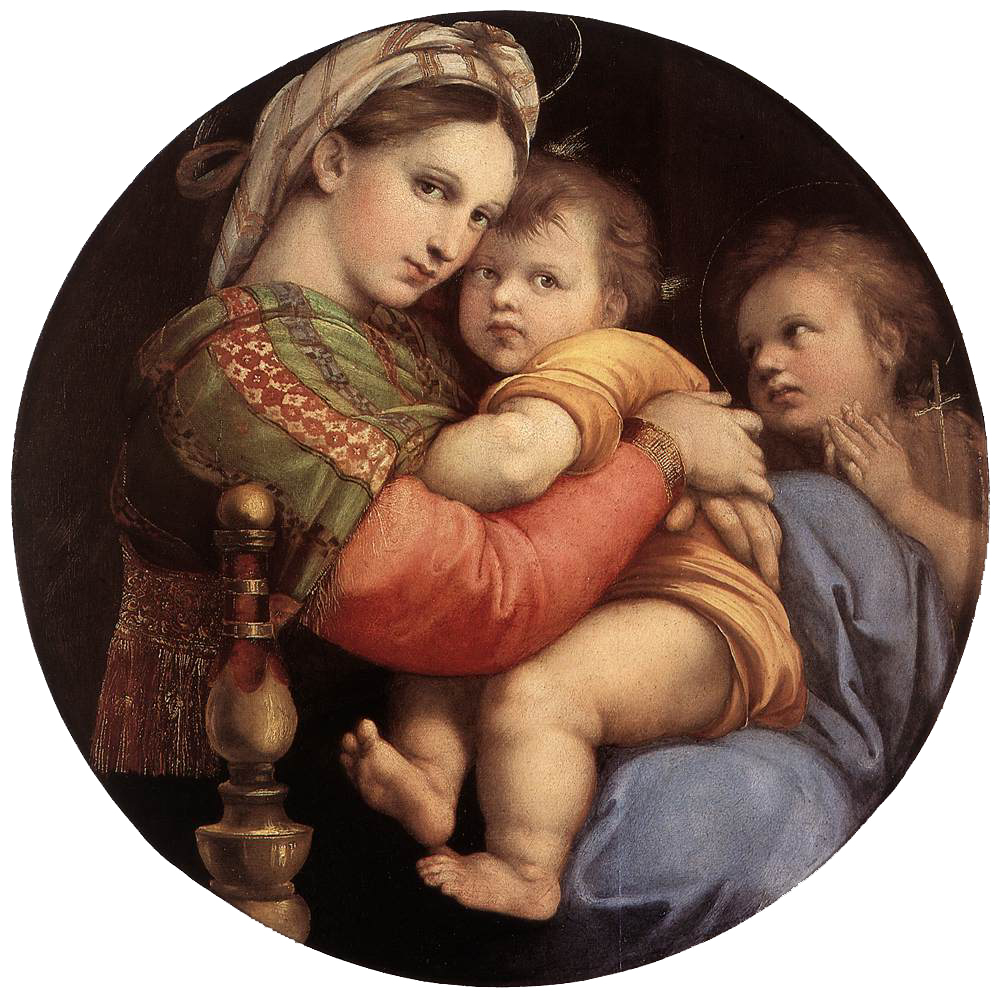


Artwork: The Tribuna of the Uffizi (whole and details)
Artist: Johan Joseph Zoffany (13 March 1733-11 November 1810)
Created: between (1772-80)
Medium: Oil on canvas
Dimensions: 123.5 × 155.0 cm
Location: The Royal Collection, Windsor Castle, Windsor, Berkshire, United Kingdom
——————————————-
“This artist has lavished immense care on the architectural features of the room: the patterned floor, the rich cornice and the decorated cupola. The neat, careful handling of paint and fresh colouring extends throughout the picture. Zoffany has painstakingly assembled paintings, sculptures and bronzes, and grouped figures around them. In fact, the artist has cheated because he has not represented the Tribuna exactly as it was in 1772, but has introduced works of art form other parts of the Medici collection, such as the Palazzo Pitti, so that the visual effect is richer; there is also a certain licence in the scattering of objects on the floor. Zoffany’s skill lies not just in the organisation of such a crowded composition, but also in the concern for texture. This is not limited to the distinction he makes between garments and the surfaces of objects such as marble, frames and fabrics, but extends to the various stylistics idioms of the paintings on the wall. Here are famous works by Rubens, Correggio, Titian, Guido Reni, Guercino, Pietro da Cortona, Hans Holbein the Younger, Annibale Carracci, and above all five works by Raphael – the apogee of art for the eighteenth-century connoisseur. In fact, the painting is really a homage to Raphael.”(text from The Royal Collection)
——————————————
#1transcribedtext #1001andmore #royalcollection #england #webgalleryofvisualart #oiloncanvaspainting #oiloncanvaspainting
Madonna of Bruges
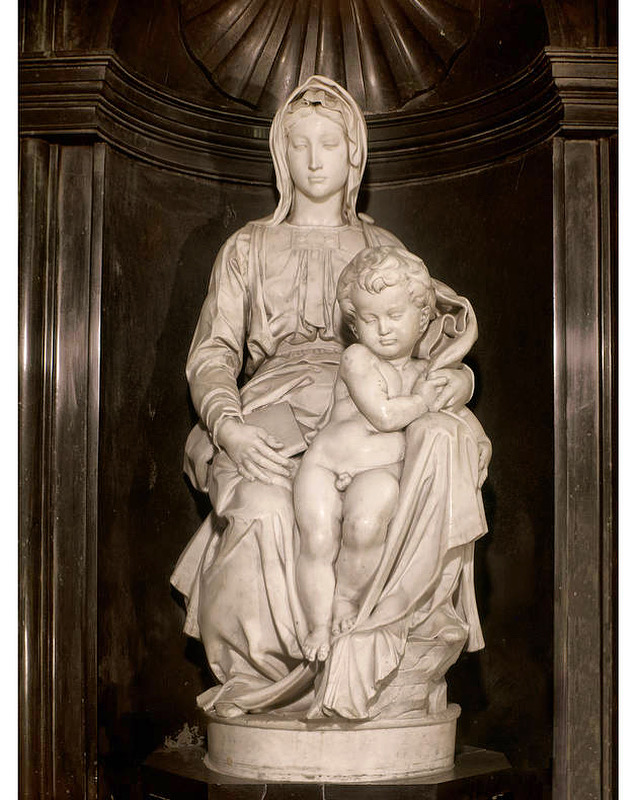
Sculpture name: The Madonna of Bruges
Artist: Michelangelo di Lodovico Buonarroti Simoni
Created: Between (1501-1504)
Dimensions: 128 cm
Location: Church of Our Lady, Bruges, Belgium
—————————-
“Michelangelo’s depiction of the Madonna and Child differs significantly from earlier representations of the same subject, which tended to feature a pious Virgin smiling down on an infant held in her arms. Instead, Jesus stands upright, almost unsupported, only loosely restrained by Mary’s left hand, and appears to be about to step away from his mother and into the world. Meanwhile, Mary does not cling to her son or even look at him, but gazes down and away, as if she knows already what is to be her son’s fate. It is believed the work was originally intended for an altar piece. If this is so, then it would have been displayed facing slightly to the right and looking down.”
——————————-
#webgalleryofvisualart #worldofsculptures #wikipedia #sculpture #artloveenjoylife #wikipedia #michelangelo
Madame Récamier David

Sculpture name: Madame Récamier David
Artist: Magritte René
Created: 1967
Material: Bronze
Dimensions: 114 x 188 x 67 cm
Location: Menil Collection, Houston, USA
——————————————-
#webgalleryofvisualarr #artloveenjoylife #1001andmore #musée #sculpting #sculptureartist #webgalleryofvisualart #renemagritte
———————————————-
René Magritte and sculpture;
All his life he was interested in sculpture, but he only started sculpting in the last year of his life. The models of the sculptures executed by the artist were cast in bronze and presented in Paris in 1968, shortly after his death.
The age of Bronze
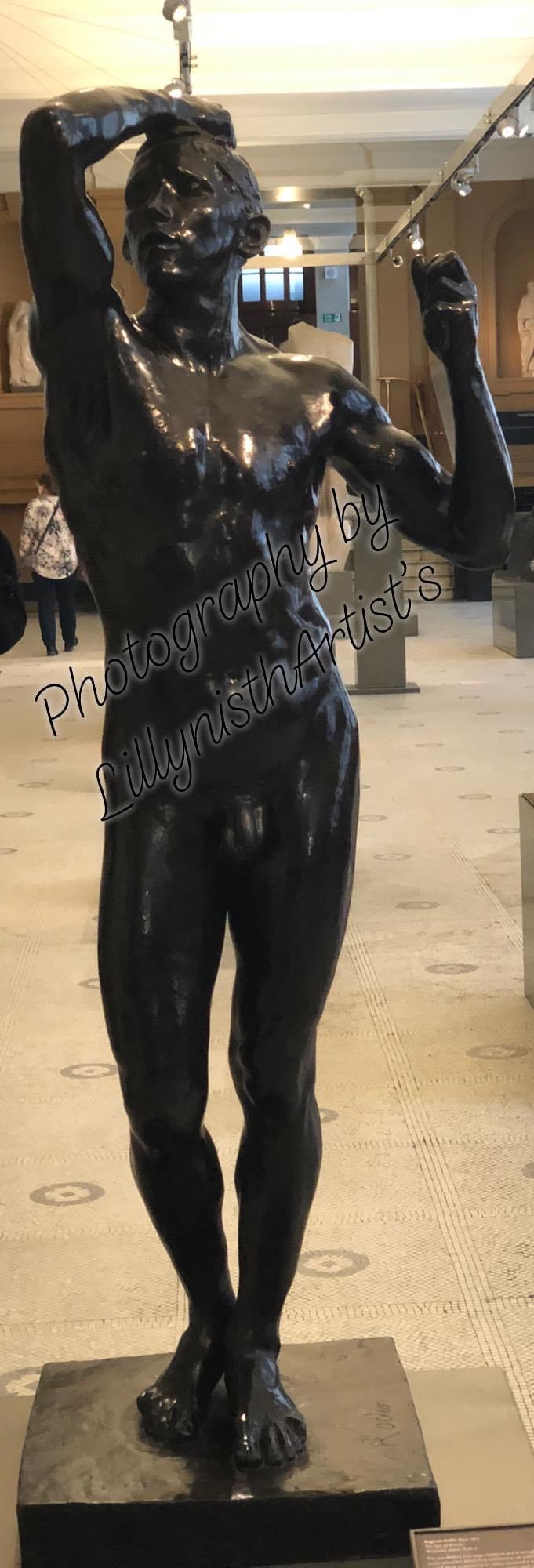
Sculpture name: The Age of Bronze (L’Age d’Airain
Artist (Sculptor): Auguste Rodin
Created: 1876-1877
Material: Bronze
Dimensions: Height: 180.3 cm
Location: Victoria and Albert Museum, London, UK
Photography by LillynisthArtist’s
——————————————
“This statue brought Rodin to the attention of the public, not just in France but internationally. It is Rodin’s earliest full-scale, independently produced statue to have survived. He started work on the figure in 1875 when he had left Paris to live in Belgium following the Franco-Prussian War. Rodin began using the model, Auguste Neyt, a 22 year old soldier from barracks near to his home in Brussels, in October 1875. While working on the figure he visited Italy for the first time, in Spring 1876, where he was profoundly influenced by Michelangelo and the works of classical and Renaissance sculptors which he sketched extensively.”(V&A)
————————————————
#1001andmore #nakedwomenandmaleinart #webgalleryofvisualart #musée #sculpture #lillynistartist #worldofsculpture
Khufu Statuette

Sculpture: Khufu Statuette
Created: uncertain: Fourth Dynasty or Twenty-Sixth Dynasty (2551-2528 BCE)
Material: Ivory
Dimensions: High 7.5 cm x Long 2.9 cm x 2.6 cm deep
Discovered: Temple of Khentyamentiu, Abydos, Upper Egypt
Location: Egyptian Museum, Cairo, Egypt
———————
It is the only image of the famous pharaoh – the one who ordered the construction of the largest pyramid in Egypt, the Great Pyramid of Giza (Pyramid of Khufu or the Pyramid of Cheops)
#sculpture #egyptianhistory #egyptianmuseum #webgalleryofvisualart #artlover #artloveenjoylife
Bramantino is one of the most important painters of the early sixteenth century.
——————
Bramantino introduces medieval elements in this work, an example is the “dispute” between the demon who persuades Jesus to come down from the cross, and an angel, who urges him to save humanity through supreme sacrifice.
——————
Artwork: Crucifixion (Whole and details)
Artist: Bramantino (Bartolomeo Suardi) [c. 1456 – c. 1530]
Created: (1505-1510)
Medium: Oil on canvas
Dimensions: 372 x 270 cm
Location: Pinacoteca di Brera, Milan, Italy
——————
“The painting is documented in Brera since 1806 but its provenance and original location are unknown. It has been suggested that the canvas came from Santa Maria di Brera, and so had entered the Pinacoteca directly, or from Milan Cathedral where, according to some, it had been put on display for a short time before being removed for its somewhat unorthodox iconography: in this case its execution would have been connected with movements of religious reform current in Milan at the beginning of the 16th century and taken up in circles close to the new French rulers and Marshal Giangiacomo Trivulzio.
The soft palette creates a backlit effect, each element arranged with careful symmetry. An angel and demon kneel in adoration by the Cross. The plaque bears the legend “Jesus of Nazareth King of the Jews” in Hebrew, Latin, and Greek after the Titulus Crucis, a relic discovered in 1492 and preserved in Rome. Some of the monuments in the background are also Roman. Bramantino, in Rome since 1508 and with a deeper knowledge of the Classical world than many, revisited that world it in an imaginative vein.”(Pinacoteca Di Brera)
#pinacotecadibrera #pinacoteca #milan #italy #artloveenjoylife #lillynisthartistconcept #webgalleryofvisualart
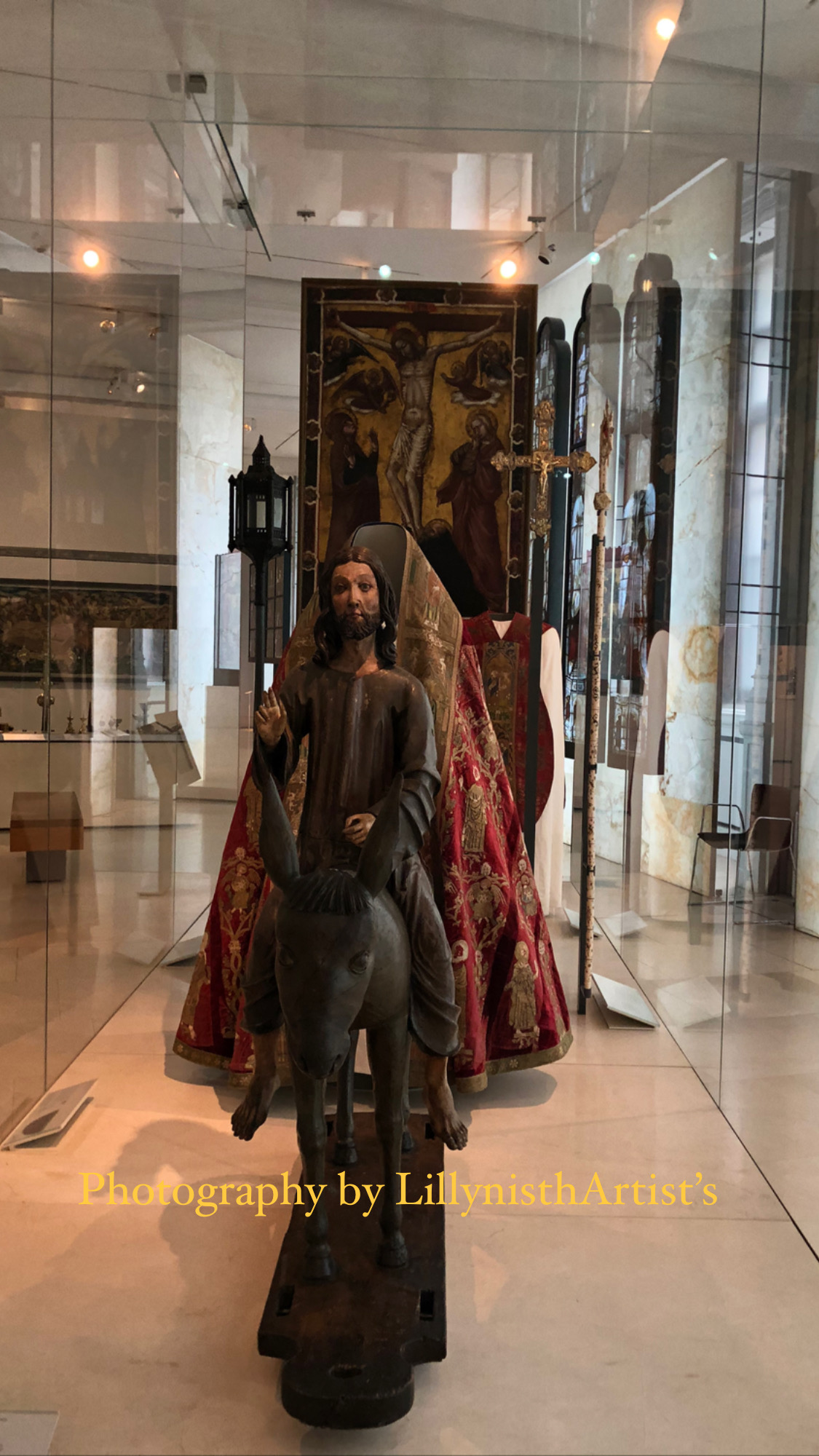
Sculpture: Christ Riding on the Ass
About (1480)
Painted wooden palmesel figure, Ulm, Germany
Location: Victoria and Albert Museum, London, UK
———————————
Photography by LillynisthArtist’s
———————————-
“Processions played an important role in the religious cycle, particularly on saints’ festivals and during the Holy Week leading up to Easter. They were also held on special occasions – at funerals, during prayers for rain or a good harvest, or when relics were formally moved (or ‘translated’) from one site to another.”(V&A)
—————————
#victoriaandalbertmuseum #webgalleryofvisualart #lillynistart #1zebraphotography #crist #sculpture #jesus

Artwork: The marriage of the Virgin Mary
Artist: Pietro Perugino (ca. 1446/1450–1523)
Created: ca. 1500-1504
Medium: Oil on wood
Dimensions: 236 × 186 cm
Location: Musée des Beaux Arts, Caen, France
(source photography Wikipedia)
———————-
#museedesbeauxarts #perugino #webgalleryofvisualart #wikipedia #oilonwood
Annunciation
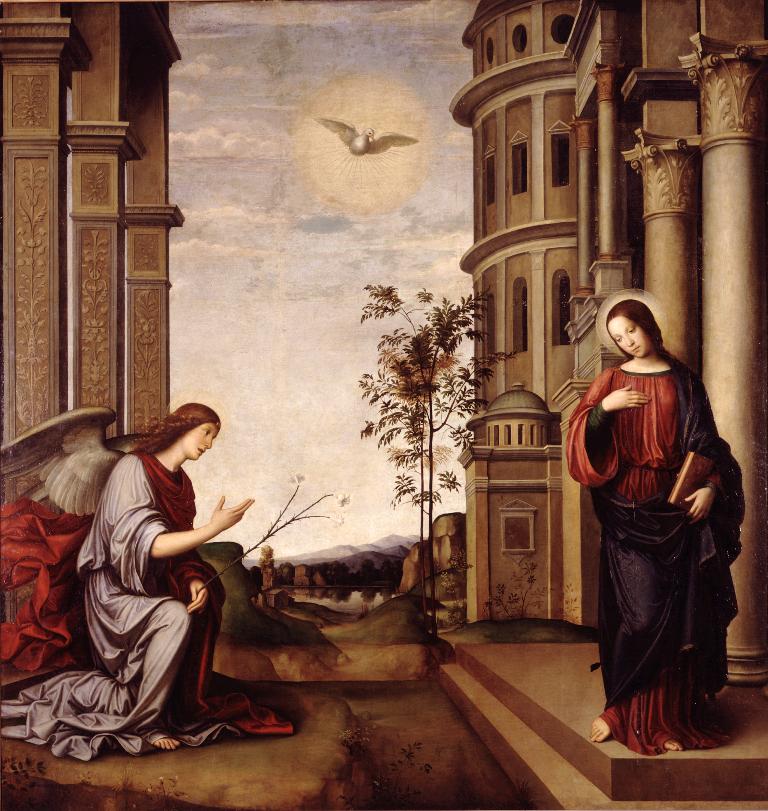
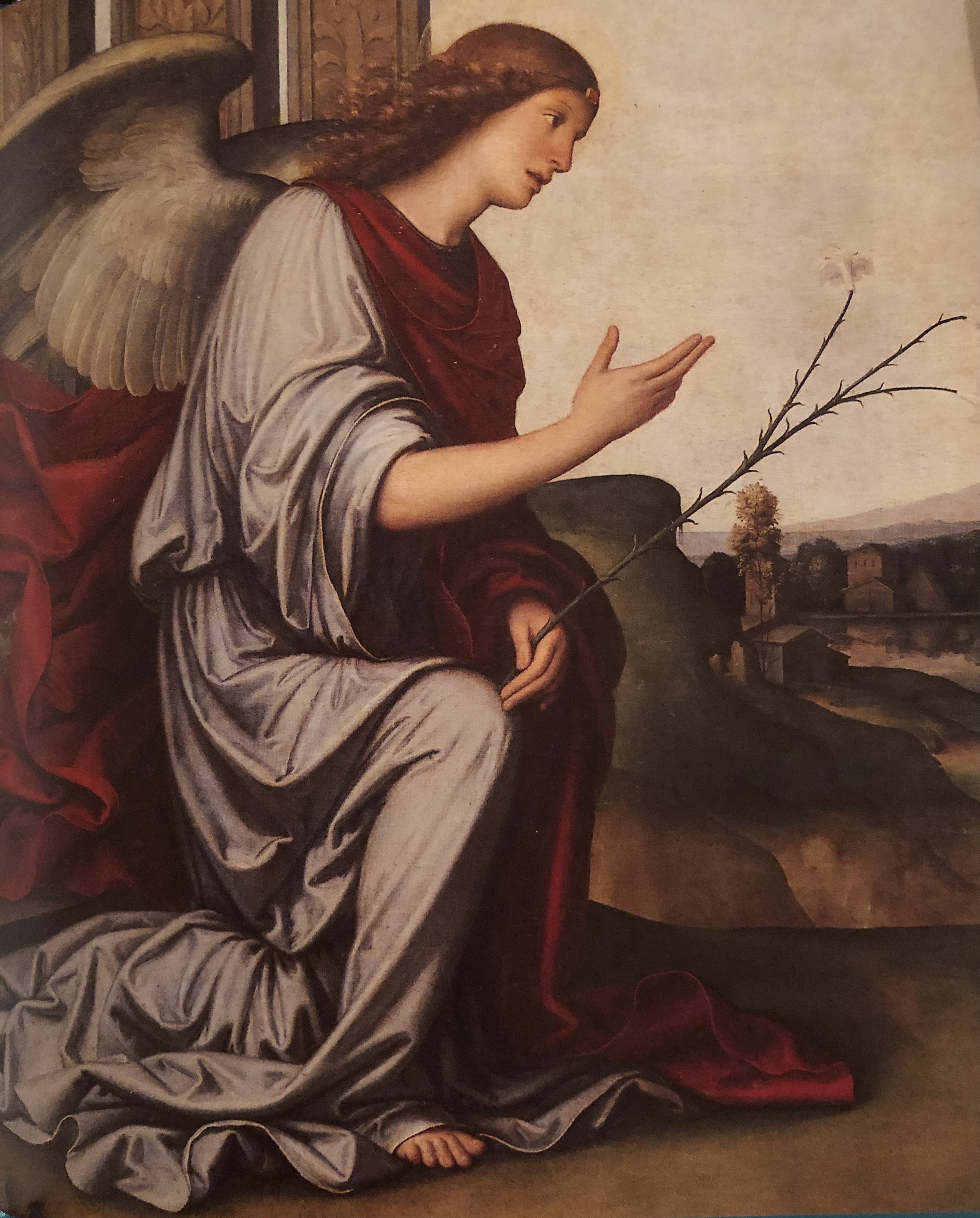
Artwork: Annunciation
Artist: Il Francia (Francesco Raibolini)
Created: 1505
Medium: Tempera and oil on panel
Dimensions: 237 x 227 cm
London: Pinacoteca di Brera, Milan, Italy
—————————
“This picture was painted at the peak of the artist’s success at the Gonzaga court in Mantua. His success was due largely to the harmony and balance of his compositions immersed in sweeping landscapes dominated by monumental buildings, to the calm simplicity of his figures’ gestures and expressions and to the smooth transparency of his palette. In this instance the large altarpiece is a tribute to the painting of Perugino.”(Pinacoteca Di Brera)
———————————-
#pinacotecadibrera #pinacoteca #museum #musée #musee #webgalleryofvisualart #italianart
Head of a Woman

Sculpture name: Head of a Woman (Fernande)
Artist: Pablo Picasso (1881-1973)
Created: 1909
Medium and Techniques: Bronze
Dimensions: Unconfirmed: 405 × 230 × 260 mm
Location: Tate Modern, Location, UK
Photography by LillynisthArtist’s
————————————
“This sculpture is of Fernande Olivier, an artist and model. Olivier and Picasso were in a relationship for seven years after meeting in Paris in 1904. A number of works Picasso made during this time were inspired by Olivier. The flat, squared surface of Head of a Woman reflects the cubist style he explored from 1907–09. Picasso made two plaster casts of this sculpture, from which at least sixteen bronze examples were cast.”(Tate)
————————————-
#1zebraphotography #sculpture #lillynisthartistconcept #tate #london #museum #artloveenjoylife #bronzesculpture #picasso #musée
Master of details Michelangelo
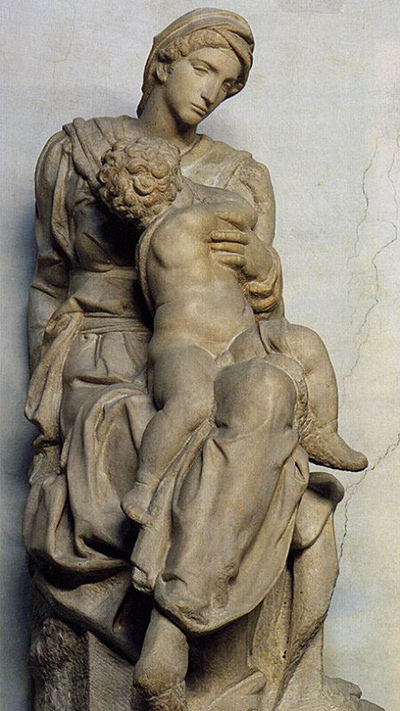
Sculpture name: Medici Madonna
Artist: Michelangelo
Created: ca. 1521-1534
Material: Marble
Dimensions: 226 cm
Location: This piece was designed as a decoration for the Old Sacristy (Sagrestia Vecchia) at the church of San Lorenzo, Florence, Italy.
———————-
Description:
“The sculpture was originally part of the Medici tombs, and it rests over the tomb of Lorenzo the Magnificent. It stood between the statues of Cosmas and Damian, the patron saints of Medici. Currently, the piece sits at the altar of the Sagrestia Nuova at the San Lorenzo Basilica.
Michelangelo was obsessed with the Virgin Mary and child theme as is evident in most of his works, and this Madonna is no different. The sculpture is of the Virgin holding the baby Jesus. In this marble representation, the child’s face is away from the spectator, buried in the Virgin’s bosom, searching for his mother’s breast.
Michelangelo’s childhood emotionally motivated his portrayal of Mother Mary. Through personal writing, poetry and letters from the Renaissance sculptor, it is revealed that he had a deep connection with his wet nurse. He seemed to have been relating his wet nurse to every single Madonna he ever made.” (Source photography and text Wikipedia-www.Michelangelo.net)
—————-
#webgalleryofvisualart #marblesculptures #sculptures #Wikipedia #michelangelo #artlovers #artloveenjoylife
Mindslave
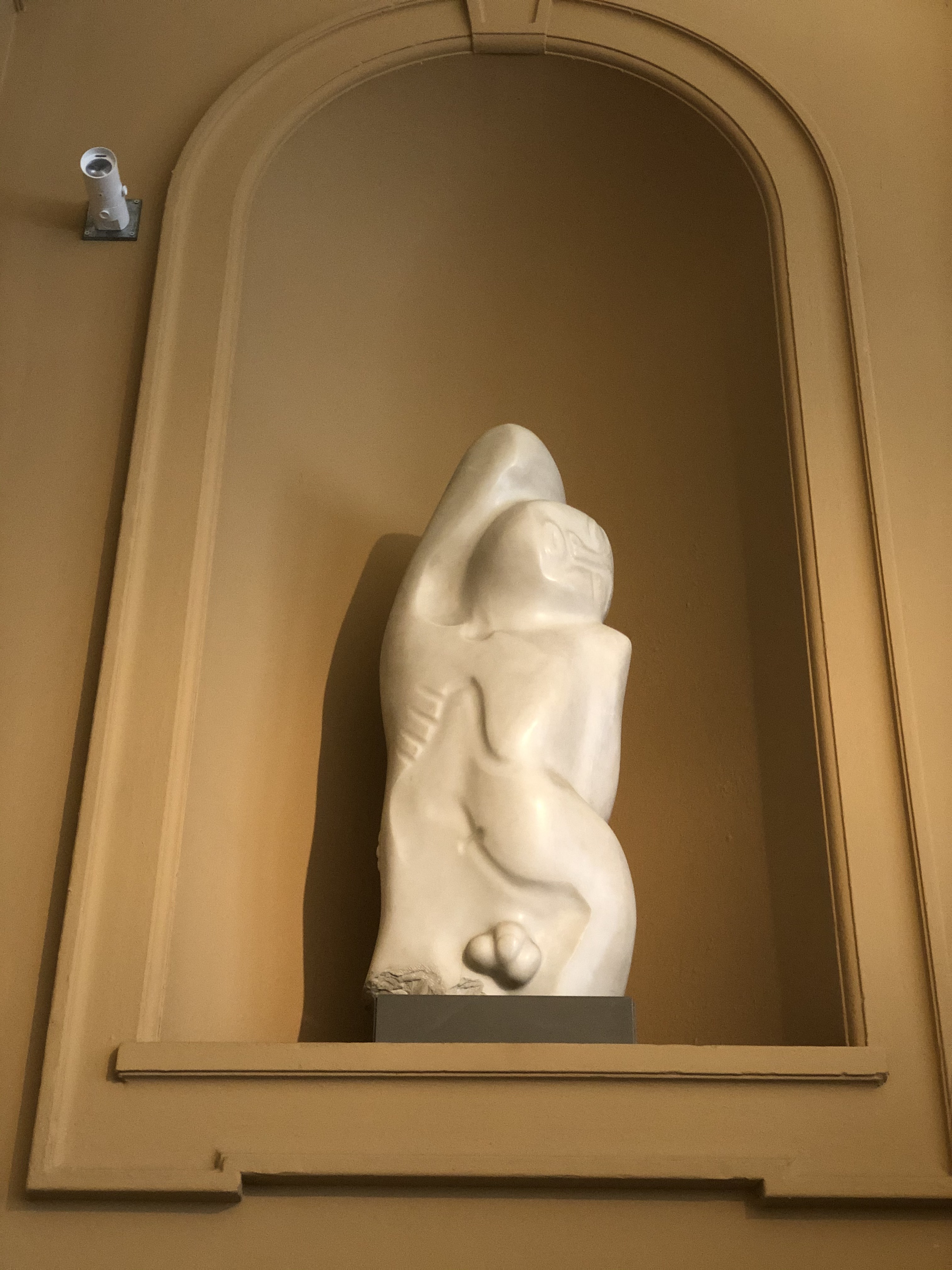
Sculpture: Mindslave: The Mind in Abject Subordination to the Intellect
Sculptor: Underwood, Leon
Carving date: 1934
Material: Marble
Dimensions: Height: 112 cm excluding base, Width: 450 mm, Depth: 380 mm
Location: Victoria and Albert Museum. London, UK
———————
Photography credits by : Costanza-Lillyanne Essco
———————-
“Underwood originally intended his block of marble for a composition called Youth, an idea he abandoned. Partly because of the similarities with Michelangelo’s Slaves in the Louvre, Paris, the donor suggested that Mindslave attempts to symbolise the struggle to escape from the mental repression prevalent in the totalitarianism of many regimes in Central Europe during the early 1930s. In a Golden Cockerell Press publication of 1934, artists were asked to write a sermon based on a biblical text, which would express their attitude towards life. Underwood contributed one on the Garden of Eden, in which he wrote: ‘Our Garden of Eden would be more readily accessible were we equipped with more of the will of the followers of Gandhi from the dark labyrinths of industrial commercialism that threaten us from the West.’ In the light of Underwood’s pamphlet of 1934, Mindslave might also be viewed as a representation of the limitations imposed on the artist by aesthetic dogma: ‘If the future is to hold for him further liberation from the bondage of this earth, it can be secured only by his intuition and imagination.’
Underwood studied at the Polytechnic, Regent Street, London in 1907 before going to the Royal College of Art in 1910. In 1913 he travelled in Europe and then attended the Slade in 1919-20. According to a completed questionnaire sent out by Kineton Parkes in about 1926, Underwood explained that at this date (1926) he had only recently begun to carve.”(V&A)
#webgalleryofvisualart #sculpture #1zebraphotography #victoriaandalbertmuseum
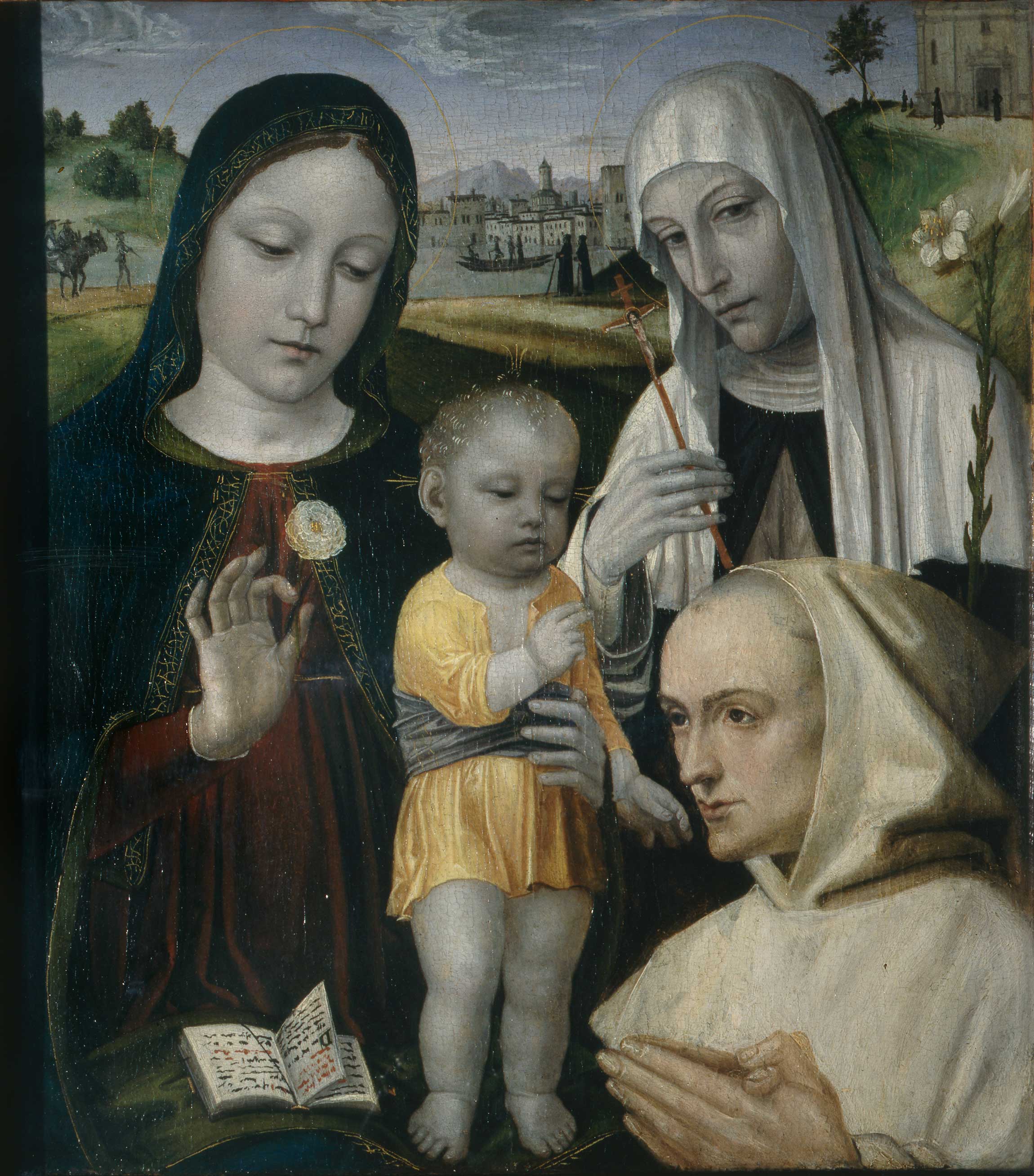
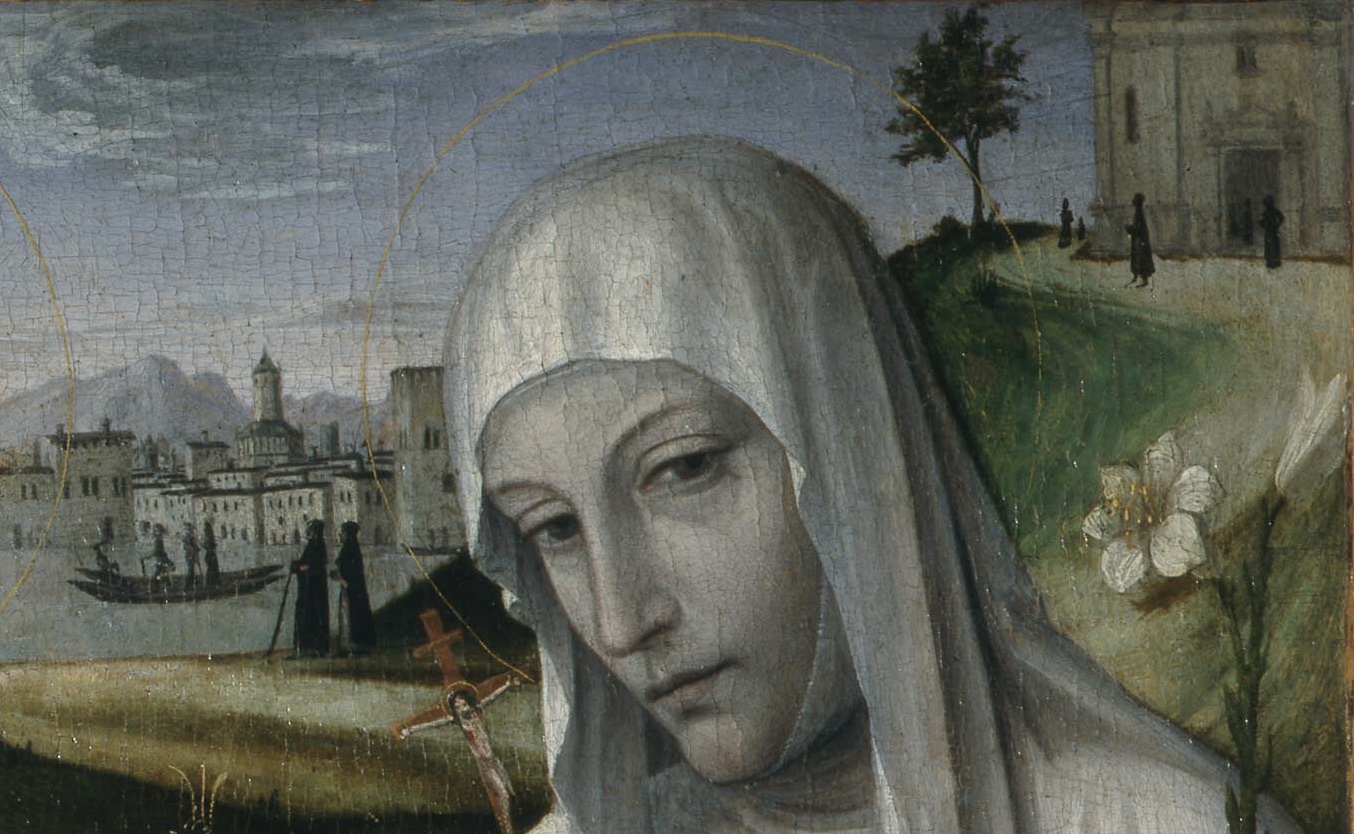
Artwork: Madonna and Child, St. Catherine of Siena and a Carthusian Monk (whole and detail)
Artist: Bergognone (Ambrogio da Fossano)
Created: ca. 1488-1490
Medium: Tempera on canvas
Dimensions: 46 x 40.5 cm
Location: Pinacoteca Di Brera, Milan, Italy
———————
“The pale palette with unusual notes such as the yellow and wisteria of Jesus’ clothing, the convincing simplicity of the composition opening out onto a sweeping landscape and the fine features of the monk make this small panel a minor masterpiece. Intended for a monk’s cell as we can see from its size and from the intensity of the figures’ expressions, it may come from the Certosa di Pavia where Bergognone worked for a long time.” (Pinacoteca di Brera)
———————-
#webgalleryofvisualart #wikipedia #pinacotecadibrera #italy #milan #masterpiece
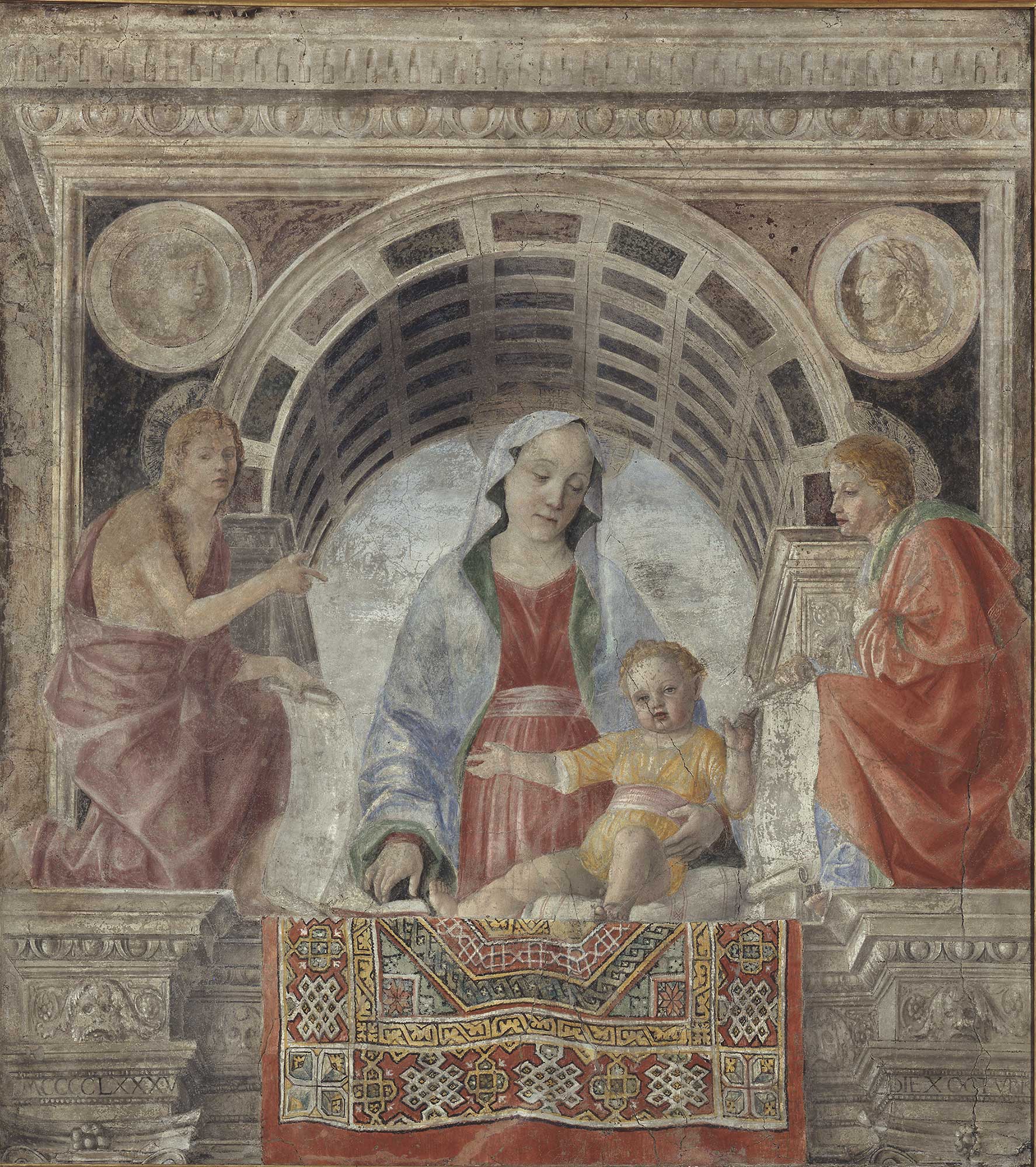
 Artwork: Madonna and Child with Saints John the Baptist and St. John the Evangelist Whole and detail)
Artist: Vincenzo Foppa
Materials and Techniques: Fresco transferred to canvas
Dimensions: 192 x 173 cm
Location: Pinacoteca di Brera
————————-
“The fresco originally stood high up over a door. The monumental arch inspired by Classical examples, with medallions on either side and a coffered barrel vault, is foreshortened from below, emphasising the scene’s illusionism. The Virgin appears to be looking out from a balcony against the open sky. The carpet ruffled by the wind, Jesus’ protruding foot and the coffers shown in perspective all contribute to the feeling of a living presence.”(Pinacoteca di Brera)
———————-
#webgalleryofvisualart #fresco #canvas #pinacotecadibrera #italianartist #religiousart
Virgin Enthroned with the Christ Child, St. Anne, St. Elisabeth, St. Augustine and the Blessed Pietro degli Onesti


Artwork: Virgin Enthroned with the Christ Child, St. Anne, St. Elisabeth, St. Augustine and the Blessed Pietro degli Onesti (whole and detail)
Artist: Ercole de Roberti
Created: 1480
Medium: Oil on canvas
Dimensions: 323 x 240 cm
Location: Pinacoteca di Brera, Milan, Italy
——————-
“The painting, also called the Portuense Altarpiece, was executed between 1479 and 1481 for the church of Santa Maria in Porto Fuori at Ravenna, served by the Canons Regular of the Lateran. In the 16th century it was transferred to San Francesco in the same city, from where it entered the Pinacoteca after the Napoleonic abolitions. Under a majestic work of architecture is located the octagonal podium on which the Virgin’s throne stands; the base is decorated with panels simulating antique bronze reliefs, on the lines of the ones made by Donatello for the altar of Il Santo in Padua. They represent the Slaughter of the Innocents, Adoration of the Magi and Presentation of Jesus in the Temple.
At the sides of the throne appear St. Augustine, patron of the Lateran Order, on the left, and Pietro degli Onesti, its founder. The base of the throne is supported by columns through which an extraordinary stormy seascape is visible, probably alluding to the foundation of Santa Maria del Porto: on the voyage back to Ravenna from the Holy Land, Pietro degli Onesti had survived a shipwreck and promised the Virgin he would construct a large church as a votive offering for the miracle.
The altarpiece constitutes one of the finest examples of the composed and classical monumentality attained by de’ Roberti, who here mutes the frenzied dynamism of the frescoes in Palazzo Schifanoia at Ferrara and adopts more solid and measured forms, in which the figures are handled with a robust plastic modeling and the artist’s nervous expressiveness remains confined to the decorations.”(Pinacoteca di Brera)
#webgalleryofvisualart #pinacotecadibrera #altarpiece
St. John the Baptist
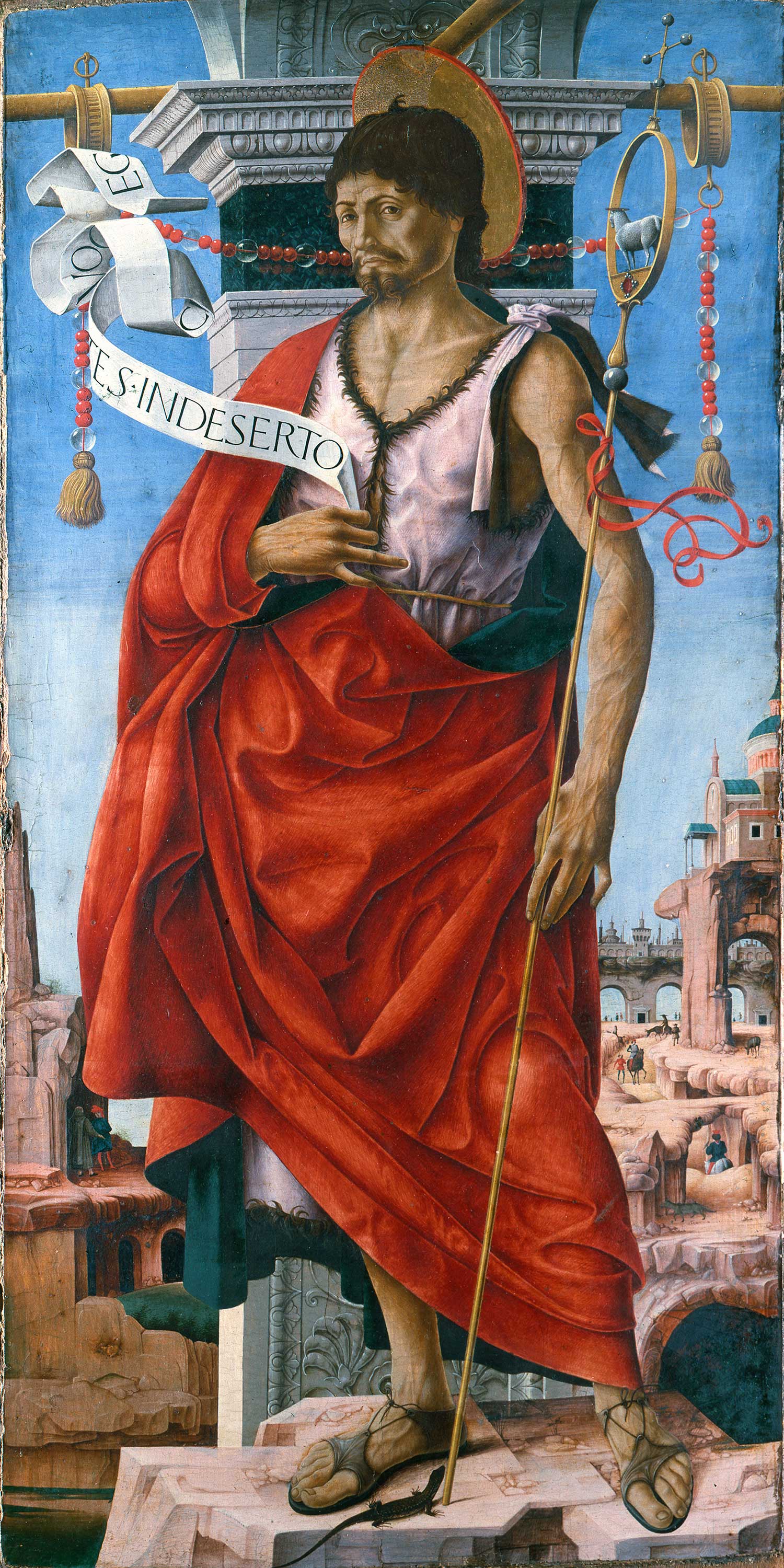

Artwork: St. John the Baptist (whole and detail)
Artist: Francesco del Cossa
Created: 1473
Dimensions: 112 x 55 cm
Medium: Tempera on panel
Location: Pinacoteca di Brera, Milan, Italy
“The painting constitutes one of the wings of a large altarpiece executed around 1473 to a commission from the merchant Floriano Griffoni and intended for the family chapel in the Bolognese church of San Petronio. The polyptych, dedicated to St. Vincent Ferrer, was ordered just a few years after the saint’s canonization (1458) and painted by the artist in collaboration with Ercole de’ Roberti, who executed the small panels of the predella. The work remained in the Griffoni Chapel until 1725-30, when the individual panels were sold separately on the antique market and dispersed: the panels in Brera were acquired by the collector Giuseppe Cavalieri in 1893, at the suggestion of Adolfo Venturi, but was only through the insight of Roberto Longhi that, in 1934, the fragments in Brera, the National Gallery in London and the National Gallery in Washington were identified as parts of single, imposing structure, one of the cornerstones of Cossa’s production and Ferrarese Renaissance painting.
The two saints, displaying all the solidity of wooden sculpture, stand on rocky outcrops which serve to isolate them, almost like the base of a statue, from the bizarre landscape where arches with unstable keystones frame plains criss-crossed by rivers and dotted with buildings.”(Pinacoteca di Brera)
———————-
#webgalleryofvisualart #pinacotecadibrera #panel #lillynisthartistconcept #artgalleries #musée #museum
St. Peter

Artwork: St. Peter
Artist: Francesco del Cossa
Created: 1473
Dimensions: 112 x 55 cm
Medium: Tempera on panel
Location: Pinacoteca di Brera, Milan, Italy
———————————-
“The painting constitutes one of the wings of a large altarpiece executed around 1473 to a commission from the merchant Floriano Griffoni and intended for the family chapel in the Bolognese church of San Petronio.
The polyptych, dedicated to St. Vincent Ferrer, was ordered just a few years after the saint’s canonization (1458) and painted by the artist in collaboration with Ercole de’ Roberti, who executed the small panels of the predella. The work remained in the Griffoni Chapel until 1725-30, when the individual panels were sold separately on the antique market and dispersed: the panels in Brera were acquired by the collector Giuseppe Cavalieri in 1893, at the suggestion of Adolfo Venturi, but was only through the insight of Roberto Longhi that, in 1934, the fragments in Brera, the National Gallery in London and the National Gallery in Washington were identified as parts of single, imposing structure, one of the cornerstones of Cossa’s production and Ferrarese Renaissance painting.
The two saints, displaying all the solidity of wooden sculpture, stand on rocky outcrops which serve to isolate them, almost like the base of a statue, from the bizarre landscape where arches with unstable keystones frame plains criss-crossed by rivers and dotted with buildings.”
(Pinacoteca di Brera)
———————————
#webgalleryofvisualart #pinacotecadibrera #panel #lillynisthartistconcept #artgalleries #musée #museum #stpeter


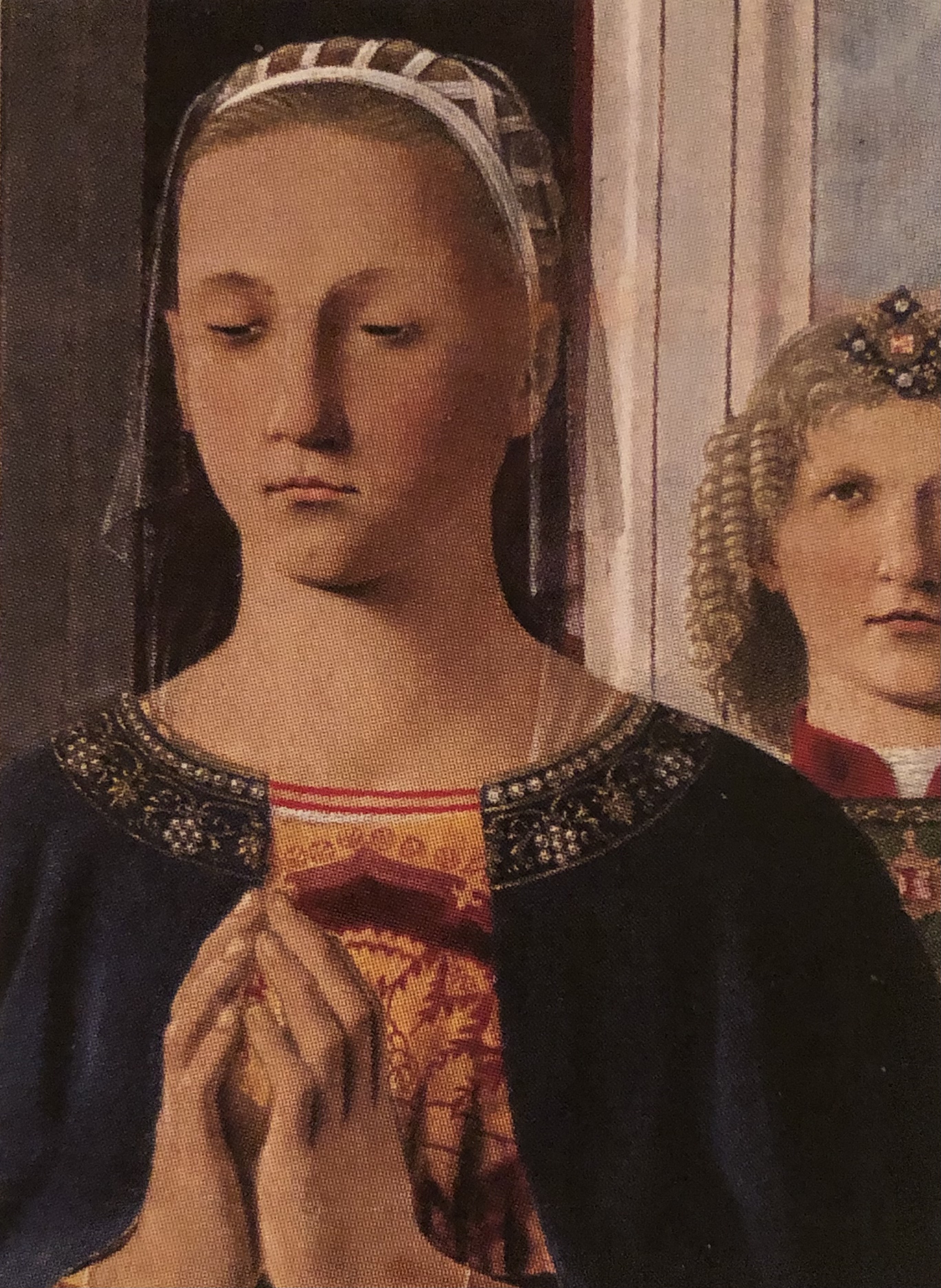

Artwork: Madonna and Child with Saints, Angels and Federico da Montefeltro (San Bernardino Altarpiece) or Madonna di Brera
Artist: Piero della Francesca
Created: ca. 1472-1474
Medium and Materials: Tempera and oil on panel
Dimensions: 251 x 172 cm
Location: Pinacoteca di Brera, Milan, Italy
—————-
“After the Napoleonic abolitions, the altarpiece came to Brera from the church of San Bernardino in Urbino, erected by Federico da Montefeltro to house his own grave. It is possible, but not certain, that the picture was originally painted for this location, and for the duke’s tomb. The interventions of restoration and recent studies have confirmed that the size of the work has been reduced and that the artist had intended the architecture to be more spacious and airy, with the figures gathered under the huge lantern of a dome. Despite the mutilation it has undergone, the work constitutes an exemplary result of the perspective research conducted by Central Italian artists in the late 15th century.
The iconography is that of the Sacra Conversazione: at the center the Virgin is seated on a throne, holding the sleeping Child; around her are arranged, from the left, St. John the Baptist, St. Bernardine, St. Jerome beating his breast with a stone, St. Francis displaying the stigmata, St. Peter Martyr with the wound on his head and St. John the Evangelist. Behind them we see the archangels and, kneeling in front of the sacred group, Federico da Montefeltro in the dress of a military commander.”(Pinacoteca di Brera)
————————
#webgalleryofvisualart #pinacotecadibrera #pinacoteca #lillynisthartistconcept #culture #musée #galleries #painters #supremeart
Pietà

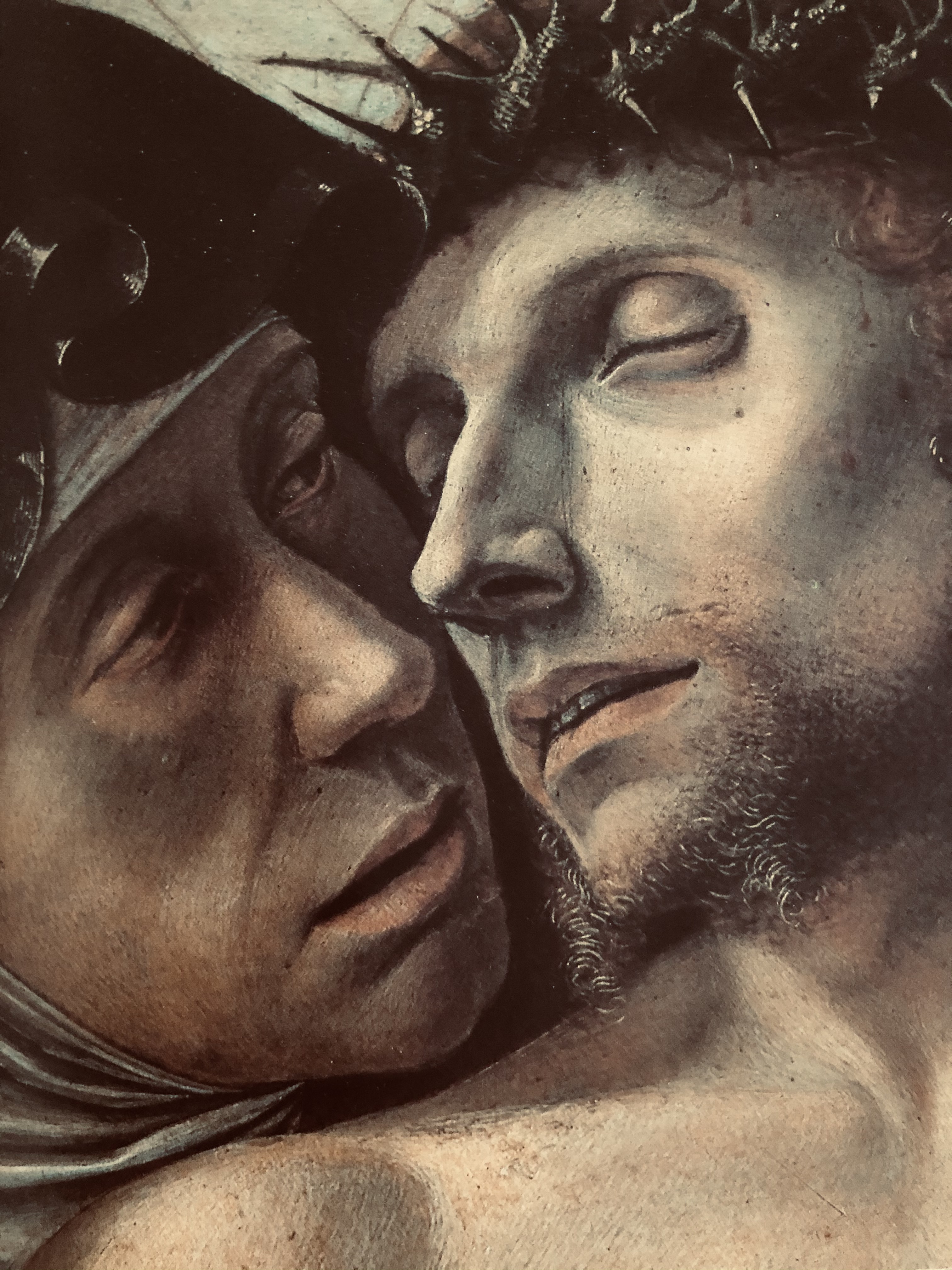
Artwork: Pietà or Dead Christ Supported by the Madonna and Saint John (whole and detail)
Artist: Giovanni Bellini
Created: ca. 1465-1470
Medium: Tempera on panel
Dimensions: 86 x 107 cm
Location: Pinacoteca di Brera, Milan, Italy
—————-
“The panel, dated to the years between 1465 and 1470, marks an evident emancipation of the artist from the influence of Andrea Mantegna, to whom he was linked not just by cultural affinities but also by close ties of kinship (they were brothers-in-law).
The lesson of the Paduan artist is clearly visible in the incisiveness of the outlines and the sculptural plasticity of the figures, brought into the foreground to invade the space of the observer. Yet Bellini immerses the scene in an atmosphere of natural light, softening the tones and concentrating not so much on the construction of a rigorous perspective as on conveying the sorrowful humanity of the protagonists.
In this way he creates a new language that will become, in the years to come, his personal and unmistakable stylistic mark.
Propertius, the great poet of the Augustan age whose verses are referred to on the strip along the sill, speaks of the capacity of an image to provoke tears – an effect observed with certain works, including this one.
The work, which used to be in the Sampieri collection in Bologna, was donated to Brera in 1811 by the viceroy of Italy, Eugène de Beauharnais.”(Pinacoteca di Brera)
———————————
#webgalleryofvisualart #pinacotecadibrera #pinacoteca #wikipedia #culture #artloveenjoylife #jesuschrist #pieta


Artwork: Madonna and Child with Angels and saints (Gualdo Tadino Polyptych) (whole and detail)
Artist: Unknown (attributed by the historians to Giovanni Angelo d’Antonio da Bolognola)
Created: ca. 1462-1465
Medium: Tempera on panel
Dimensions: Upper register: cm 190 x 60 central panel, cm 154 x 43 side panels; Lower register: cm 132 x 60 central panel, cm 118 x 42 side panels
Location: Pinacoteca di Brera, Milan, Italy
——————
“This group is the result of a 19th century reassembly of panels from two different polyptychs, as we can tell from the fact that the light illuminating the upper and lower parts comes from opposite directions. The panels all reveal the same luminous brushwork, and the artist’s interest in conveying measured space through the shadows cast by figures and objects and his attention to details communicating a sense of tenderness, such as the clasped hands of Virgin and the Christ Child.”(Pinacoteca di Brera
———————-
#webgalleryofvisualart #pinacoteca #pinacotecadibrera #milan #italy #unknown #panel #polyptych #artist

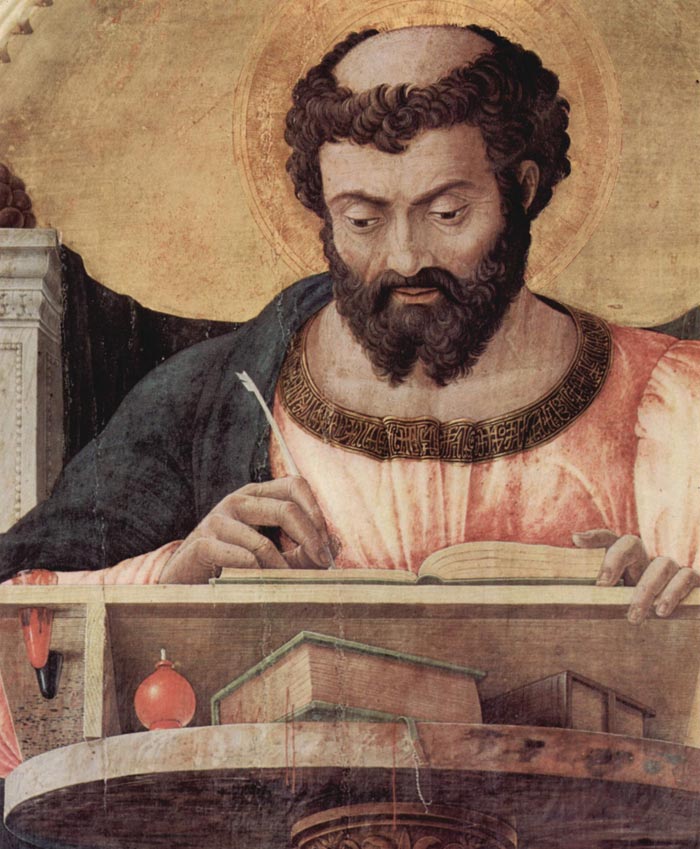
Artwork: Saint Luke Polyptych
Artist: Andrea Mantegna
Created: 1455
Medium: Tempera on panel
Dimensions: 177 x 230 cm
Location: Pinacoteca di Brera, Milan Italy
————-
“The painting features 12 figures with an arch on each figure. At the top are seven figures who are important to Jesus Christ, while the five below are Saint Luke. The altarpiece painting was commissioned when Mantegna was 22 years old in 1453, in the S. Luca chapel in the church of S. Giustina in Padua. From the upper left, we have St. Daniel of Padua, St. Jerome, the Virgin, Christ, St. John, St. Augustine, St. Sebastian, St. Scholastica, St. Prosdomicus, St. Benedict, and St. Justina.
In the 17th century, the original wooden frame where Mantegna’s signature was inscribed was struck by lightning. The loss of this piece has altered the composition of the painting, which is notable when you look at the scale between the 2 registers. The painting is said to have been commissioned by donors to bring about a Gothic masterpiece. The insertion of a thick moulding between two orders is a great achievement by Mantegna. This separation set the two ranges apart in the earlier days than they are today. Mantegna also used a composition where the support panels were smaller to create a distance while the lower panels were created larger to showcase how the viewer is close to them.
The separate figures are highly impressive even without their original framework. The wet drapery of the painting creates an illusionistic effect on the figures to present a great quality in Mantegna’s work, which must have originated from his studies on classic Roman sculpture. The painting was created in a time when the two brothers-in-law had an intense dialogue about Mantegna’s marriage to Giovanni Bellini’s sister, Nicolosia. The painting is a demonstration of the adhesion the monastery of Santa Giustina had to the new Benedictine rule.
Mantegna signed a contract on August 10th, 1453 to paint the Santa Giustina in Padua for 50 ducats. He worked with paints to depict the figure and the azzuro Todesco, which is a blue pigment sourced from copper, to inlay them.”
———————
#webgalleryofvisualart #pinacotecadibrera #wikipedia


Artwork: Adoration of the Magi (whole and detail)
Artist: Stefano da Zevio (or known as Stefano de Verona)
Created: 1435
Medium: Tempera on panel
Dimensions: 72 x 47 cm
Location: Pinacoteca di Brera, Milan, Italy
—————-
“Signed and dated in the lower part of the panel: “Stefanus pinxit 1435.” The unidentified coat of arms of the donor appears with the inscription.
A late work, this painting is clearly derived from the famous version of the same subject by Gentile da Fabriano (now in the Uffizi). Both paintings reveal the influence of the Veronese painter Altichiero. Stefano’s panel also reflects the new Milanese art typified by Michelino da Besozzo, with its degree of naivete and its esthetic refinement. The composition here is divided into two registers, or two fields of space, united by a bird’s eye view. The first is a semicircular crowd of figures; the second is laid out in a meander pattern that includes a number of separate episodes. The whole is closely integrated, as in an illuminated manuscript initial.”(Photography and comment from Wikipedia)
—————————-
#webgalleryofvisualart #pinacotecadibrera #milan #italy #arthistory #adorationofthemagi #tempera #pinacoteca


Artwork: Christ Enthroned with Angels in Adoration
Artist: Giovanni da Milano
Created: 1371
Medium: Tempera on panel
Dimensions: 152.3 x 68.5 cm
Location: Pinacoteca di Brera, Milan, Italy
————————-
#pinacotecadibrera #italy #webgalleryofvisualart #religiousart #wikipedia (1)
————————
“The beginning of the 14th century is marked by the Pre-Humanism period, which manifests itself in both literature and art, the followers of the current were Dante and Giotto. Giovanni da Milano works in an archaic, severe and religious style specific to painting from the second half of the 14th century.
Christ Enthroned with Angels in Adoration is the only painting the master paints in his hometown.
The painter is influenced by contemporary Lombard art (Rather than the Early Christian preference for symmetry, primary colours, and presentation of the world through a style of visual realism, including three-dimensional representation, Lombard art forms exploited asymmetry, colours such as orange, green, and purple, and flat abstraction).(1)
Christ is represented in the center on a compact and golden background, displaying a calm and firm attitude. The throne is decorated with lion’s heads, and around it are four angels presented in profile, frightened by the power of the Supreme Judge. The artist resumes the theme of immobility and the difference between the human and divine plan, specific to Byzantine painting.
The text of the book begins with the following sentence: “Ego sum alpha et omega.”
(Text by Costanza-Lillyanne Essco)
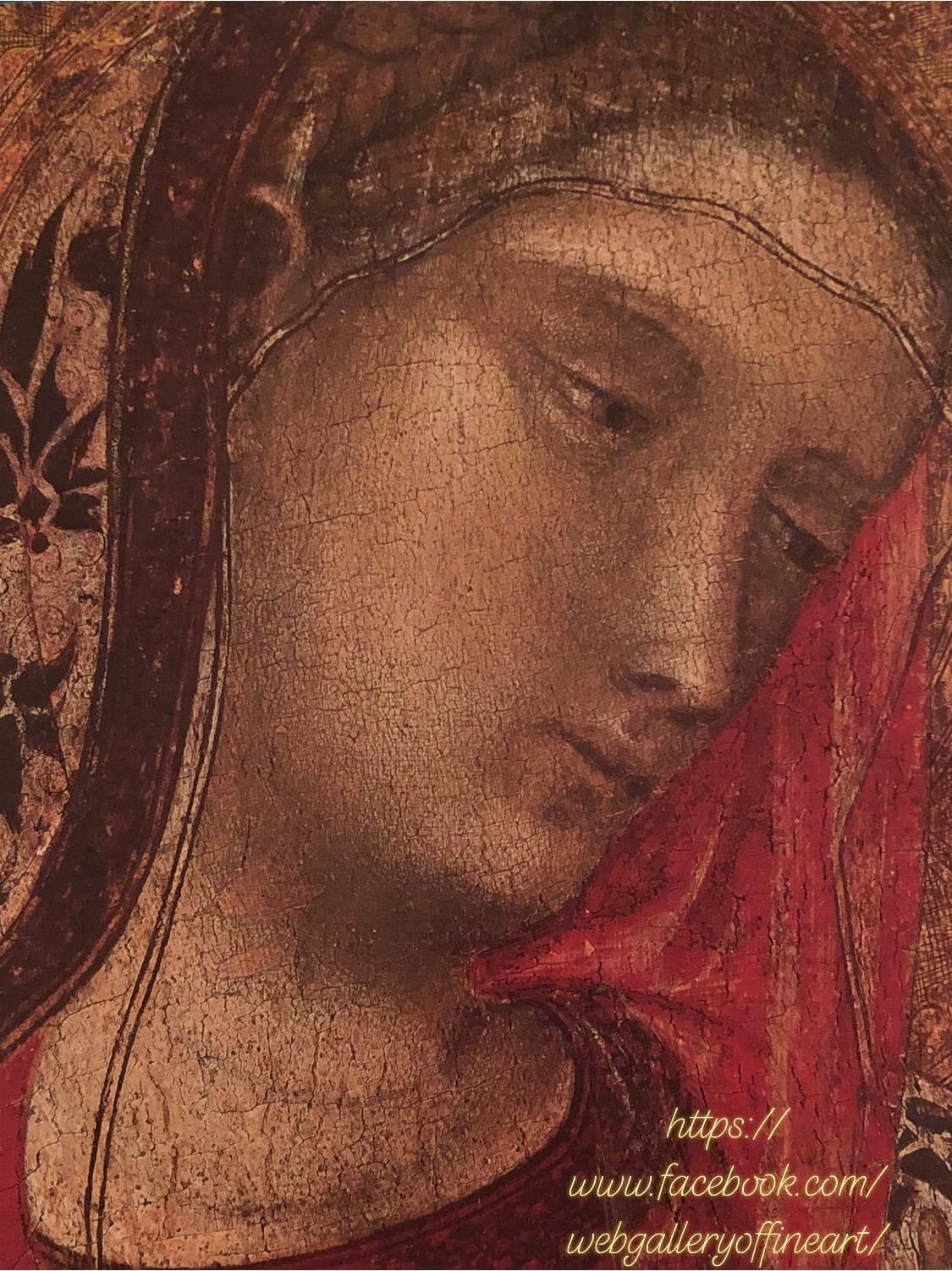

Masterpiece (Artwork): Madonna and Child (whole and detail)
——————————
Artist: Ambrogio Lorenzetti
“Ambrogio Lorenzetti or Ambruogio Laurati was an Italian painter of the Sienese school. He was active from approximately 1317 to 1348. He painted The Allegory of Good and Bad Government in the Sala dei Nove in Siena’s Palazzo Pubblico. His elder brother was the painter Pietro Lorenzetti.”
—————————
Created: ca. 1320
Medium: Tempera on panel
Dimensions: 85 x 57 cm
Location: Pinacoteca di Brera, Milan, Italy
————————
#pinacotecadibrera #webgalleryofvisualart #italianart #tempera #masterpiece #milan #italy #wikipedia
————————————-
“Even if the preservation conditions are not the best – the blue-lapis lazuli with which the Virgin’s mantle was painted hasn’t faded – the painting still retains the features of the style of Ambrogio Lorenzetti and the art school of Siena, from the 14th century.
The painting dates from the period of Lorenzetti’s artistic maturity. The three-dimensional characteristic of the characters is taken from Giotto. Against a golden background, the characters look at each other affectionately as if trying to communicate.
The artist gives up the rigid and severe style specific to Byzantine art, the Virgin Mary being strong and at the same time gentle.
The Virgin Mary wears a very beautiful cloak, embroidered and lined; on her arm she wears a purple cloth. The Infant Jesus is in diapers trying to reveal himself: he shakes his legs and manages to release a hand – he looks at his mother with tenderness and emotion.” (Text by Costanza-Lillyanne Essco )
Crucifixion and Lamentation, about 1335

Artwork: Crucifixion and Lamentation
Artist: Taddeo Gaddi (b. ca. 1290-1366)
Created: 1335
Medium and Support: Tempera and gilding on panel
Dimensions: H 52.4 x W 26.7 cm
Location: Bristol Museum and Art Gallery, Bristol, UK
Photography by LillynisthArtist’s
————————————
“This small panel was probably made for private devotion. In the upper portion appears the Crucifixion, with the Virgin, Saint John the Evangelist and Mary Magdalene. Over the crucifix is set a pelican, symbolic of Christ’s sacrifice. In the lower portion is a lamentation over the body of Christ. Taddeo Gaddi was a pupil and collaborator of Giotto and one of the most influential painters of fourteenth-century Florence.
The composition has been described as an adaptation of the Crucifixion which appears in the right side of his 1334 triptych in Berlin.”
—————————
#webgalleryofvisualart #lillynisth #bristolmuseumandartgallery
St. Anthony of Padua with a Nun

Artwork: St. Anthony of Padua with a Nun (origin of painting Netherlands)
Artist: David, Gerard
Created: ca. 1500
Materials and Techniques: Oil on oak panel
Dimensions: Height: 88 cm estimate,
Width: 37 cm estimate,
Depth: 7 cm
Location: Victoria and Albert Museum, London, UK
Photography credit: LillynisthArtist’s
——————————-
“This is the left wing of a dismantled altarpiece, the rest of which remains unidentified. A tonsured St Anthony of Padua is shown in Franciscan habit with his attribute, the Infant Jesus seated on a book, referring to his vision of the Infant Christ when preaching on the Incarnation (the belief that Christ became man). He presents a kneeling nun, possibly from the female branch of the Franciscan order known as the Poor Clares, to the Holy figures on the missing central panel. She fervently presses her hands together in a gesture of prayer- a model for the pious beholder to emulate.”(V&AM)
———————————————
#1001andmore #webgalleryofvisualart #victoriaandalbertmuseum #museum #londonfootwalk #london
Aphrodite

Artwork: Aphrodite
Artist: Paul Delvaux (1897-1994, Belgian painter)
Created: 1969
Medium: Oil on canvas
Dimensions: 150 x 130 cm
Location: Private collection
——————————————
#webgalleryofvisualart #privatecollection #painter #canvas #nakedwomenandmaleinart
Psyche

Artwork/Sculpture: Psyche
Sculptor: Wood, Francis Derwent R.A
Created: ca. 1908-1919
Material: Bronze
Dimensions: Height: 175 cm including base, Width: 52 cm, Depth: 40 cm
Location Victoria and Albert Museum, London, UK
Photography: LillynisthArtist’s
———————————
“The sculpture of Psyche an allegorical figure who represents the soul, is one of number of formula by Wood.”
————————
#victoriaandalbertmuseum #sculpture #webgalleryofvisualart #museum #london #ukfootwalk
The Naked Maja

Artwork: The Naked Maja
Artist: Francisco Goya
Created: ca.1796-1798
Medium: Oil on canvas
Dimensions: 97 x 190 cm
Location: Prado Museum, Madrid, Spain
Period: Romanticism
——————————-
“The Nude Maja is a name given to a c. 1797–1800 oil on canvas painting by the Spanish artist Francisco Goya. It portrays a nude woman reclining on a bed of pillows, and was probably commissioned by Manuel de Godoy, to hang in his private collection in a separate cabinet reserved for nude paintings.”(source text and photography Wikipedia)
——————————-
#webgalleryofvisualart #nakedwomenandmaleinart #nakedwomen #pradomuseum #romanticism #painting #oiloncanvas #museum
Salt Cellar
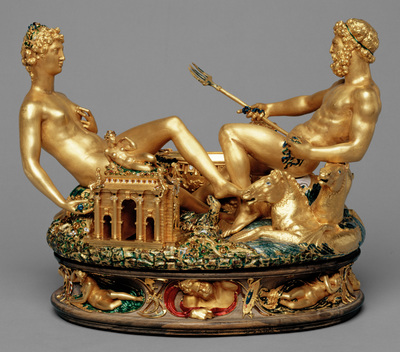
Artwork/Sculpture: Salt Cellar of Francisc I
Artist: Benvenuto Cellini
Created: ca. 1540-1543
Materials: Gold and email
Dimensions: 31.3 x 33.5 cm
Location: Kunsthistorisches Museum, Vienna, Austria
————————————-
“Salt Cellar
by Benvenuto CELLINI
Cellini worked in the service of François I from 1537 until 1545, and it was under his patronage in Paris that he made his first sculptures. Arguably his most remarkable individual work dates from this time: a salt cellar made of gold, ebony and enamel, now in the Kunsthistorisches Museum in Vienna. This lavish item of tableware is a sculptural group in miniature. Two figures, a male and a female, recline upon an ornate base. She is the goddess of earth, he is Neptune, god of the sea. Below them are carved personifications of the times of the day and the four winds, and beside them sit two beautifully wrought receptacles: a miniature temple to house earth’s peppercorns, and a boat to carry Neptune’s salt.
Cellini’s gold and enamel container for salt and pepper is the most famous example of Mannerist goldsmithery. Cellini tells us that he had five workmen to help him with this and other artistic activities for King Francis I.
The salt cellar was stolen from the museum in May 2003 and recovered by police in January 2006. “ (source Wikipedia)
#sculpture #europe #wikipedia #cellini #saltcellar #artwork
The Four Continents

Artwork: The Four Continents (Europe, Asia, Africa and America)
Artist: Peter Paul Rubens (Dutch 28 June 1577 – 30 May 1640) was a Flemish artist and diplomat )
Created: ca. 1614-1615
Medium: Oil on canvas
Dimensions: 209 x 284 cm
Location: Kunsthistorisches Museum of Art History, Vienna, Austria
———————————-
Each of the four continents (Europe, Asia, Africa and America) is represented by four women, each woman is accompanied by the divinity that corresponds to the most important river in that geographical area.
————————————
#webgalleryofvisualart #nakedwomenandmaleinart #rubens #baroque #oiloncanvas
The Fall of Man and the Lamentation
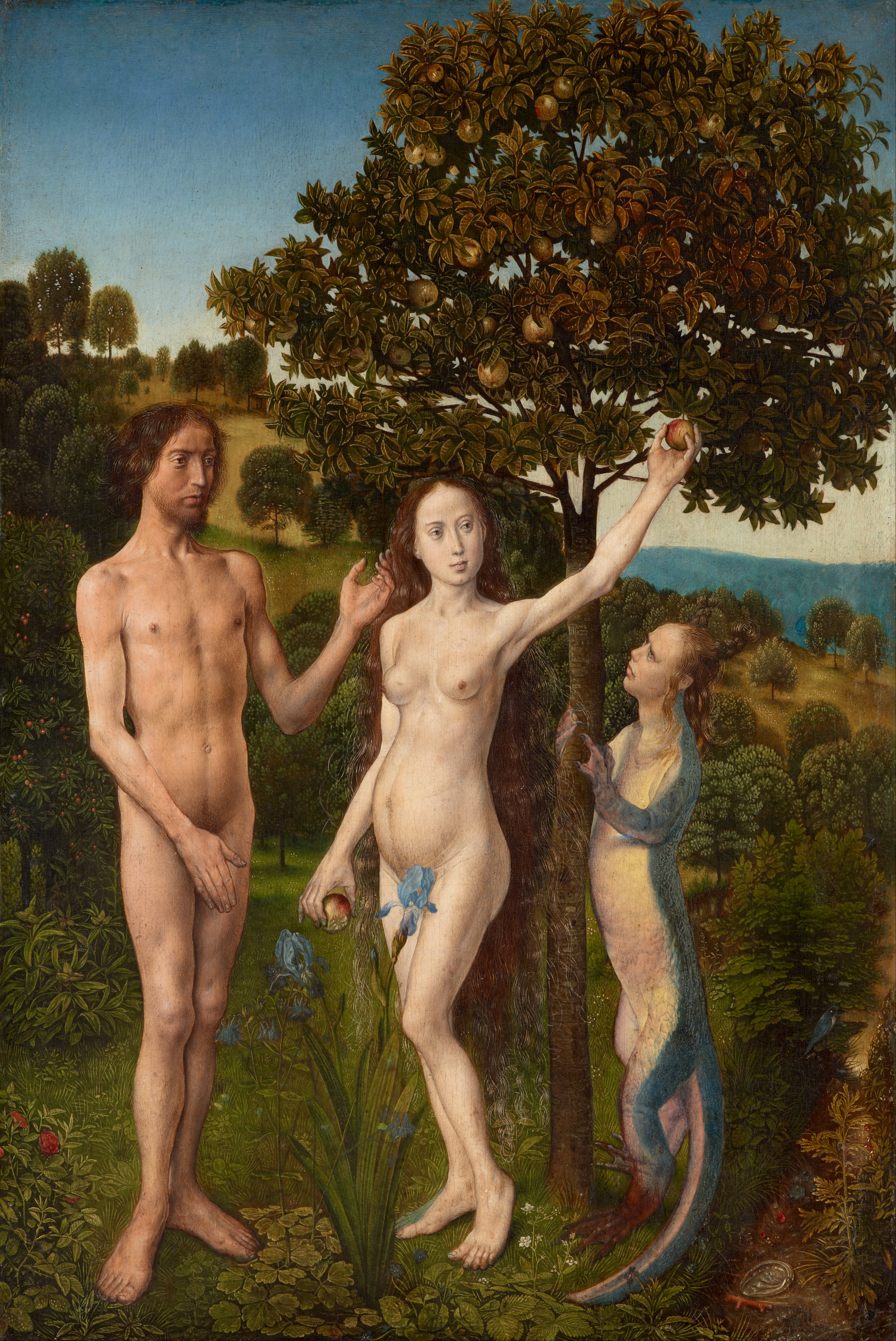
Artwork: The Fall of Man and Lamentation
Artist: Hugo van der Goes
Created: ca. 1468-1470
Medium: Oil on canvas
Dimensions: 33.8 x 23 cm
Genre: Christian art
Periods: Renaissance, Northern Renaissance, Dutch and Flemish Renaissance painting
Location: The Kunsthistorisches Museum of Art History, Vienna, Austria
——————————————
“Fall and the Redemption of Man, death and life, a paradise flooded with light and a dark overcast horizon, find their formal counterpart in this stylistic and compositional realisation of the theme. The delicate and sharply contoured bodies of the first two human beings are quite different from the figures in the Lamentation, which are interpreted in a painterly fashion and set restlessly into the scene in a continuation of the tradition of Rogier van der Weyden’s expressive painting. This has led to the supposition that the two panels were painted at different points in time, rather far apart from one another. Goes, in his striking rendition of the “tempter” with the head of a woman, body of a salamander and feet of an aquatic bird, was falling back on an existing tradition that was occasionally found in Netherlandish (book) paintings.” (text: Art and Culture; photography from Wikipedia)
——————————————————————
#nakedwomenandmaleinart #webgalleryofvisualart #Wikipedia #artandculture #vienna #museums
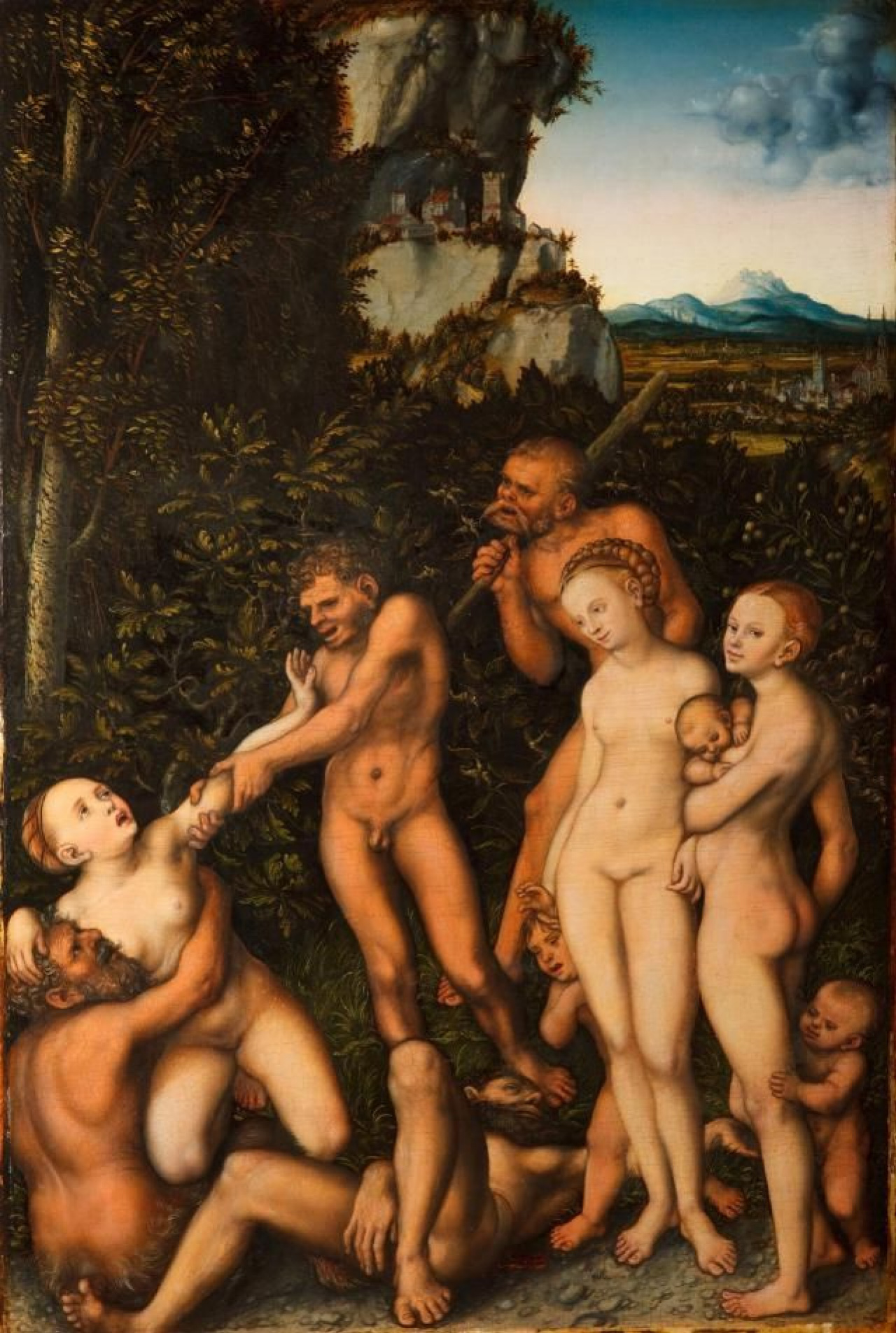
Artwork: Fruits of jealousy ( the Silver age)
Subject: Mythological (Metamorphoses by Ovid)
Artist: Lucas Cranach the Elder
Created: 1530
Period: Renaissance
Medium: Oil on wood
Dimensions: 56.7 x 38.5 cm
Location: Pushkin State Museum of Fine Arts, Moscow, Russia
————————
The beauty of the female characters and the children contrasts with the hideous aspect of the male characters.
Ovid’s Metamorphoses they were an inexhaustible source of inspiration in painting and art in general at that time.
The first age is the Gold Age, a kind of earthly paradise, a kingdom of modesty and peace, in which people live in harmony with nature.
The history of civilization is deteriorates as we reach the last age, that of iron, in which immorality and wars.
The intermediate epochs are the Bronze Age and the Silver Age, the time when humanity faces its first problems.
#nakedwomenandmaleinart
#webgalleryofvisualart #1001andmore #metamorphose #mythology
Woman Drying her Foot

Artwork: Woman Drying her Foot
Artist: Edgar Degas
Created: 1885-86
Medium and Support: Pastel on buff wove paper, affixed to pulpboard
Dimensions: 19 3/4 x 21 1/4 in
Location: Metropolitan Museum of Art, New York, USA
——————————-
“This pastel may well have been in the Eighth Impressionist Exhibition as well. Here we have the full bathtub being used to prop the bather’s foot as she dries it. Is this the same auburn-haired model as in the above paintings? It appears Degas blended areas of the pastel (her centre back, the bathtub, her right leg) as well as leaving areas of hatched lines. There seems to be a strange confusion in the area around the right hand drying the foot – do you see what I mean?” (Source text and photography from Wikipedia)
#webgalleryofvisualart #nakedwomenandmaleinart #wikipedia #metropolitanmuseumofart #1001andmore
Artwork: Greek Interior
Artist: Jean-Léon Gérôme
Created: 1848
Medium: Oil on canvas
Dimensions: 15.5 x 21 cm
Location: Musée d’Orsay, Paris, France
Period: Académisme
Jean-Léon GérômeGreek Interior, The Women’s Apartments© Property of Lady Micheline Connery. The Neo-Grec circle came about informally in 1847, when a group of young artists, passionate about a new vision of ancient Greece, would meet in the rue de Fleurus.”(source Wikipedia)
#webgalleryofvisualart #nakedwomenandmaleinart #museedorsay #museum #artgallery
Female Naked Standing Inside
Artwork: Female Naked Standing Inside
Artist: Louis Émile Villa (1836-1900)
Created: 1870
Medium and Support: Oil on canvas
Dimensions: 167 x 75 cm
Location: Private collection
#webgalleryofvisualart #1001andmore #frenchpainter #femaleartist #repostlillynisth #artlovers
Reclining Girl

Artwork: Reclining Girl
Artist: François Boucher
Created: 1751
Medium: Oil on canvas
Dimensions: 59.5 x 73.5 cm
Location: Wallraf-Richartz Museum, Cologne, Germany
“The reclining girl, perhaps one of Louis XV’s mistresses, (little as that particular-lorises her), is a triumph of simple and memorable design, and shows Boucher’s delight in the sheer painting of flesh. Such pictures were certainly appreciated outside France, but significantly enough, the female nude was by no means a popular subject for painters in either Italy or England.” (ML)
#webgalleryofvisualart #1001andmore #1001beforeyoudiecollection #frenchpainter
Artwork: Apollo Flaying Marsyas
Artist/ Sculptor: Corradini, Antonio
Created: c. 1710-1750, Italy
Materials and Techniques:
Carved marble
Dimensions:
Height: 1494 in object and plinth,
Weight: 1088 kg object only,
Weight: 172 kg plinth ballast,
Weight: 65.5 kg plinth top,
Weight: 140.5 kg plinth base,
Weight: 28 kg plinth doors,
Height: 220 cm, Width: 100 cm, Depth: 57 cm
Location: Victoria and Albert Museum, London
Photography credit: Costanza-Lillyanne Essco
“The subject of this group is one of the most disturbing in classical mythology. When the god Apollo beat the satyr Marsyas in a musical contest, Apollo chose to skin Marsyas alive as a penalty for losing. This group and its companion, Zephyr and Flora (Museum no. A.5-1967), belonged to a series of garden sculptures supplied by Corradini to Augustus the Strong, King of Poland and Elector of Saxony for his gardens in Dresden. Known to have been in the Easton Neston collection in Lincolnshire at least as early as 1902, the sculpture was perhaps brought to England soon after it was sold at an auction, in Dresden, in 1836.
Corradini was a virtuoso sculptor of marble, and although he was mainly active in the Veneto, also worked in Vienna and Rome. He was particularly renowned for his statues of veiled or partially veiled figures, such as his Modesty of about 1750. This figure and Zephyr and Flora exemplify his elegant style, rooted in a classical language, but also incorporating a rococo lightness and movement. Such a style was well suited to garden sculpture in the 18th century.”(V&AM)
#webgalleryofvisualart #1transcribedtext #victoriaandalbertmuseum

Artwork: Bust of Anne-Marie-Louise de Pange (1762-99)
Created: c. 1920-1925
Dimensions: Height 60 cm
Material and Technique:
Plaster cast, of marble bust of Madame de Sérilly by Jean-Antoine Houdon, realised in 1782.
Location: Victoria and Albert Museum, London, UK
Photography by LillynisthArtist’s
“This is a plaster cast, made in about 1925, of a bust of Anne-Marie-Louise de Pange (1762-99) who was married to Antoine Mégret de Sérilly. The couple lived in a magnificent house in Paris, the Hôtel Mègret de Sérilly, in the Marais district. Mme de Serilly was lady-in-waiting to Marie Antoinette and renowned for her beauty. Her husband and brother were guillotined during the Terror, at the height of the French Revolution. She herself was spared as she claimed she was pregnant. She subsequently married twice, but died aged only thirty-six in 1799.
The magnificent marble bust of which this is a cast copy is by Jean-Antoine Houdon, perhaps the foremost sculptor of the eighteenth century in France and particularly praised for his portrait busts. It is signed and dated 1782 and is in the Wallace Collection, London. It was exhibited in the Salon in Paris in 1783, a terracotta of Mme de Sérilly having been exhibited in the Salon by Houdon two years previously.
The Art Historian H H Arnason, commenting on the marble original in his biography of Houdon (1975) wrote, ‘this is the consummate type of the late Baroque and rococo portrait of a noblewoman, presented with the decorative grace of an earlier time…she belongs to an age of elegance rapidly drawing to a close’.”(V&AM)
#1001andmore #webgalleryofvisualart #bust #sculpture

Artwork/ Sculpture: Theseus and the Minotaur
Artist/ Sculptor: Canova, Antonio
Created: 1782
Materials and Techniques: Marble
Dimensions: Height: 145.4 cm, Length: 158.7 cm, Width: 91.4 cm, Weight: 940 kg marble group, Weight: 238 kg base
Location: Victoria and Albert Museum, London, UK
Photography credit: LillynisthArtist’ s Concept
“
The legendary Greek hero Theseus sits astride the minotaur whom he has just killed. Coils of thread used by Theseus to retrace his steps from the minotaur’s lair can be seen by the minotaur’s left leg. This was one of Canova’s earliest completed works after he left Venice to settle in Rome in 1780. The massive block of marble from which this group was carved was given to Canova by his patron Girolamo Zulian, who was Venetian ambassador in Rome in 1781. Zulian gave Canova the choice of subject for the work, and he decided on one of the stories from Ovid’s.” (V&AM)
#webgalleryofvisualart #sculpture
Louis XIV

Artwork: Bust of Louis XIV of France 1638-1715) monarch the House of Bourbon
Artist: Unknown from Paris, France
Date: 1600
Material: Bronze
Dimensions: Height: 89.2 cm with socle, Height: 69.2 cm without socle, Width: 61 cm, Depth: 26 cm
Location: Victoria and Albert Museum, London, UK
Photography by LillynisthArtist’s
—————————
“This portrait was probably made around 1660, when the king was in his early 20s. Later to be known as the Sun King, the young monarch was asserting himself as absolute ruler. Around this date he started to rebuild the extravagant Château of Versailles, which was later to become his court and seat of government. The importance of valour, glory and military strength as virtues of sovereignty are reflected in the bust – traits that emulated Louis’s grandfather, Henri IV. The mantle is richly decorated with fleur-de-lys and he wears armour adorned with the Order of Saint-Esprit on which the ‘Hs’ in the chain represent Henri III, who founded the Order in 1578. Under Louis XIV, the Order became the highest honour bestowed on a subject.” (V&AM)
#lillynisthartist #1001andmore #victoriaandalbertmuseum #webgalleryofvisualart #sculpture #bust


Artwork: Reliquary
Artist: Unknown
Created: 1250-1300 (Belgium possibly made)
Dimensions: Height: 22.6 cm
Width: 11.1 cm
Depth 5.1 cm
Weight: 0.32 kg
Materials and Techniques: Silver and gilt
Location: Victoria and Albert Museum, London, UK
Photography by LillynisthArtist’s
“A reliquary is a container for displaying precious relics, consisting of the bones and possessions associated with Christ and the saints. In the Middle Ages these relics were thought to have miraculous powers and were greatly venerated. The faithful believed that by praying, and by touching a reliquary, they would receive protection against sickness and ill fortune.
Reliquaries were generally made of precious materials – gold or silver, with enamel or gems – and they took many forms. Some were shaped to represent the saint, or a body part such as an arm, leg, head, foot or finger. Others were designed as a monstrance, with the relic on view inside a glass compartment (Latin ‘monstrare’ means ‘to show’). Another style of reliquary, the tempietto (meaning ‘little temple’), reflected architectural forms of the period.
In this case the hand probably originally formed part of an arm reliquary. The relics (now lost) would have been visible through the windows in the fingers. The ring is worn almost at the fingertip, a common practice throughout the Middle ages and well into the 16th century.” (Source V&AM)
#webgalleryofvisualart #victoriaandalbertmuseum #1zebraphotography #lillynisthartistsconcept #museum #sculpture
Sleeping Nymph


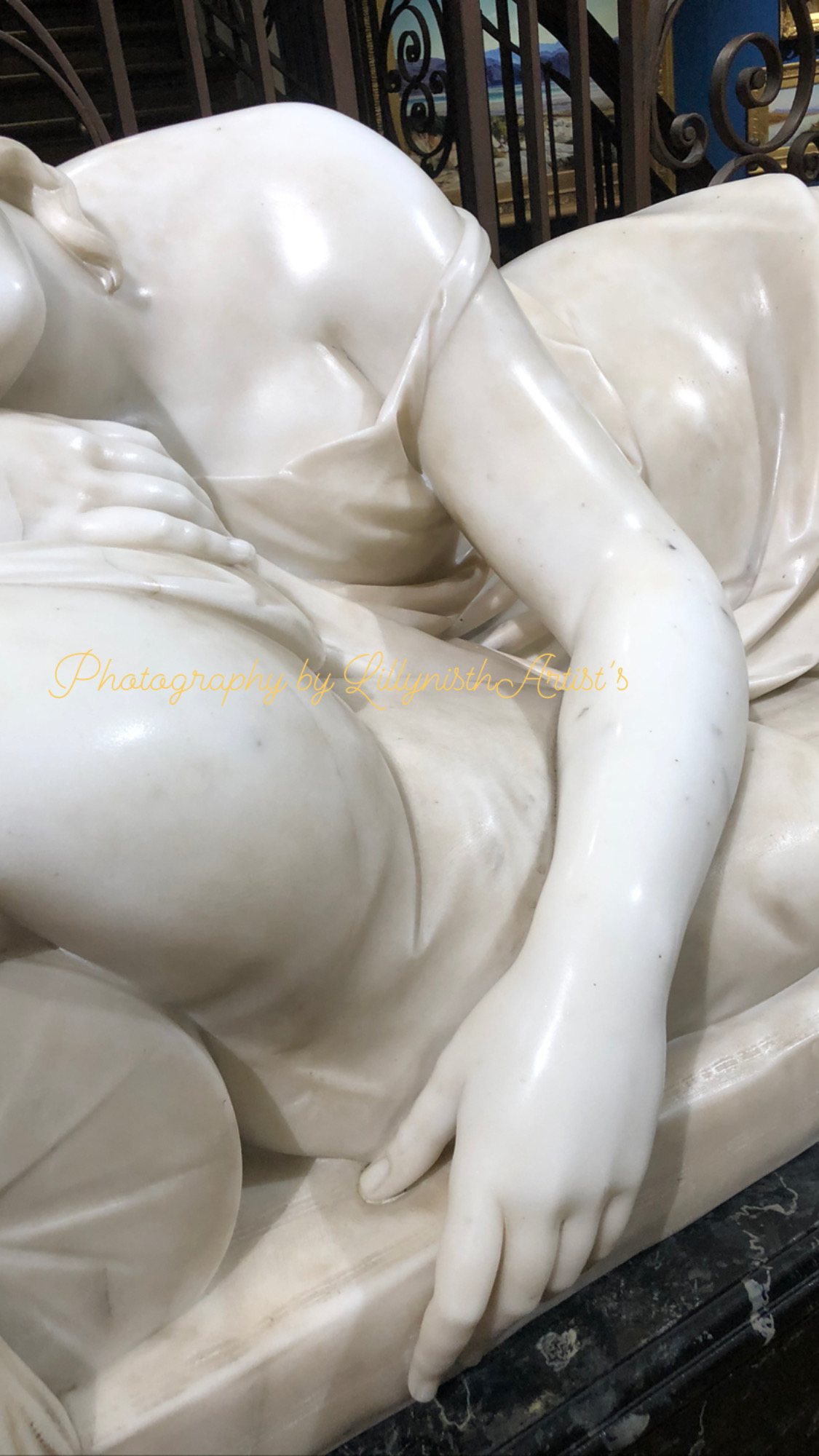

Artwork: Sleeping Nymph
Category: Sculpture
Artist: E. H. Bailey
Created: 1850
Material: Marble
Dimensions: ?
Location: Bristol Museum and Art Gallery, BS, UK
Photography: LillynisthArtist’s
———————-
A shiny marble statue of a woman sleeping might be pressed into being an image of ‘desire’, but for my money is, again, much better described as an aspect of dream.
Militating against the description of ‘desire’ is the simple fact that she is fully clothed. After all, much of Victorian poetry, under the influence of Tennyson, was similarly dreamy, escapist, seeking marmoreal perfection aimed the filthy clatter of the Industrial Revolution.” (astrotella)
————————
#webgalleryofvisualart #1transcribedtext #statues #bristolmuseumandartgallery
Woman Bathing
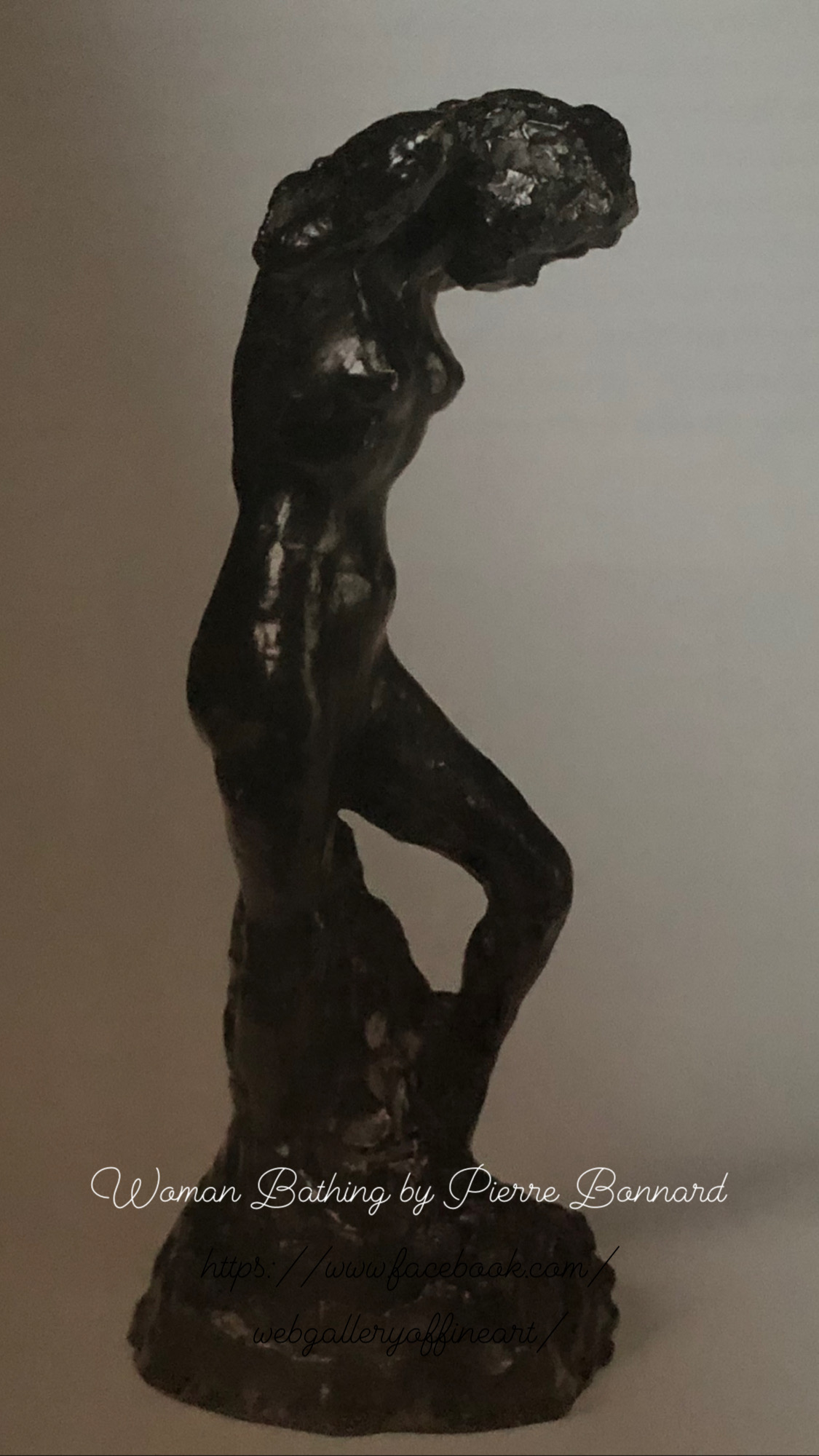
Artwork: Woman Bathing
Artist: Pierre Bonnard
Created: c. 1900-1906
Category: Sculpture
Material: Bronze
Dimensions: 27.3 cm
Location: Hirshhorn Museum and Sculpture Garden, Smithsonian Institution, Washington DC
“It was a time when he also experimented with portraiture and sculpture under the influence of Aristide Maillol. Then, after ten years together in Paris, the Nabis gradually dissolved and moved away; Denis to Saint-Germain-en-Laye, Roussel to L’Étang-la-Ville; Maillol to Marvy-le-Roi.” (Juliette Rizzi)
#webgalleryofvisualart #1001andmore #pierrebonnard #1transcribedtext #sculpture
Red Abstract No 5
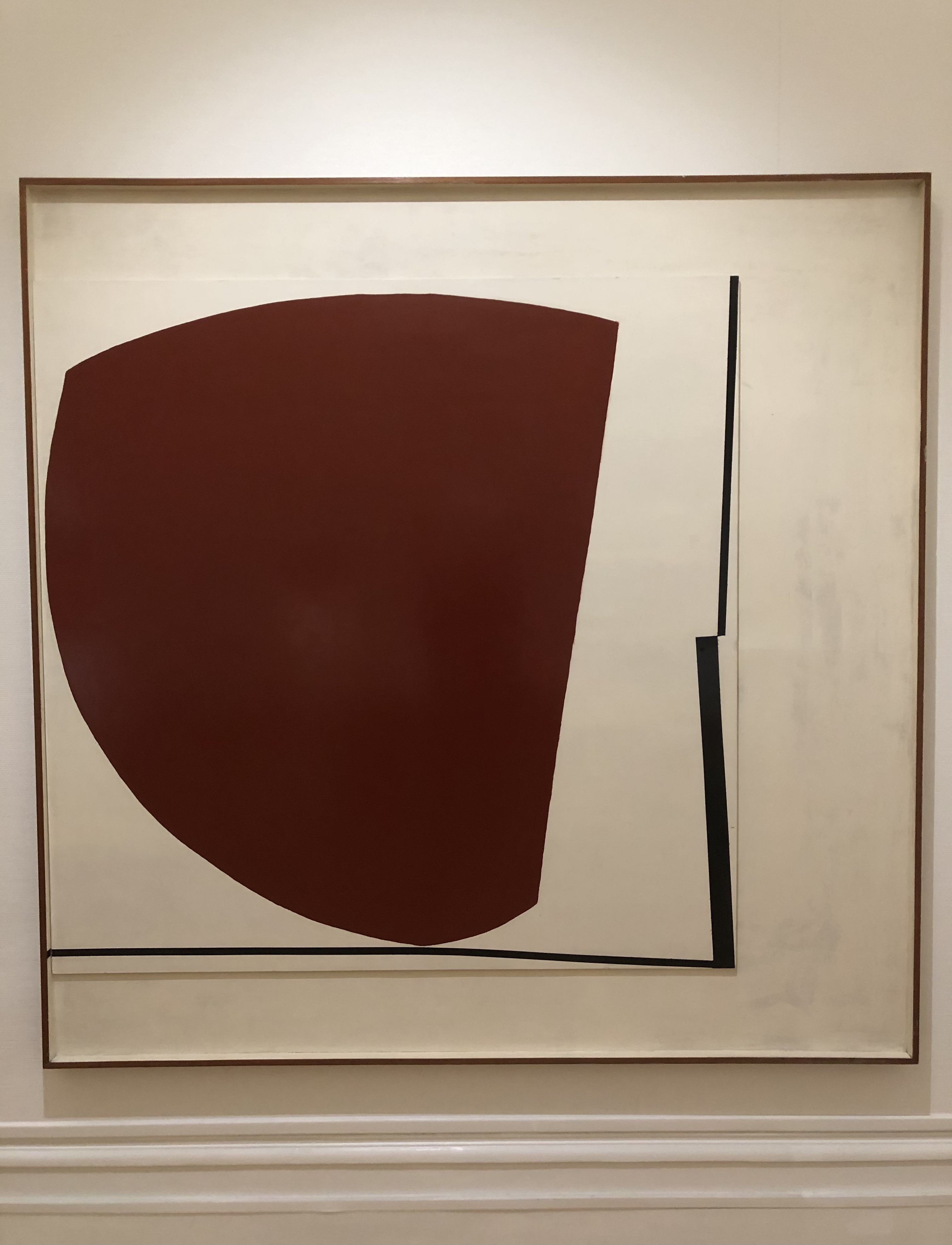
Artwork: Red Abstract No 5
Artist: Victor Pasmore (1908-1998)
Created: 1960
Medium: Oil on plywood
Dimensions: 193 x 193 cm
Location: Bristol Museum and Art Gallery
Photography by LillynisthArtist’s
———————
“Victor Pasmore was one of the leading British artist. His early work was figurative, and highly regarded, but in the late 1940s he progressed logically to abstraction.
The picture was independent object in its own right, not a representation of another object.
Looking back, he said he had witnessed the ‘revolution of Painting. . . (when) the naturalist painter has been forced to start completely again’.
This monumental work is in shallow relief, giving a subtle extra dimension to the painted surface.” (BM&AGsite)
———————-
#webgalleryofvisualart #1transcribedtext #britishartist #bristol #repostlillynisth #bristolmuseumandartgallery #lillynisthartistconcept


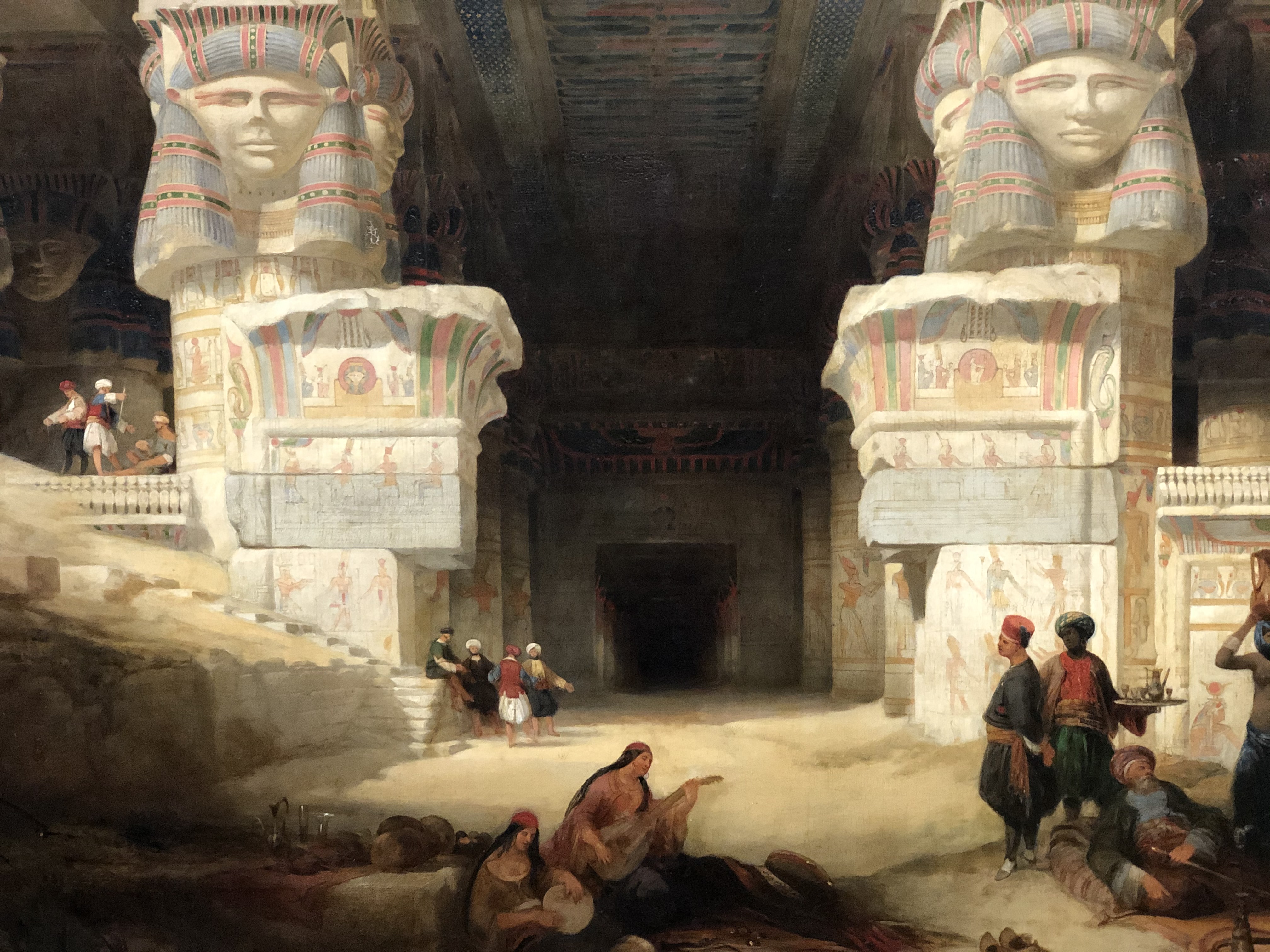
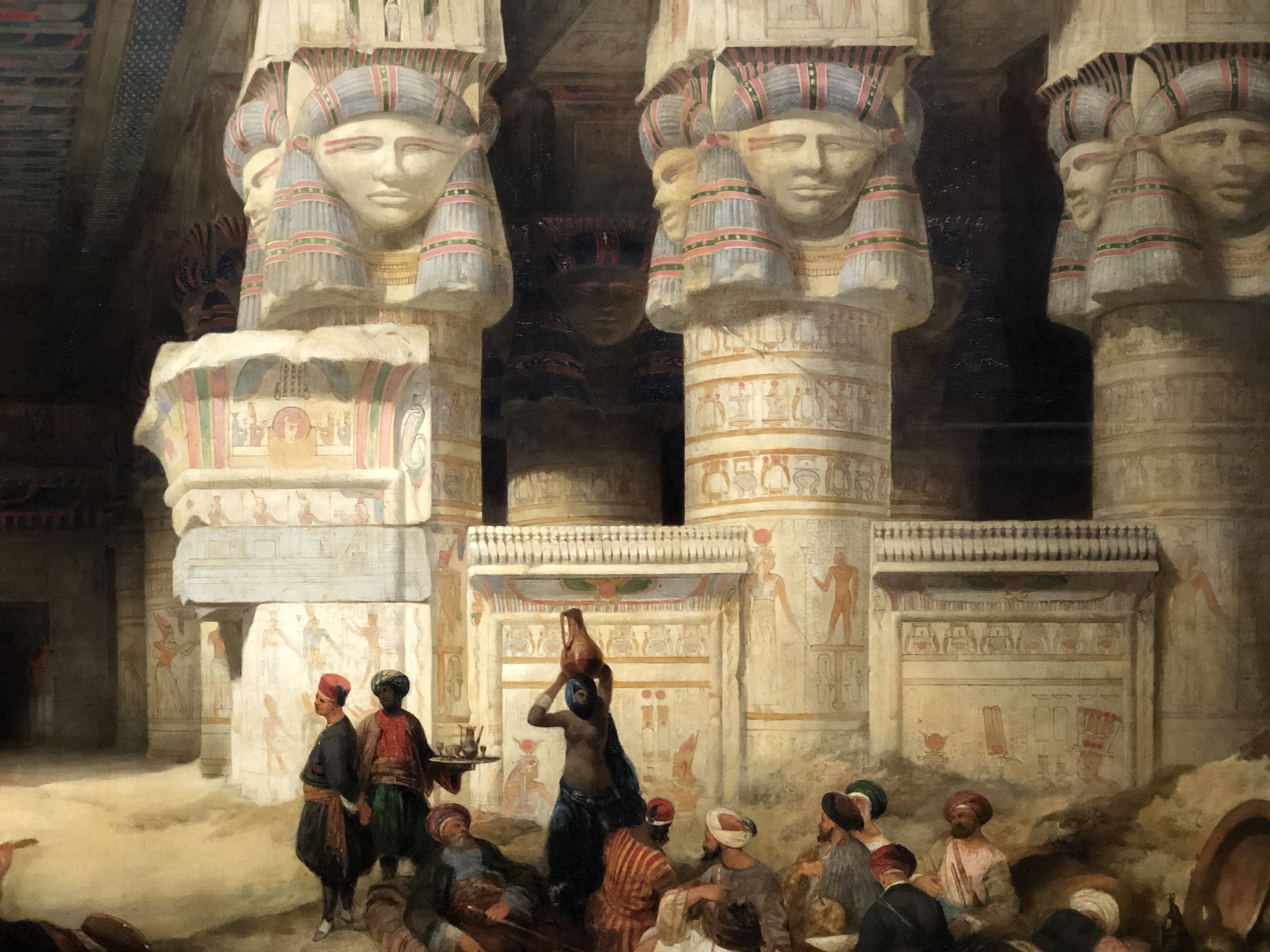
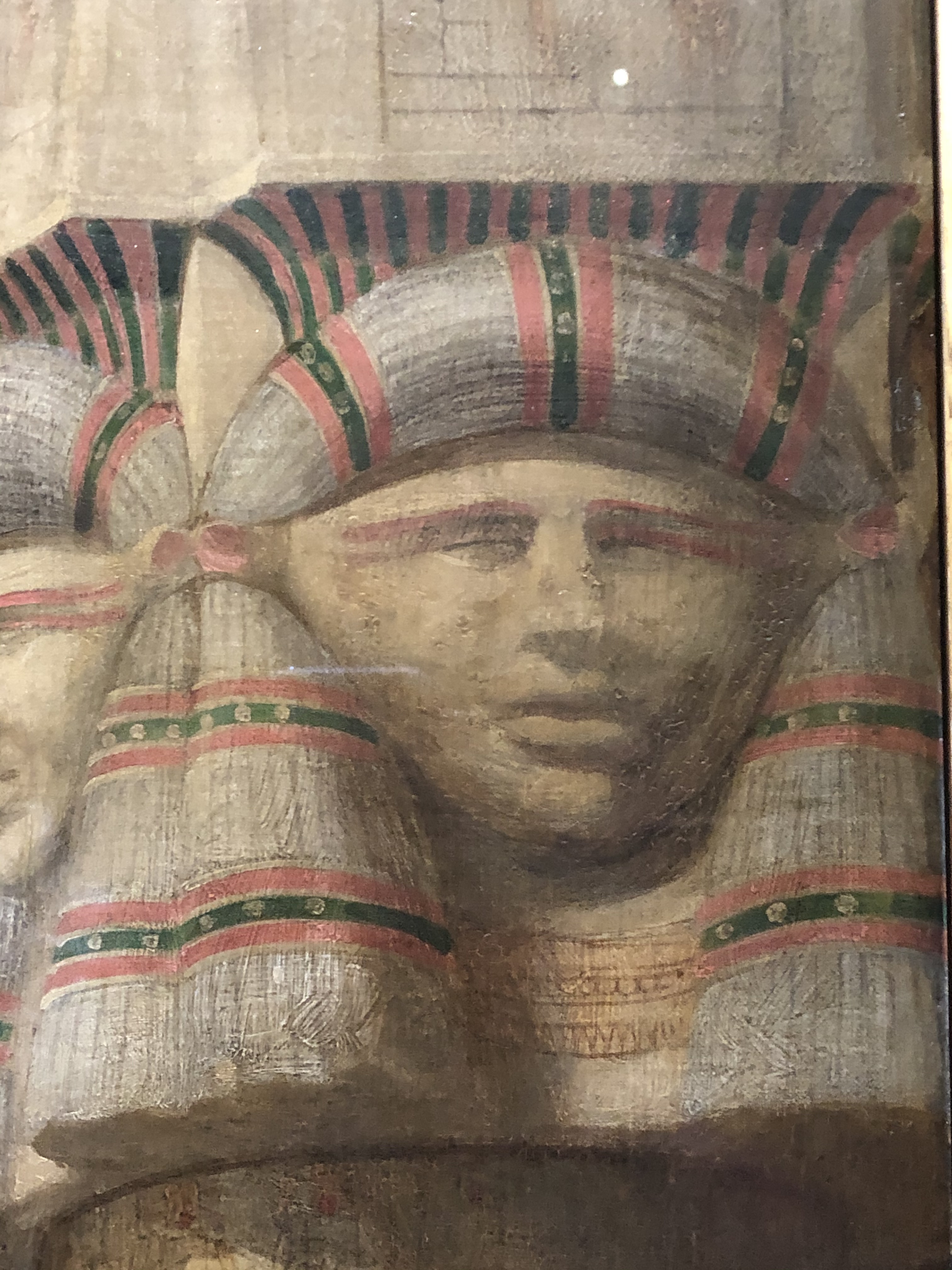


Artwork: The Temple of Dendera, Upper Egypt (whole and details)
Artist: David Roberts (1796-1864)
Created: 1841
Medium: Oil on canvas
Dimensions: 119.3 x 212 cm
Location: Bristol Museum and Art Museum
Photography by LillynisthArtist’s
————————-
“In this painting the dark entrance to the Temple of Hathor at Dendera seems to stretch endlessly into the half-buried and elaborately decorated facade of the colossal building. The figures in the right foreground heighten the scale of the architecture. Dramatic lighting increases further the effects of sublime grandeur.
David Roberts’ visit to the Near East in 1838-9 was of crucial importance to his career. He was already acclaimed as a painter of European topographical and architectural views but he needed new subject matter and was one of the first British artists to visit Egypt.
The sketches he made there and in the Holy Land gave him enough subjects for the rest of his life. At Dendera he noted the temple’s good state of preservation in his diary. However, the faces on the columns of the portico had eroded and he embellished them in this painting for greater dramatic impact.” (BM&AG)
——————-
#webgalleryofvisualart #1001andmore #bristolmuseumandartgallery #repostlillynisth #lillynisthartistconcept
Daedalus Equipping Icarus


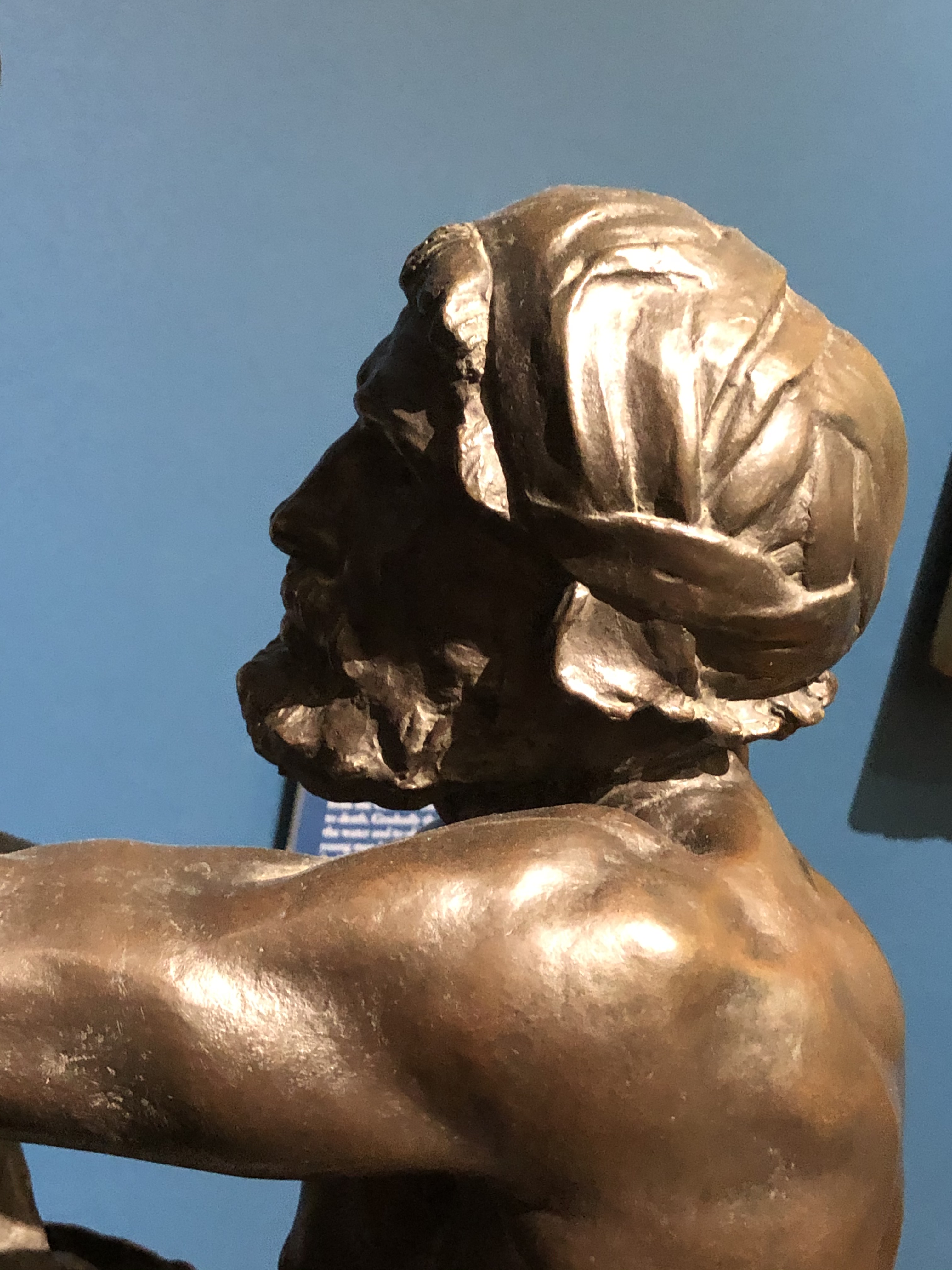
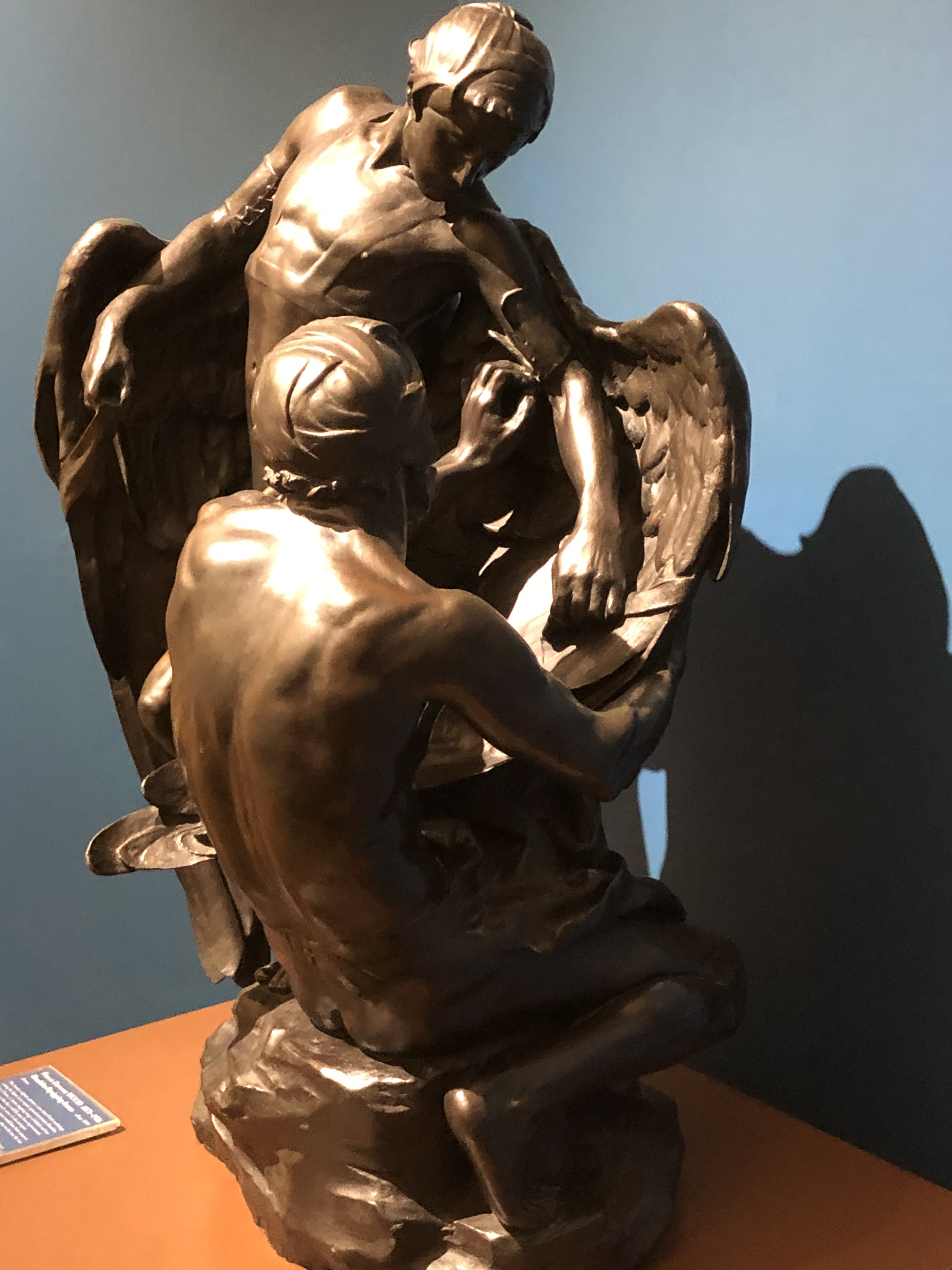
Artwork/Sculpture: Daedalus Equipping Icarus
Artist/Sculptor: Francis Derwent Wood (1871-1826) was British artist
Created: 1895
Material: Bronze
Dimensions: H 106.5 x W 67.5 x D 55 cm
Location: Bristol Museum and Art Gallery
Photography by @art_love_enjoy_life
——————————
#webgalleryofvisualart #bristolmuseumandartgallery #ukfootwalk🇬🇧 #ukfootwalk #bristolfootwalk #newconceptofphoto #1zebraphotography #1001andmore
Small Female Torso
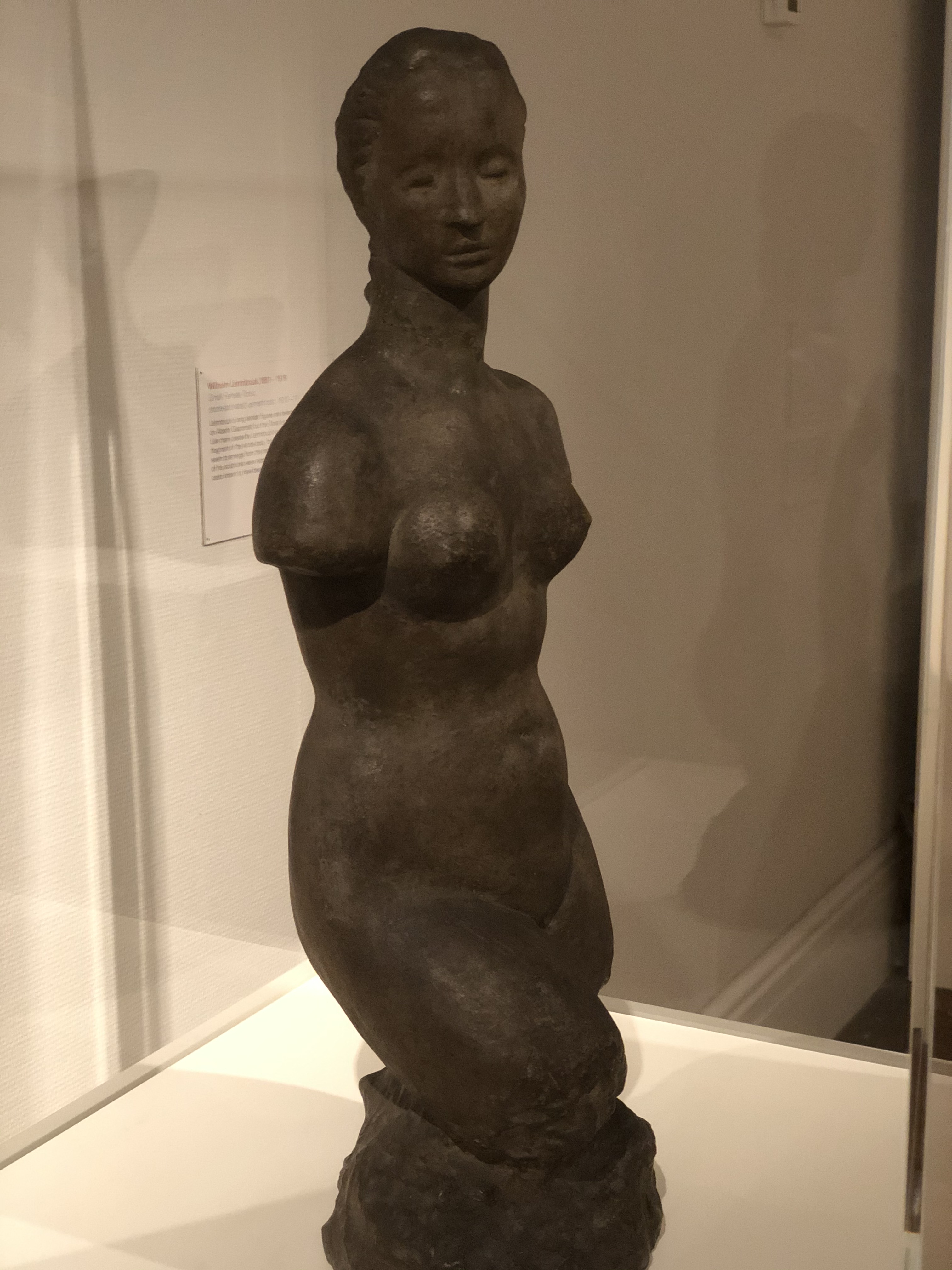


Sculpture: Small Female Torso
Artist/Sculptor: Wilhelm Lehmbruck (1881-1919)
Created: c. 1910-1911
Material: Stone-patinated cement
Dimensions: H 71 x W 28 x D 28 cm
Location: Bristol Museum and Art Gallery, Bristol, BS, UK
Photography by @art_love_enjoy_life
——————
“Lehmbruck’s long slender figures are believed to have been influential on Alberto Giacometti but his Torso is a more solid and inert form.
Like many pieces by Lehmbruck’s admired Rodin, this sculpture is a fragment of the whole body, focusing on particular body parts that seems to emerge from the material. After Lehmbruck’s suicide, many of his sculptures were recast in bronze, and there are three such cast known to have been taken of this work.” (source from BM&AG)
—————————-
#webgalleryofvisualart #1transcribedtext #sculpturesofinstagram #repostlillynisth #newconceptofphoto #1zebraphotography #1001andmore
Moon Figure
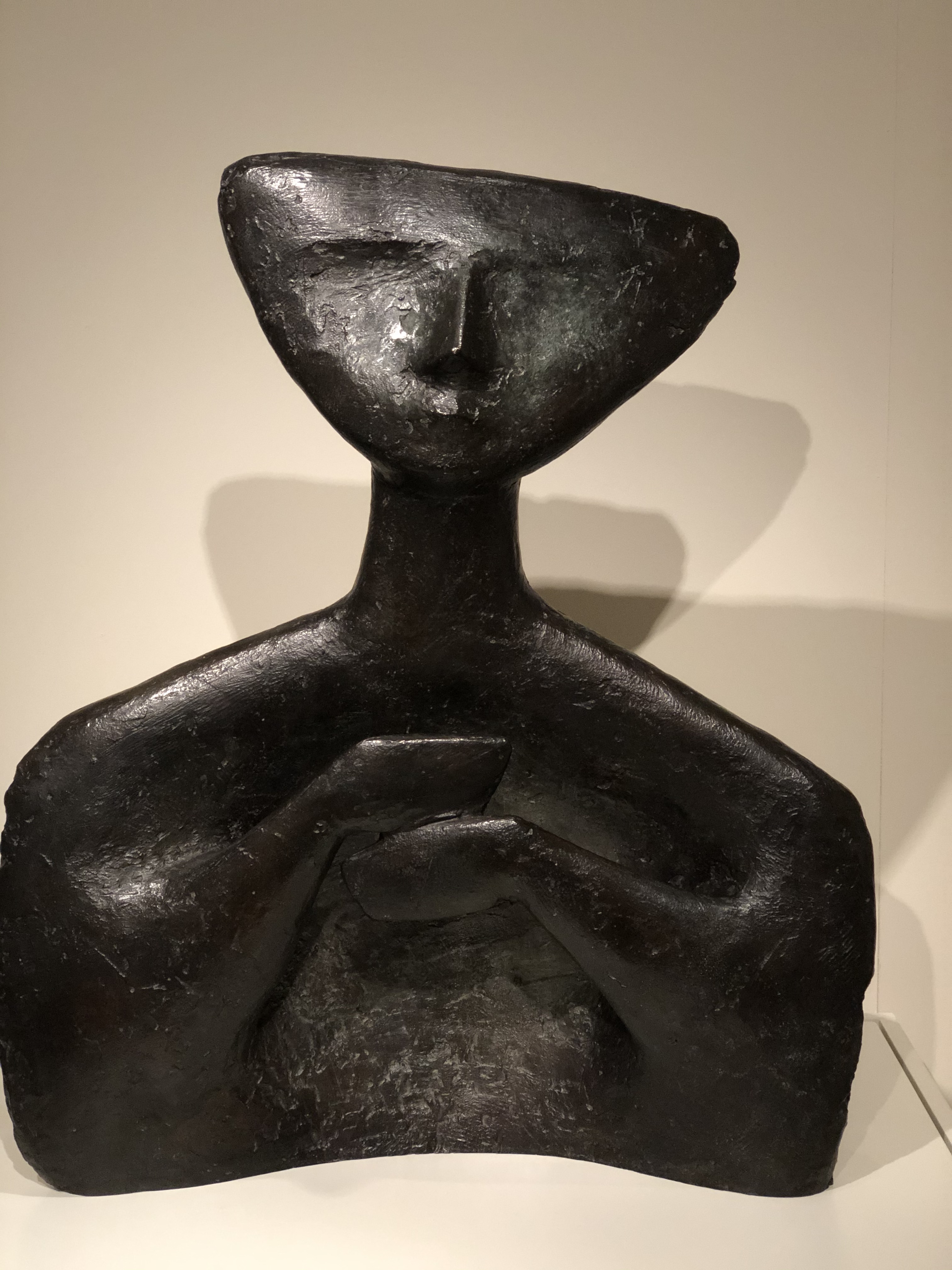
Sculpture: Moon Figure
Artist/Sculptor: Ken Armitage (1916-2002)
Created: 1948
Material: Bronze
Dimensions: H 67.5 x W 83 x D (?) cm
Location: Bristol Museum and Art Gallery, BS., UK
Photography by LillynisthArtist’s
————————
“Moon Figure is Armitage’s first modelled and cast work, made at Corsham in Wiltshire where he was teaching. Armitage experimented with casting as a teenager but he practised carving at the Slade School, when he became interested in ancient Egyptian and Greek figures at the British Museum. Moon Figure with its flattened, simplified form, wide face and shoulders, blends the influences of ancient Greek sculpture with the creation of a style of his own.” (BM&AG/BS)
———————-
#1001andmore #webgalleryofvisualart #sculpture #bristolmuseumandartgallery
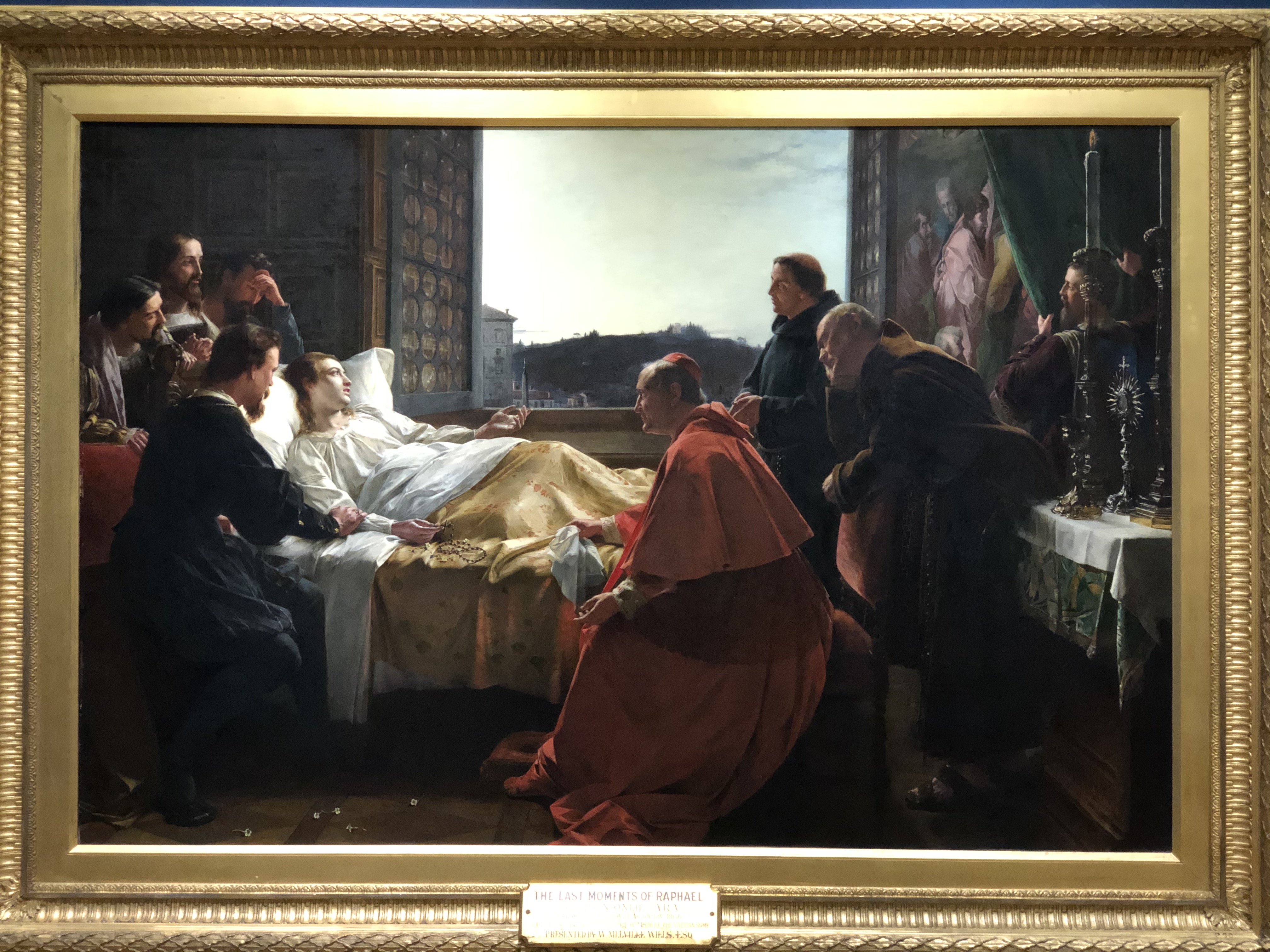

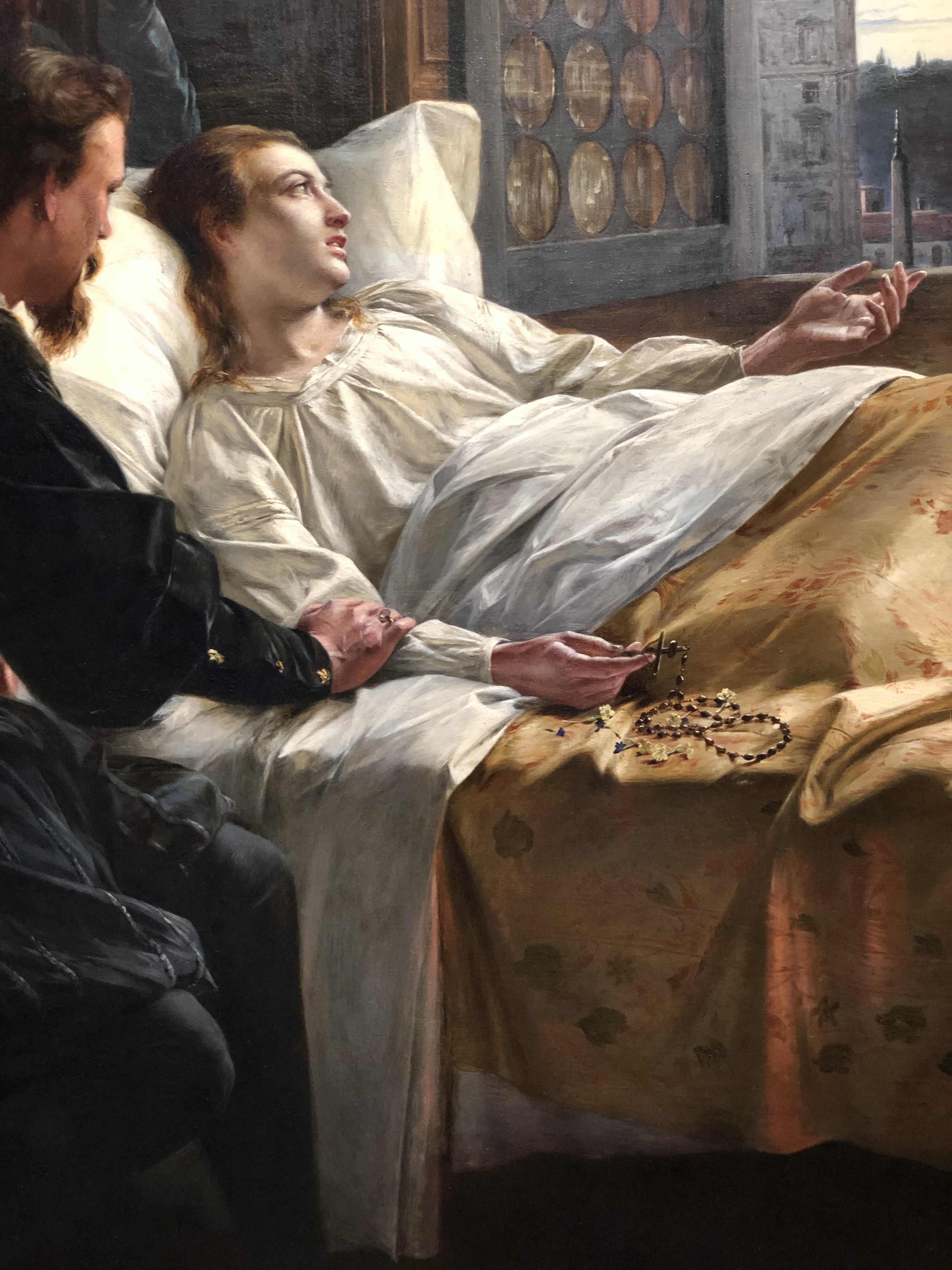

Artwork: The Last Moments of Raphael (b. 1483-d. 1520) – (Whole and details)
Movement: Realism
Artist: Henry Nelson O’Neil (1817-1880)
About: 1866
Medium and Support: Oil on canvas
Dimensions: 121.1 x 182.3 cm
Location: Bristol Museum and Art Gallery
Photography @art_love_enjoy_life
——————
#1001andmore #bristolmuseumandartgallery #webgalleryofvisualart
Les Adieux


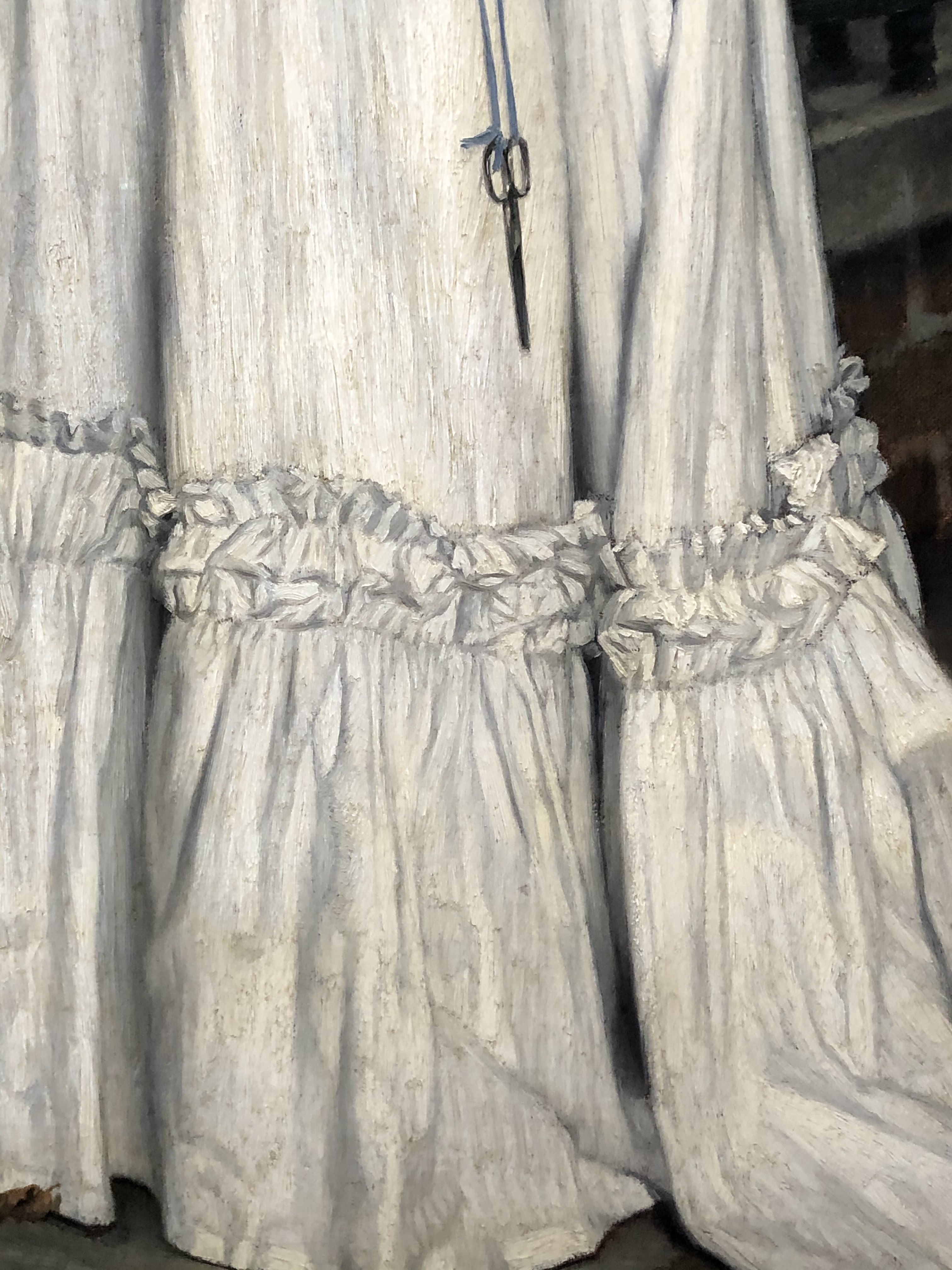
Artwork: Les Adieux (The Farewells) – whole and details
Artist: James Tissot (1836-1902)
Created: 1871
Medium and Support: Oil on canvas
Dimensions: 100.3 x 62.5 cm
Location: Bristol Museum and Art Gallery, Bristol, UK
Photography by @art_love_enjoy_life
——————
“A lady in white regency dress and black stole says her farewells to a gentleman at a tall cast-iron garden gate. Autumn has turned the leaves above their heads yellow and the couple’s mood are sombre.
This is one of the first works the French artist James Tissot painted after his arrival in London in 1871, and one of several in which he treated the theme of painting. It has been suggested that subjects were provoked by Tissot’s sudden departure from his native Paris and his sense of displacement in London, although clearly he was also responding to the English taste for narrative and costume.
The reluctantly pairing couple are divided by the railing that symbolizes their imminent separation. The scissors which dangle from the lady’s waist also allude to their division, yet the flower symbolism of the ivy and holly along the railing would have been understood by Victorian audiences to allude to an eventual, happy ending. The image became famous through an engraving published in 1873.” (BM&Art Gallery)
———————
#1001andmore #1transcribedtext #french #repostlillynisth #tissot #bristolmuseumandartgallery #couple #webgalleryofvisualart
Translated Vase no. 8

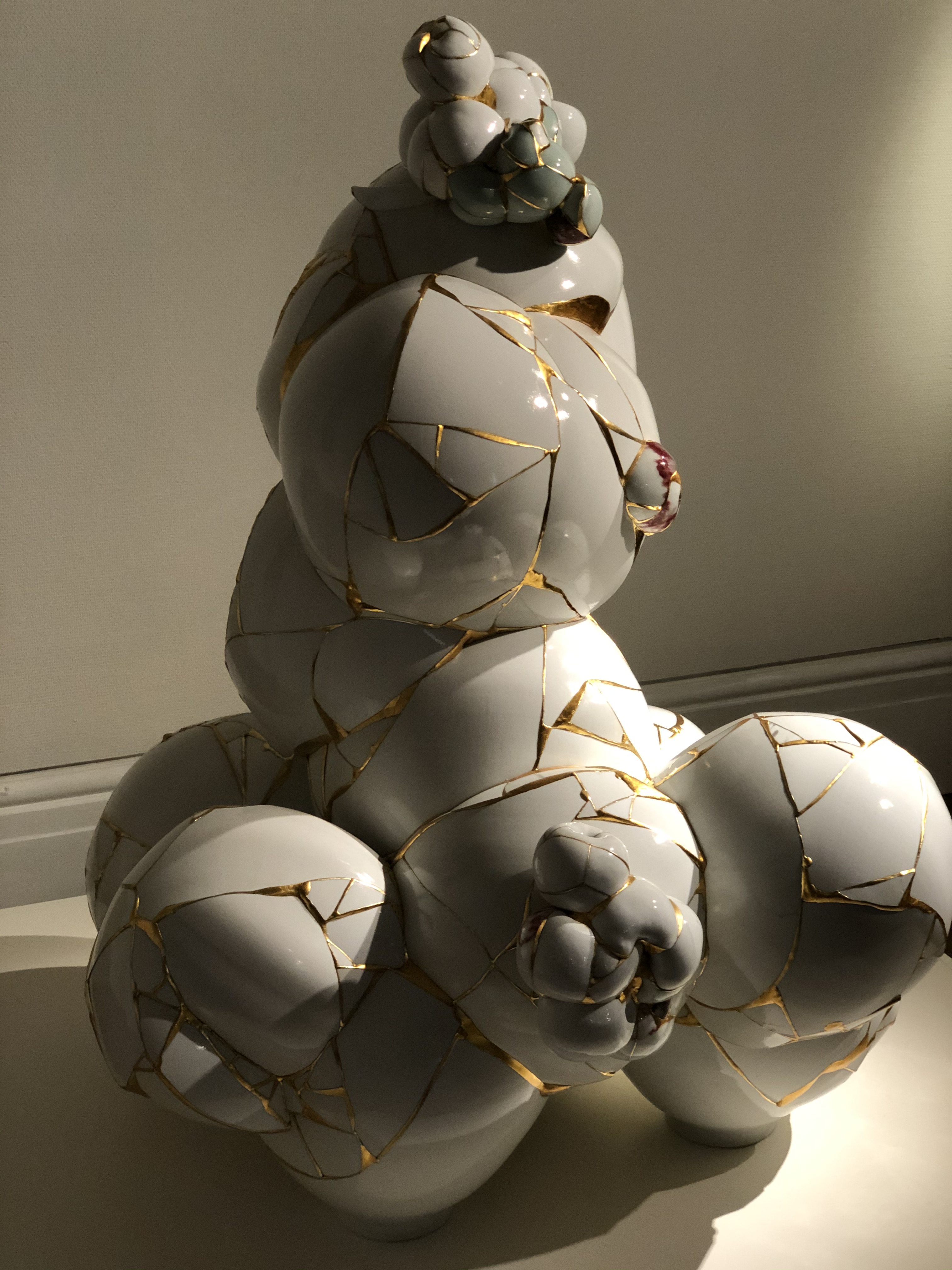
Artist: Yeesookyung, born 1963
Translated Vase number 8
Dimensions: 116 x 111 x 122 cm
———————-
“Ceramic sculpture created from ceramic discarded by Park Young Sook, fused together with epoxy and 24 carat gold, 2012.
For her – ‘Translated Vase’ – sculptures Yee gathers discarded shards for master ceramics to create a new forms. The sculptures incorporate the traditionally-made highly-prized porcelain into awkward forms that seem strangely human fused together with precious gold leaf. The use of gold leaf is a pun on the Korean term geum meaning both gold and split. Yee’s constructions fuse centuries of Far Eastern ceramic tradition (and by implication, centuries of separation) with 20th-century European Modernism’s bricolage technique of assembling found materials.”
Location: Bristol Museum and Art Gallery, Bristol, UK
———————-
Photography by @art_love_enjoy_life #1zebraphotography #webgalleryofvisualart #1transcribedtext #sculpture #ceramics #bristolmuseumandartgallery
Susanna

Artwork: Susanna and the Elders
Movement: Mannerism
Artist: Jacopo Tintoretto
Created: 1555
Medium and Support: Oil on canvas
Dimensions: 146.6 x 193.6 cm
Location: Kunsthistorisches Museum, Vienna, Austria
“His creamy crouching Susanna has little in common with Titian’s nudes, with its blonde incandescence as if lit by the slow flush of summer lighting; and all around Susanna light flickers and spirals, shaping the tree trunks, spraying out into bunches of leaves or curling up to become the clothes of the Elders.” (ML)
#1001andmore #tintoretto #1transcribedtext #webgalleryofvisualart
Portrait of a Cardinal

Artwork: Portrait of a Cardinal
Artist: Sebastiano del Piombo
Created: c. 1500
Medium: Oil on canvas
Dimensions: 71.5 x 57 cm
Location: Kunsthistorisches Museum, Vienna, Austria
“Sebastiano del Piombo (c. 1485-1547) was a Venetian who began under the strong influence of Giorgione but settled at Rome and came under the spell of Michelangelo.
A dusky splendour of colouring remains typical of Sebastiano; and a grandeur in portraiture which Vasari rightly emphasised.” (ML)
#1001andmore #webgalleryofvisualart #venetian #kunsthistorischesmuseum
Madame de Pompadour

Artwork: Madame de Pompadour
Style: Rococo
Genre: Portrait
Artist: Maurice Quentin de La Tour (1704-88)
Created: c. 1748
Medium: Pastel on paper
Dimensions: 175 x 128 cm
Location: Louvre, Paris
“This pastel portrait depicts one of the rare women to play a decisive role in the political, intellectual, and artistic life of the 18th century. First mistress and later friend of King Louis XV, she also aspired to be his counselor. Commissioned from the most famous and gifted pastelist of the period, Maurice-Quentin de La Tour, this masterpiece sheds light on the intentions of the Marquise de Pompadour, created as it was throughout the evolving relationship of an exceptional couple.” (Wikiart)
#madamedepompadour #webgalleryofvisualart #louvremuseum #pastel
Rinaldo and Armida

Artwork: Rinaldo and Armida
Period: Rococo
Artist: Jean-Honoré Fragonard
Created: c. 1763
Medium: Oil on canvas
Dimensions: 72 x 91 cm
Location: Private Collection
“The zenith of frivolity is reached in Jean-Honoré Fragonard (1732-1806) whose verve is almost defiant dancing on the volcano’s edge, and who lived to see the eruption. Fragonard’s eager curving lines sway and unite amorously throughout his compositions. . .But woman remained objects of lascivious attention rather than people; they are forever bathing, or putting men under their immortal spill, as the vogue for pictures of the Rinaldo and Armida story proves.” (ML)
#1001andmore #webgalleryofvisualart #historyofart #1transcribedtext
Water-Lilies
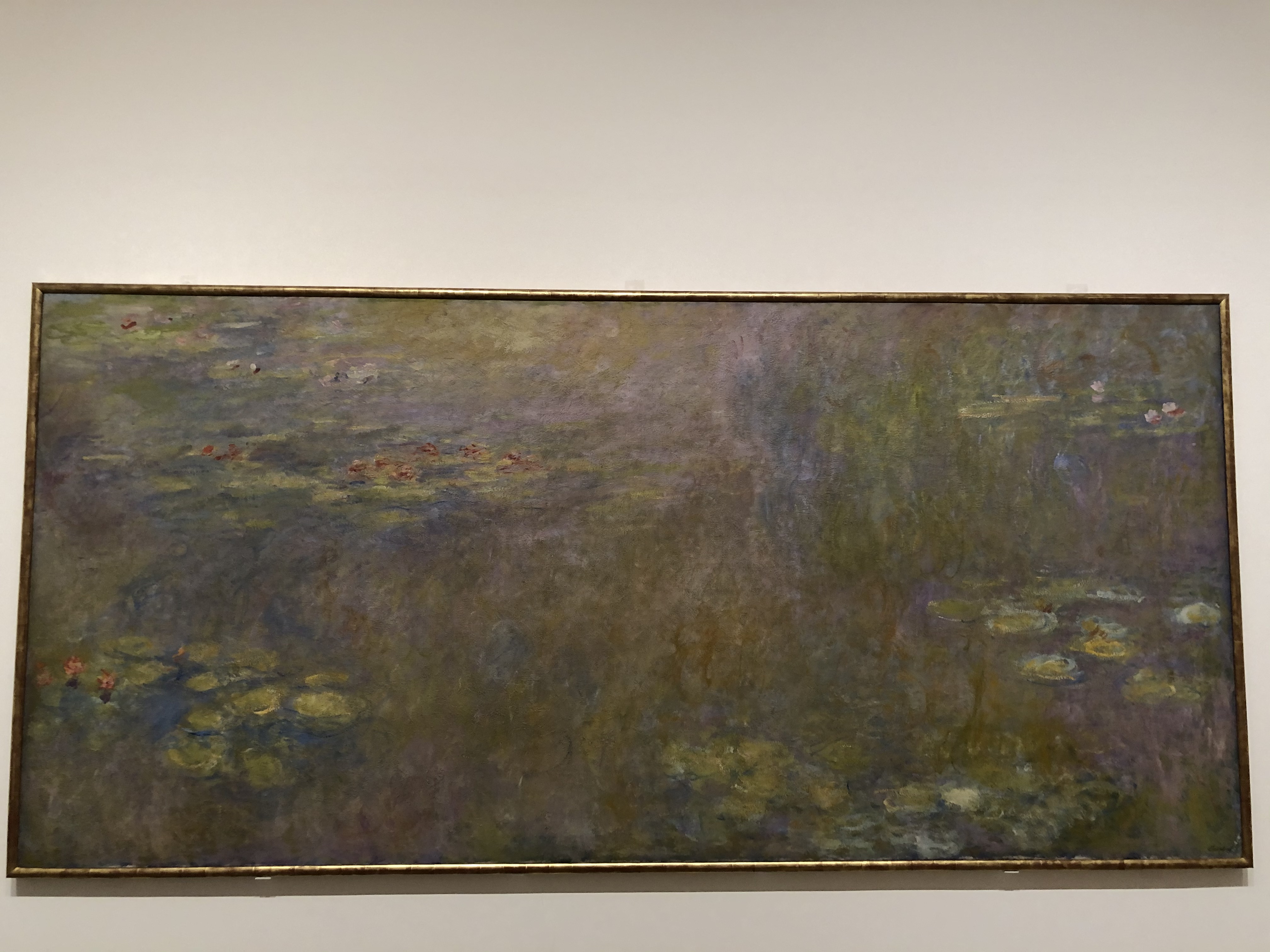
Artwork: Nymphéas (original name), or Water-Lilies
Style: Impressionism
Artist: Claude Monet (1840-1926)
Created: after 1916
Medium: Oil on canvas
Dimensions: 200.7 x 426.7 cm (estimate — unframed)
Framed: 206 x 432 cm (framed)
Location: Tate Modern, London, UK
Photography by @1001before_you_die_collection (L-C E)
(Photo is taken with the Mobile Phone — camera)
—————————
‘’Water Lilies is a series of approximately 250 oil paintings by French Impressionist Claude Monet. The paintings depict his flower garden at his home in Giverny, and were the main focus of his artistic production during the last thirty years of his life.’’ (Wikipedia)
——————————
#webgalleryofvisualart #1zebraphotography #claudemonet #tatemodern #frenchpainter
The Wood Sawyers

Artwork: The Wood Sawyers
Artist: Jean-François Millet
Created: c. 1850-1852
Medium: Oil on canvas
Dimensions: 95.5 x 119.5 cm (framed)
Weight: 31 kg with frame (this thing is very interesting)
Location: Victoria and Albert Museum, London, UK
Photography: @webgalleryofvisualart
—————————
‘’Three colours dominate the earthen palette: the intense blue of the near sawyer’s trousers, his brilliant white shirt and the red of the third figure in the background. This colour scheme combined with the emphasis put on the strain of the figures may convey a political meaning. For instance, the Winnover, The National Gallery, London, exhibited at the Salon in 1848, has been interpreted as an allusion to the Revolution of February that year through the colours worn by the figure, blue, white and red, and the subject matter, separating the grain from the chaff.
X-ray photography shows that the scene was painted over an earlier composition, most likely the lost oil sketch for The Republic, unsuccessfully submitted by Millet at a French state competition in 1848. Around this time, Millet made two other sketches entitled L’Egalité and La Fraternité stylistically compatible with the underlying composition.’’ (Source of text V&A)
#1001andmore #webgalleryofvisualart #museumlover #victoriaandalbertmuseum
Portrait of a Lady Called Jeanne de Marigny
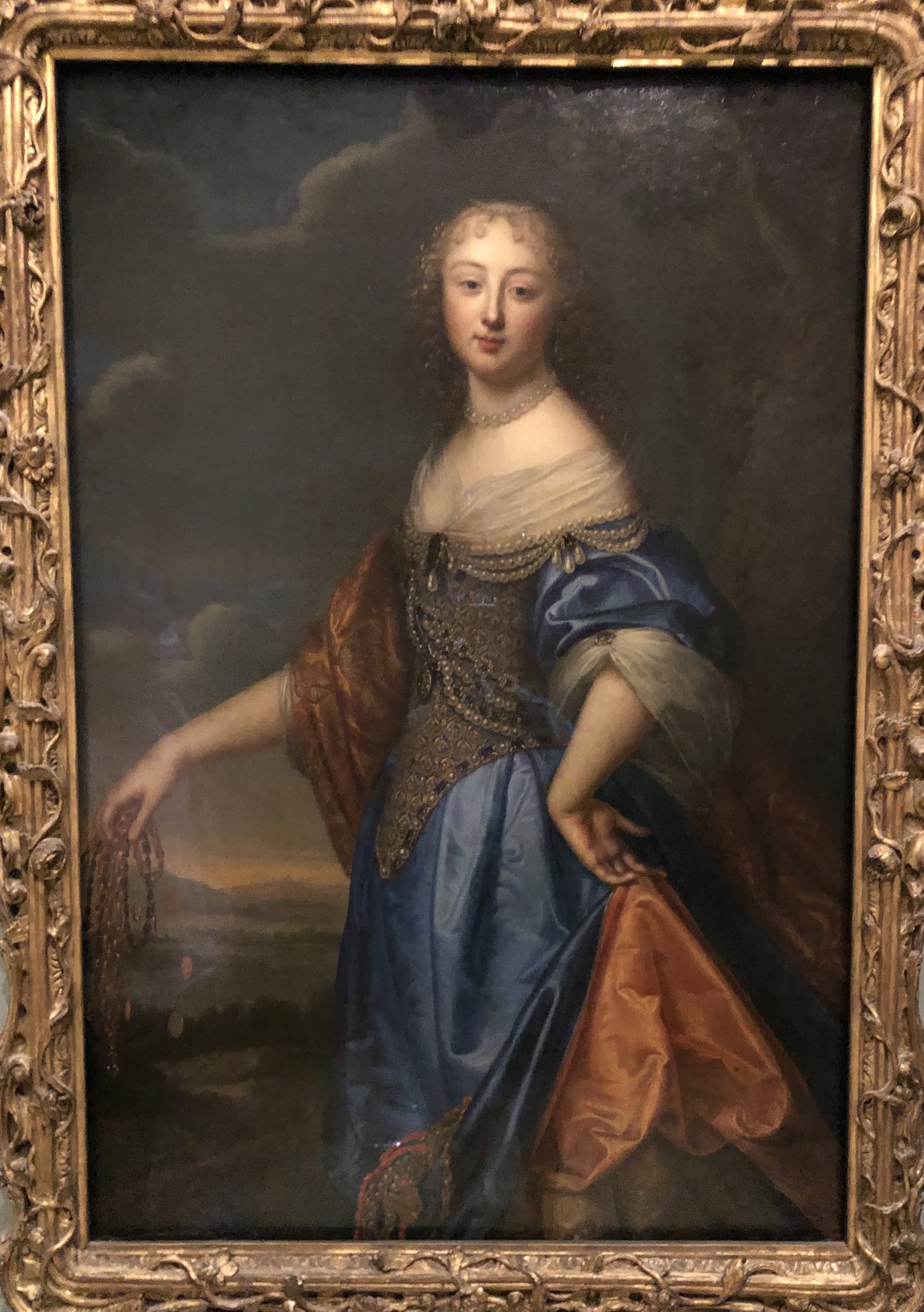
Artwork: Portrait of a Lady Called Jeanne de Marigny
Artist: Charles Beaubrun and Henri Beaubrun
Created : c. 1650-1660
Medium: Oil on canvas
Dimensions: 128 x 84.5 cm (estimate)
Location: Victoria and Albert Museum, London, UK
Photography: @art_love_enjoy_life (L-C E)
——————————————
‘’Three-quarter length full-face portrait of a lady facing the spectator; she has fair hair arranged in ringlets surmounted by a string of pearls, she wears elaborate satin dress in gold, blue and orange/red, also ornamented with pearls. Her left hand rests on her hip and holds up her skirt in which are trapped some necklaces and gold coins. From her right hand she holds out two necklaces while some coins are dropping out. In the background on the left is a landscape under a cloudy sky; on the right is a tree.’’ (V&A)
———————————————-
#webgallyofvisualart #webgalleryofvisualart #victoriaandalbertmuseum #1001andmore #museumlover
The Arch of Janus Quadriffons

Artwork: The Arch of Janus Quadriffons
Artist: Giacomo Raffaelli
Created: c. 1775-1800
Materials and Techniques: Mosaic
Dimensions: 65 cm x 79.5 (framed)
Location: Victoria and Albert Museum, London UK
Photography by @art_love_enjoy_life
—————————-
‘’This mosaic picture shows the Arch of Janus Quadrifons, one of the most celebrated ancient sights in Rome which attracted travellers from all over Europe as the single most important stop on their Grand Tour in the late eighteenth century. It is made with unusually small pieces, so-called tesserae, which consist of a glass-like material called smalti (enamel).
Rectangular mosaic picture of the Arch of Janus Quadrifons showing a ruined four-sided arch inhabited by cows, horses and other domestic animals. On the left is a portion of another ruined structure with a peasant family seated at its base; in 20th-century giltwood frame.’’ (V&AM)
———————————
#mosaic #picture #victoriaandalbertmuseum #1001andmore #webgalleryofvisualart #1zebraphotography
The Bowl of Milk
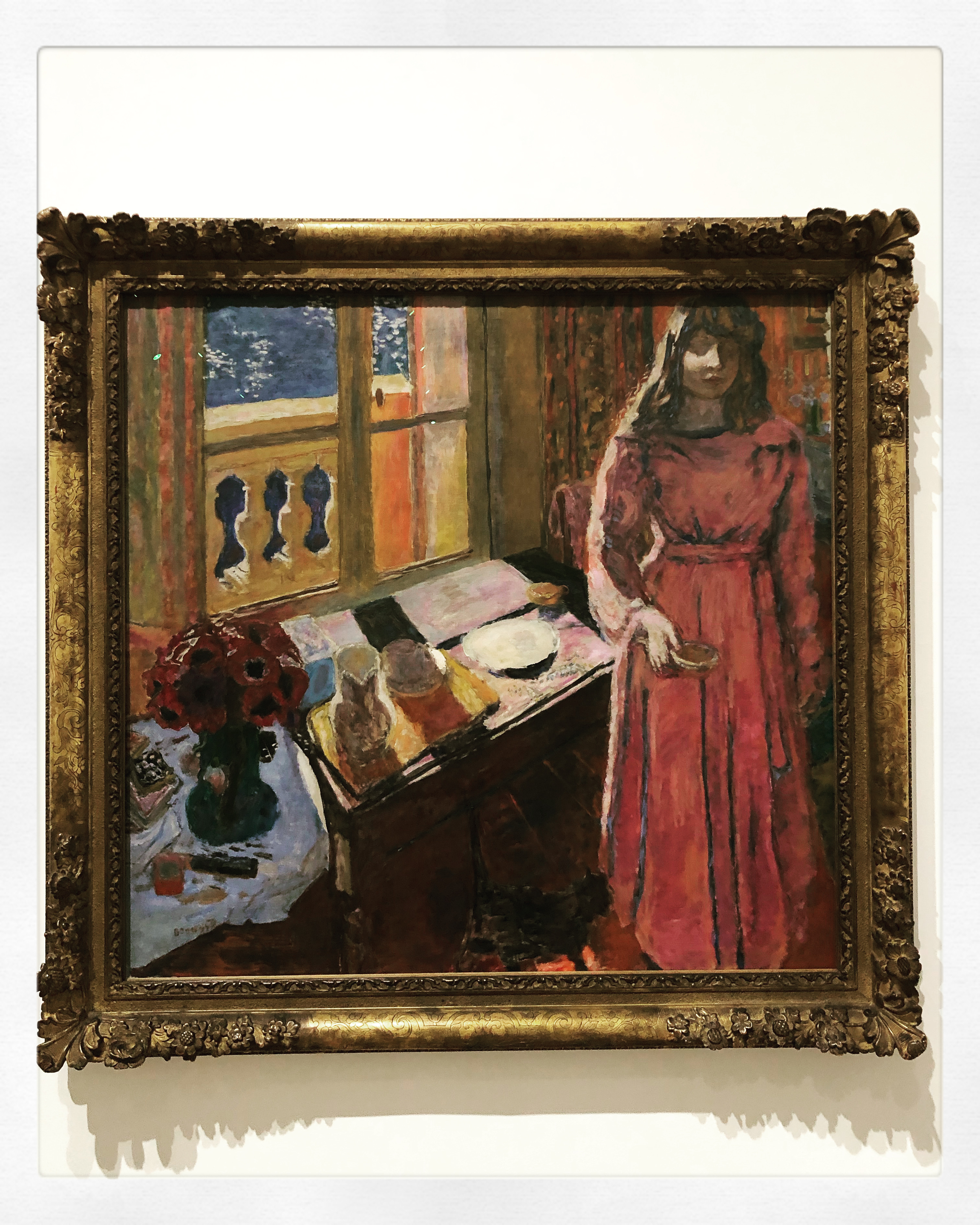
Artwork: The Bowl of Milk
Artist: Pierre Bonnard
Created: c. 1919
Medium: Oil on canvas
Dimensions: 138 x 143.5 cm (framed)
Location: Tâte Modern, London, UK
Photography by @art_love_enjoy_life
—————————————————
‘’Bonnard painted this work in the south of France. He moved there during the First World War with his partner Marthe de Méligny, pictured here. This view is of the room they rented. Light reflected from the sea pours through the balcony window. The strong light leaves many details in shadow, including de Méligny’s face and the cat awaiting its milk. Preparatory drawings show Bonnard testing a variety of details and poses before he brought them together in the final painting.’’ (Tate Modern)
———————————————
#webgalleryofvisualart @art_love_enjoy_life #frenchpainter #oiloncanvas #tatemodern
Portrait of a Young Woman

Artwork: Portrait of a Young Woman
Artist: Meredith Frampton
Created: 1935
Medium: Oil on canvas
Dimensions: 214.5 x 117.4 x 6.5 cm (framed)
Location: Tate Modern, London, UK
Photography credit: @1001before_you_die_collection (L-C E)
————————————————
Meredith Frampton 1894-1984, born and worked Britain.
Portrait of a Young Woman 1935, is painted ‘’to the tradition of full-length portraits of women that is associated in particular with the work of earlier artists, such Van Dyck and Gainsborough.
However, it executed with a clarity and precision that give it an unmistakably modern feeling. Frampton said that he made this painting as ‘a relaxation from commissions, and to celebrate an assembly of objects… beautiful in their own right’.
The sitter was Margaret Austin-Jones, then aged twenty-three. Her dress was made up from a Vogue pattern by Frampton’s mother.
The vase, made in mahogany, was designed by Frampton himself.’’ (from Tate)
—————————————————
#webgalleryofvisualart #1zebraphotography #portrait #tate #ukfootwalk #londonfootwalk
The Ballet Scene from Meyerbeer’s Opera
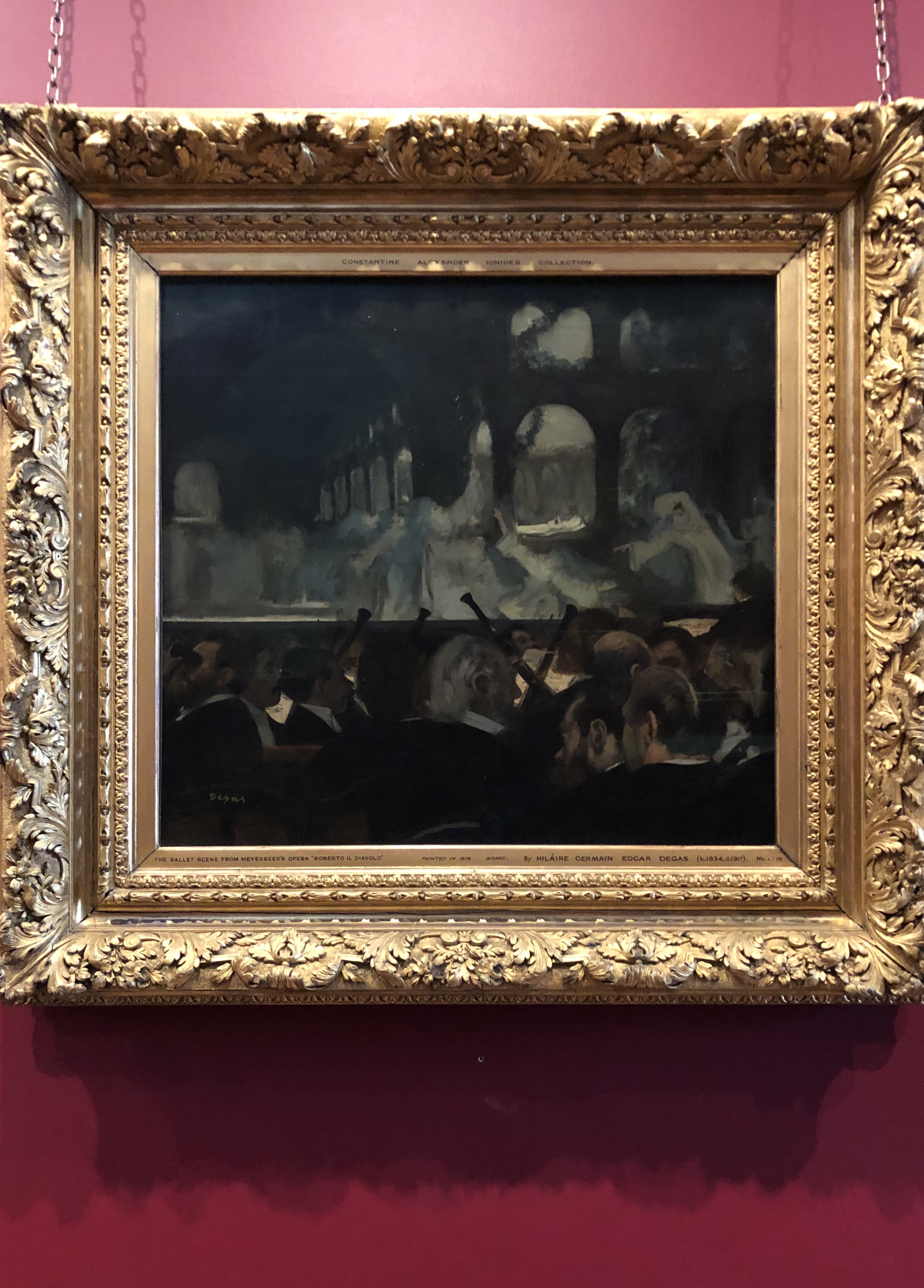
Artwork: The Ballet Scene from Meyerbeer’s Opera Robert Le Diable
Artist: Hilaire-Germain Edgar Degas
Created: 1876
Medium: Oil on canvas
Dimensions: 121 x 115 cm (with frame)
Location: Victoria and Albert Museum, London, UK
Photography by @webgalleryofvisualart (L-C E)
‘’This painting is a fine example of Degas’ opera scenes. It depicts the final act of the Romantic opera Robert le Diable when deceased nuns come back to life and execute some bacchanal dance. The scene is depicted from behind the orchestra and the first rows of spectators among whom can be recognised some friends of the artist. This compositional idea is quite typical of Degas and is recurring in several stage representations. Although Degas was close to some Impressionist painters, he rather defined his work as realist.’’
#1001andmore #webgalleryofvisualart #frenchpainter #1zebraphotography #ukfootwalk🇬🇧 #londonfootwalk #museum
Salisbury Cathedral from the Bishop’s Grounds

Artwork: Salisbury Cathedral from the Bishop’s Grounds
Artist: John Constable
Created: 1825
Medium: Oil on canvas
Dimensions: 87.9 x 111.8 cm
Location: Victoria and Albert Museum, London, UK
Photography by LillynisthArtist’s (L-C E)
——————————————
‘’This painting was made as a full-scale study for the picture of 1826 now in the Frick Collection, New York. The latter picture was completed for Constable’s friend John Fisher, bishop of Salisbury, who appears at lower left in both canvases. In fact the commission dates back to 1822; in the course of working on the composition, Constable opened up the tree canopy and added a sunny sky to frame the cathedral’s medieval spire, the tallest in England.’’ (V&A)
—————————————
#1001andmore #webgalleryofvisualart #1zebraphotography #oilpainting #victoriaandalbertmuseum #constable #englishpainter
Francis William, the Scholar of Jamaica

Artwork: Francis William, the Scholar of Jamaica
Artist: Unknown
Created: c. 1745
Medium: Oil on canvas
Dimensions: 66 x 50.1 cm (canvas
Location: Victoria and Albert Museum, London, UK
Photography by @1001before_you_die_collection (L-C E)
————————————————-
‘’Francis Williams was a Jamaican poet and a scholar. The painter of his portrait, who probably worked in Jamaica, has copied the style and format of European portraits. He or she must have seen examples of such pictures, or, more likely, prints reproducing them. There were conventions in representing scholarly men, and the artist has used several of them here. Williams is shown as a scholar in his book-lined study, with a globe of the world, and a celestial globe on the table. Dividers and other instruments are also strewn on the table. All this indicates that he has studied astronomy, mathematics and geography. A landscape, presumably of Spanish Town, Jamaica, is visible through the window, showing that Williams was resident there. It has been suggested that this portrait is a caricature of Williams because the painter has shown him with a large head and legs so thin that his stockings are wrinkled. However, Williams may have wanted to be shown in this manner to emphasise his intellectual rather than physical stature.’’ (Source V&A)
————————————————-
#unknown #painting #victoriaandalbertmuseum #1zebraphotography #webgalleryofvisualart
The Rape of Europa
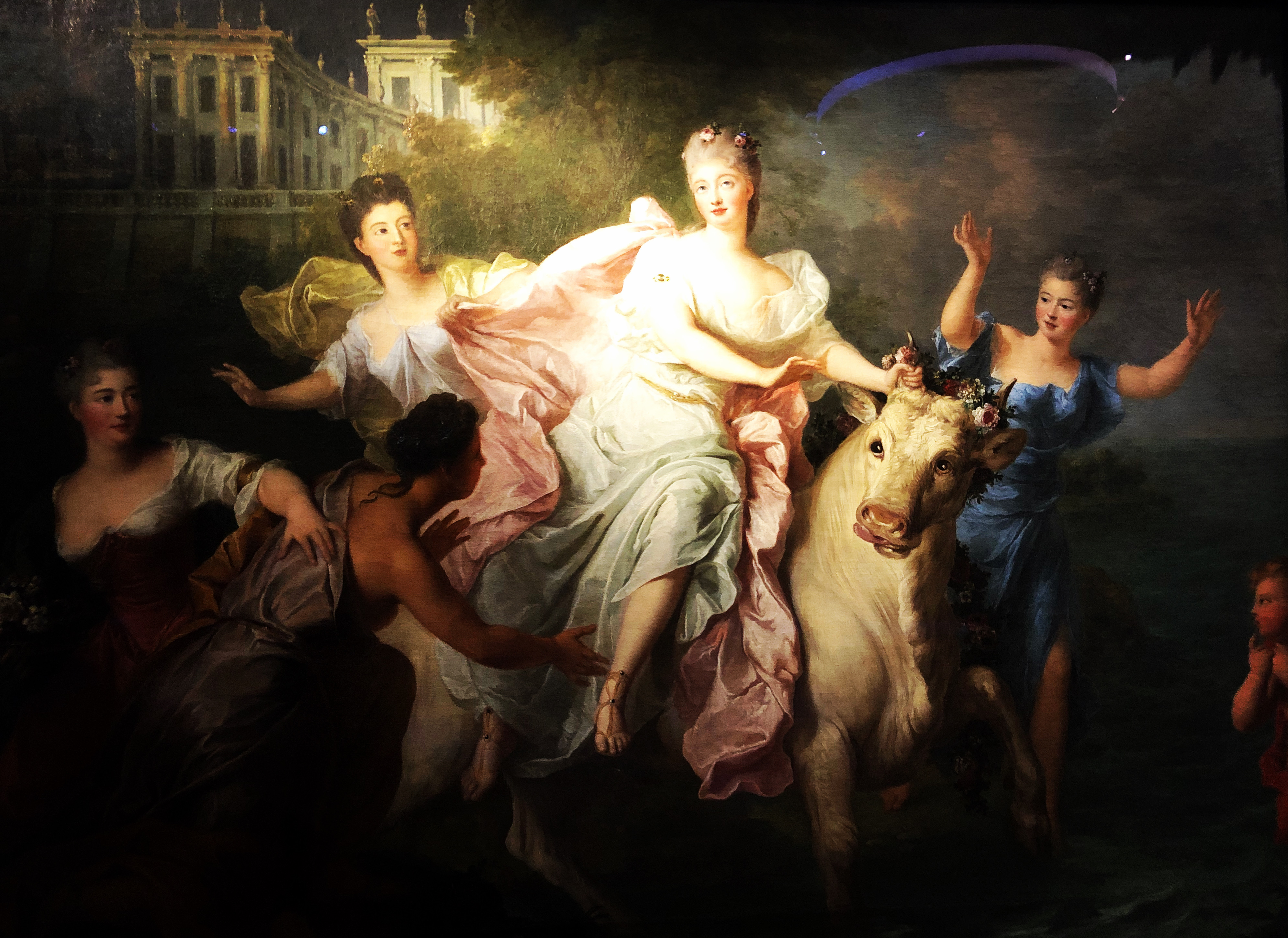
Artwork: The Rape of Europa
Artist: Pierre Gobert
Created: c. 1710-1720
Medium: Oil on canvas
Dimensions: 124 x 157.5 cm (estimate without frame)
Location: Victoria and Albert Museum, London, UK
Photography by @webgalleryofvisualart (L-C E)
——————————————-
‘’In classical mythology, Jupiter, king of the gods, took the form of a white bull and abducted the Phoenician princess Europa. Louis XIV’s foremost portrait painter depicted this myth, according to the description in Book II of Ovid’s Metamorphoses, first published in French in 1619.
He alludes to the king’s power and prowess as a lover by portraying five female members of the French royal family.’’
———————————————
#webgalleryofvisualart #1001andmore
The Alarm of the Loyal Servant

Artwork: The Alarm of the Loyal Servant
Artist: Jean-François de Troy
Created: 1723
Medium: Oil on canvas
Dimensions: 69.5 x 63.8 cm (estimate)
Location: Victoria and Albert Museum, London, UK
Photography credit: @art_love_enjoy_life
————————————————-
‘’Jean-François de Troy (1679-1752) was born in Paris and was first taught by his father. He later attended lessons at the Académie Royale de Peinture et de Sculpture and sojourned in Italy from 1699 to 1706. He specialised in history painting and genre painting with erotically charged scenes, for which he became best known. He was one of the leading painters of the Parisian high society and was nominated, in January 1738, Director of the Académie Française in Rome where he died in 1752.’’(V&A)
#webgalleryofvisualart #1001andmore #victoriaandalbertmuseum
Mrs. Luke Ionides

Artwork: Mrs. Luke Ionides (1848-1929)
Artist: Richmond William Blake
Created: 1882
Medium: Oil on canvas
Dimensions: 133 x 145.5 cm
Location: Victoria and Albert Museum, London, UK
Photography credit: LillynisthArtist’s
—————————————————
“The sister Elfrida Ionides, was married to Luke Ionides, of the famous British family of art patrons. She wears a loose, flowing dress and amber beads. In 1881 the ornate sofa was illustrated in a book on advanced interior decoration. The screen is made of embroidered Japanese kimono silk. This setting and her costume epitomise the ideals of the Aesthetic Moment.” (V&A)
—————————————————
#1001andmore #webgalleryofvisualart #1zebraphotography #1transcribedtext
Portrait of a Man

Artwork: Portrait of a Man
Artist: Alexis-Simon Belle (probably)
Created: 1712
Medium: Oil on canvas
Dimensions: 153 x 120 cm (framed)
Location: Victoria and Albert Museum, London, UK
Photography credit: @1001before_you_die_collection
———————————————-
“When dressing formally, courtiers usually wore suits made is silk or the finest wool, with lace accessories.
Court painters were skilled in portraying the visual and tactile qualities of such expensive textiles. In this portrait, the deep coat cuffs and matching waistcoat are rendered so precisely that the silk can be identified as a particularly fashionable pattern of the early 18th century.” (V&A)
—————————————————-
#1transcribedtext #webgalleryofvisualart #victoriaandalbertmuseum #manportrait
Portrait of Joshua Kirby

Artwork: Portrait of Joshua Kirby (1716-1774)
Artist: Thomas Gainsborough
Created: c. 1754-1756
Medium: Oil on canvas
Dimensions: 41.9 x 29.2 cm (estimate); without frame
Photography credit: @1001before_you_die_collection at @vamuseum
————————————————
“A brilliant British artist Thomas Gainsborough (1727-1788), probably painted this “Portrait of Joshua Kirby,” while the artist was living in Ipswich.
Joshua Kirby (1716-74), one of Gainsborough’s closest friends, was a painter, author and printmaker and later became President of the Society of Artists in London..” (C-LE)
—————————————————-
#victoriaandalbertmuseum #webgalleryofvisualart #1zebraphotography
The Martyrdom of St Catherine

Artwork: The Martyrdom of St Catherine
Artist: Italian (Florentine) School
Created: 1510
Medium: Oil on poplar panel
Dimensions: 25.5 x 51.2 cm
Location: Victoria & Albert Museum, London, UK
Photography credit: @1001before_you_die_collection
#1001andmore #webgalleryofvisualart #victoriaandalbertmuseum
Portrait of Mlle Doré

Artwork: Portrait of Mlle Doré
Artist: François-Hubert Drouais
Created: 1758
Medium: Oil on canvas
Dimensions: 68.6 x 61 cm (estimate, without frame)
Location: Victoria and Albert Museum, London, UK
Photography by @1001before_you_die_collection
—————————————————
“This painting has close affinity with the work of François-Hubert Drouais (1727-75) and it was formerly described as a portrait of Mademoiselle Doré by Drouais.
However, there was a portrait painter who signed herself Mlle Doré in 1763 and 1765-about the time when this picture was painted-and it seems likely that, in this case also, Mademoiselle Doré was the painter rather than the sister. She is probably to be identified with Marie-Jeane Doré, Drouais sister in law. “ (V&A)
—————————————————
#webgalleryofvisualart #1transcribedtext #1001andmore #lillyrphotography
The Death of the Buddha

The Death of the Buddha
Created: c. 100-200
Ancient: Gandhara
Material and Techniques: Carved schist
—————————————————
“This is the moment of Buddha’s death as he passes into mahaparinirvana the final release from the cycle of rebirth. Behind his bed are local princes, grief etched into their faces. A senior disciple with a staff, Mahakashyapa, stands at the foot of the bed.
Immediately below, the Buddha Subhadra, a recent convert, sits meditating.”
—————————————————
#webgalleryofvisualart #lillyrphotography #1zebraphotography
Photography by @1001before_you_die_collection
St Michael

St Michael
Created: c. 1300-50
Artist: Unknown
Weight: 38 kg
Height: 129.7 cm
Width: 54 cm
Depth: 29.8 cm
—————————————————
France
Walnut, painted and gilded
Wings and spear missing
—————————————————
“The Archangel Michael is shown overcoming Satan in the form of dragon. During the 14th century the cult of St Michael became widespread, but is was particularly cherished in France by the Valois dynasty. A sculpture like this might have stood in a church aisle or in a chapel dedicated to St Michael.” (V&A)
Photography: @1001before_you_die_collection
—————————————————
#webgalleryofvisualart #sculpture
Portrait of Frances Anne


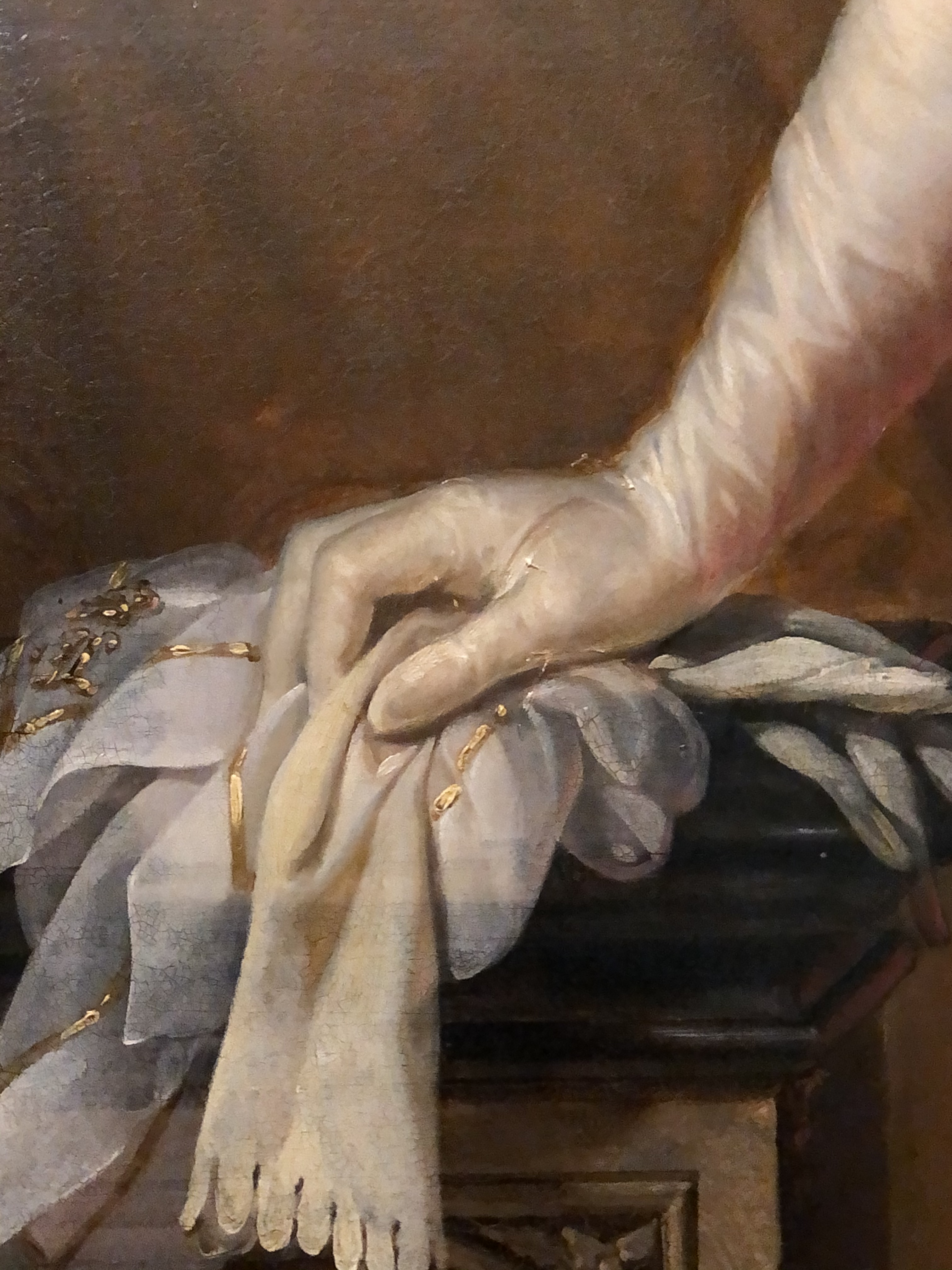
Artwork: Portrait of Frances Anne Vane, Marchioness of Londonderry
Artist: Dubois-Drahonet, Alexandre-Jean
Created: 1831
Medium: Oil on canvas
Dimensions: 268.6 x 178.4 cm
Location: V&A Museum, London, UK
———————————————
“The magnificent portrait was painted to commemorate the attendance of Frances Anne, Marchioness of Londonderry at the coronation of William IV in Westminster Abbey on the 8 September 1831. The jewels sewn to her dress include the turquoises she bought from Count Palffy in Vienna, and, at the bottom of her dress, a large pink topaz given to her by Tsar Alexander I of Russia. These can be recognised among the Londonderry Jewels, which are on luan to the V&A from the Marquess of Londonderry and are displayed in their current settings in the William and Judith Bollinger Jewellery Gallery.
Frances Anne Vane-Tempest (1800-1865) was the only child of Sir Henry Vane-Tempest, Bt. (1771-1813) and his wife, Anne Catherine MacDonnell (d. 1834), Countess of Antrim in her own right. On her father’s death in 1813, Frances Anne became the richest heiress of her generation. In 1819 she married Charles William, Baron Stewart, then British Ambassador in Vienna. He was half-brother to Viscount Castlereagh, the Foreign Secretary and on the latter’s death, became 3rd Marquess of Londonderry in 1822. Following his marriage to Frances Anne, he changed his surname to Vane.” (V&A)
#1001andmore #webgalleryofvisualart #victoriaandalbertmuseum
Photos by @art_love_enjoy_life
Alessandro de’ Medici

Artwork: Alessandro de’ Medici
Painted by: School of Bronzino
Created: c. 1550
Medium: Oil on limewood panel
Dimensions: 47 x 35 cm (without frame)
Location: V&A Museum, London, Uk
Photography by @1001before_you_die_collection
—————————————————
“Jacopo Carucci (1494-1556) was born in Empoli and probably studied in Florence with Leonardo da Vinci in 1508 (Vasari), then with Piero Di Cosimo, and by 1510 with Mariotto Albertinelli. Around 1512 he was an assistant of Andrea del Sarto.
Pontormo enjoyed the protection of the Medici family throughout his career but, unlike Agnolo Bronzino and Giorgio Vasari, did not become court painter. His subjective portrait style did not lend itself to the state portrait. He produced few mythological works and portraits after 1540 devoted himself almost exclusively to religious subjects. Pontormo was the master of Agnolo Bronzino, the most important painter of the late Florentine mannerism.
This painting is a mid-16h century copy of sketch executed by Jacopo Pontormo in 1534-35 in preparation of an official state portrait of Alessandro de’ Medici, new Duke of Florence. It shows the young Duke in three-quarter profile, austerely dressed in black, set on a neutral dark background, his gaze facing the beholder.” (V&A)
—————————————————
#webgalleryofvisualart #1001andmore #1transcribedtext
Seated Crowned Buddha
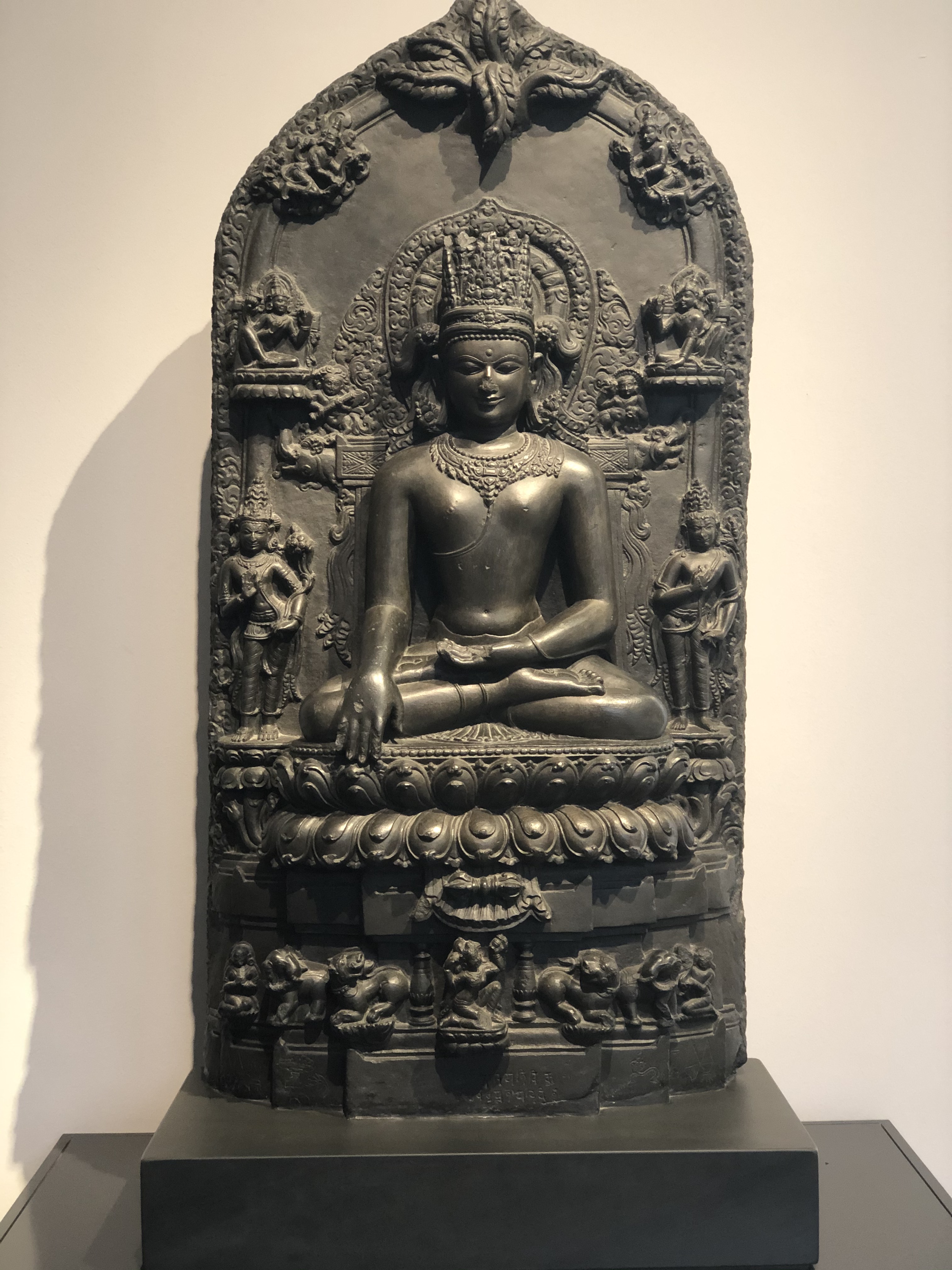
Sculpture: Seated Crowned Buddha
Artist: Unknown
Created: AD 1000-1100
Period: Pala
North-East India or Bangladesh
Material: Black stone or marble
Height: 119 cm
Width: 58 cm
Depth: 30 cm
Weight: 290 kg
————————————————-
“The sculpture shows Buddha Shakyamuni wearing the crown and ornaments of a monarch combined with the simple monastic robes of monk. The tall tripartite crown, necklace and earrings contrast dramatically with the unadorned transparent robe.” (V&A)
————————————————-
Photography by @art_love_enjoy_life
#1001andmore #lillyr #victoriaandalbertmuseum #sculpture
Sleeping Odalisque

Artwork: A Sleeping Odalisque
Artist: Jean-Auguste-Dominique Ingres
Created: c. 1810-1830
Medium: Oil on canvas
Dimensions: estimate (29.8 x 47.6 cm)
Location: V&A Museum, London, UK
Photography credit: @art_love_enjoy_life
———————————————
“Jean-Auguste-Dominique Ingres (1780-1867) was born in Montauban. He studied with local painters in Toulouse before entering the Paris studio of David (1748-1825) in 1797. He was soon considered as the champion of the French classical tradition of history painting, traditionally opposed to the art of Delacroix in the early 19th century. Ingres was awarded the prix the Rome in 1801 and alternated long sojourns in Italy and Paris from 1806 but spent the last 9 years of his life in Paris where he died age 87. His oeuvre also includes portraits paintings which represent a good testimonial of the 19th-century French high society.
This painting was probably a preparatory study for one of Ingres’ Odalisques a prototype of female reclining nude which recurs in several composition. The precise painting for which it was a study is still subject to debate as well as the dating.
However it was probably made in Rome between 1810 and 1830.” (V&A Museum)
———————————————
#victoriaandalbertmuseum #webgalleryofvisualart #1zebraphotography #1transcribedtext


(First image from top)
Artwork: Peace and Fortitude (detail from Good Government)
Artist: Ambrogio Lorenzetti (active 1319-47)
Created: 1338-1339
Medium: Fresco
Location: Palazzo Pubblico, Siena, Italy
—————————————————
“Ambrogio Lorenzetti (active 1319-47) pays homage in the enormous fresco of Good and Bad Government in the Palazzo Pubblico, Siena, to Simone Martini who might well have imagined the delicate reclining image of Peace and Fortitude.” (ML)
#1transcribedtext #webgalleryofvisualart #ambrogiolorenzetti
(The second image)
Artwork: Good Government (detail)
Artist: Ambrogio Lorenzetti (active 1319-47)
Created: 1338-1339
Medium: Fresco
Location: Palazzo Pubblico, Siena, Italy
——————————————
…”More vividly his own are Ambrogio’s observations of life in the Commune, men toiling, nobles hawking, and the fields and buildings of Siena. Good and Bad Government are not shown by dramatic anecdotes (as Dirk Bouts in Flanders was to paint but through the panorama of a whole society.
Such large decorative schemes seldom came the way of Northern painters, and without the opportunity they lost too the chance of that large public which Italian artists from the first enjoyed. In Italy, where the climate allowed frescoes, the pictures and the building they decorated could be integrated into a whole; and this further freedom encouraged grand concepts, allowing men to paint their own kind on human or even superhuman scale.” (ML)
——————————————
#1transcribedtext #webgalleryofvisualart #ambrogiolorenzetti
Tribute Money

Artwork: Tribute Money
Artist: Masaccio
Created: 1425
Medium: Fresco
Dimensions: 2.47 x 5.97 m
Location: Brancacci chapel, Church of S. Maria del Carmine, Florence, Italy
—————————————
“The Tribute Money is set in a wintry landscape where the grave group of Christ and his disciples stand like stone figures, weathered but imperishable. Everything trivial and mundane is supperssed. The scene is lifted out of associations of time and place. A classical concentration is concerned with the human figure alone, and the faces are moulded with the massiveness of archaic sculpture.” (ML)
#1transcribedtext #webgalleryofvisualart #masaccio #arthistory
Expulsion from Paradise

Pain and shame this is my short description about this fresco.
Artwork: Expulsion from Paradise
Artist: Masaccio
Medium: Fresco
Location: Brancacci chapel, Church of S. Maria del Carmine, Florence, Italy
—————————————————————
“In the Expulsion from Paradise the miserable nakedness of Adam and Eve contrasts with the dignified robed figures of the Tribute Money close by. The gateway to Paradise is barley suggested; all concentrates on the half-crazed despair of the slow-moving too human couple, Eve wailing and Adam dumb and blind with grief.
Leaving the Carmine frescoes probably unfiltered, Masaccio went to Rome where he died prematurely. He had been little honoured, but Brunelleschi had been his friend and was left in Florence to mourn in his own words ‘una gran perdita.’ For long the Carmine frescoes served as a school of study for painters, and Leonardo, Raphael and Michelangelo all acknowledged an indebtedness to Masaccio.”
(ML)
#webgalleryofvisualart #1transcribedtext
The Nightmare
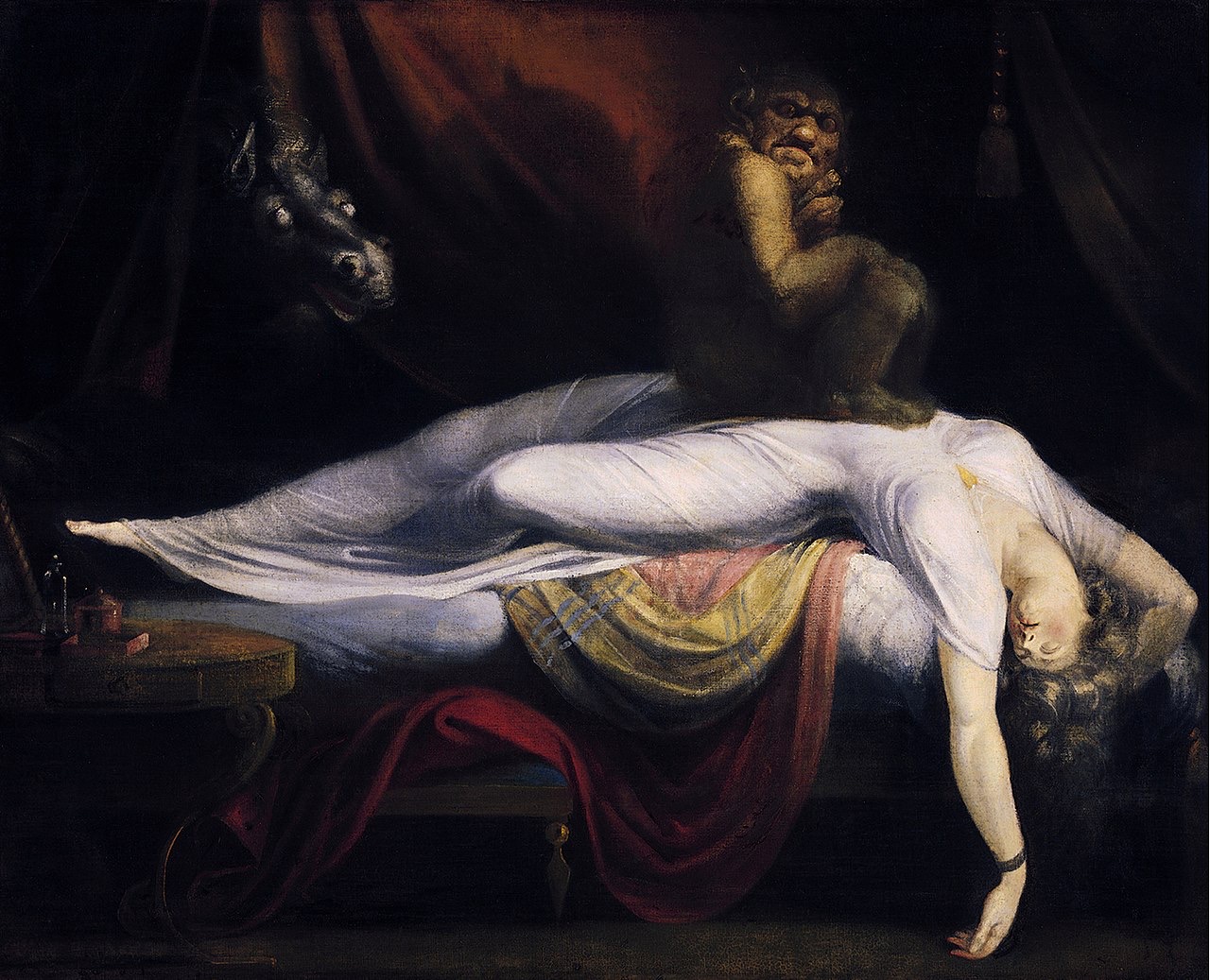
Artwork: The Nightmare
Artist: Henry Fuseli
Created: 1781
Periods: Romanticism, Sturm and Drang
Medium: Oil on canvas
Dimensions: 101.6 x 127 cm
Location: Detroit Institute of Art, Detroit, Michigan, USA
————————————————
“The painting’s dreamlike and haunting erotic evocation of infatuation and obsession was a huge popular success. After its first exhibition, at the 1872 Royal Academy of London, critics and patrons reached with horrified fascination and the work became widely popular, to the extent that is was parodied in political satire and an engraved version was widely distributed. In response, Fuseli produced at least three other versions.
Interpretations vary. The canvas seems to portray simultaneously a dreaming woman and the content of her nightmare. The incubus and horse’s head refer to contemporary belief and folklore about nightmares, but have been ascribed more specific meanings by some theorists. Contemporary critics were taken aback by the overt sexuality of the painting, since interpreted by some scholars as anticipating Jungian (relating to or characteristic of the Swiss psychologist Carl Jung or his works)ideas about the unconscious (the part of mind which is inaccessible to the conscious mind but which affects behaviour and and emotions).”
#wikipedia #1transcribedtext #webgalleryofvisualart
Venus, Cupid and Mars

Artwork: Venus, Cupid and Mars
Artist: Lambert Sustris
Created: 1550
Medium: Oil on canvas
Dimensions: 132 x 184 cm
Location: Louvre Museum
Cupid’s presence clearly shows that the female figure represents the goddess of love, Venus.
Cupid points his arrow at the two pigeons. These birds appear traditionally, along with the two characters, Venus and Cupid.
The warrior on the right of the picture is Mars, the god of war and the lover of Venus.
#webgalleryofvisualart

The Royal 👑 Collection
Sir Peter Lely: Elizabeth Hamilton, Countess of Gramont, c. 1663
Oil on canvas
Dimensions: 124.5 x 101.2 cm
#art #royalcollection #sirpeterlely #1essco
Sibyl
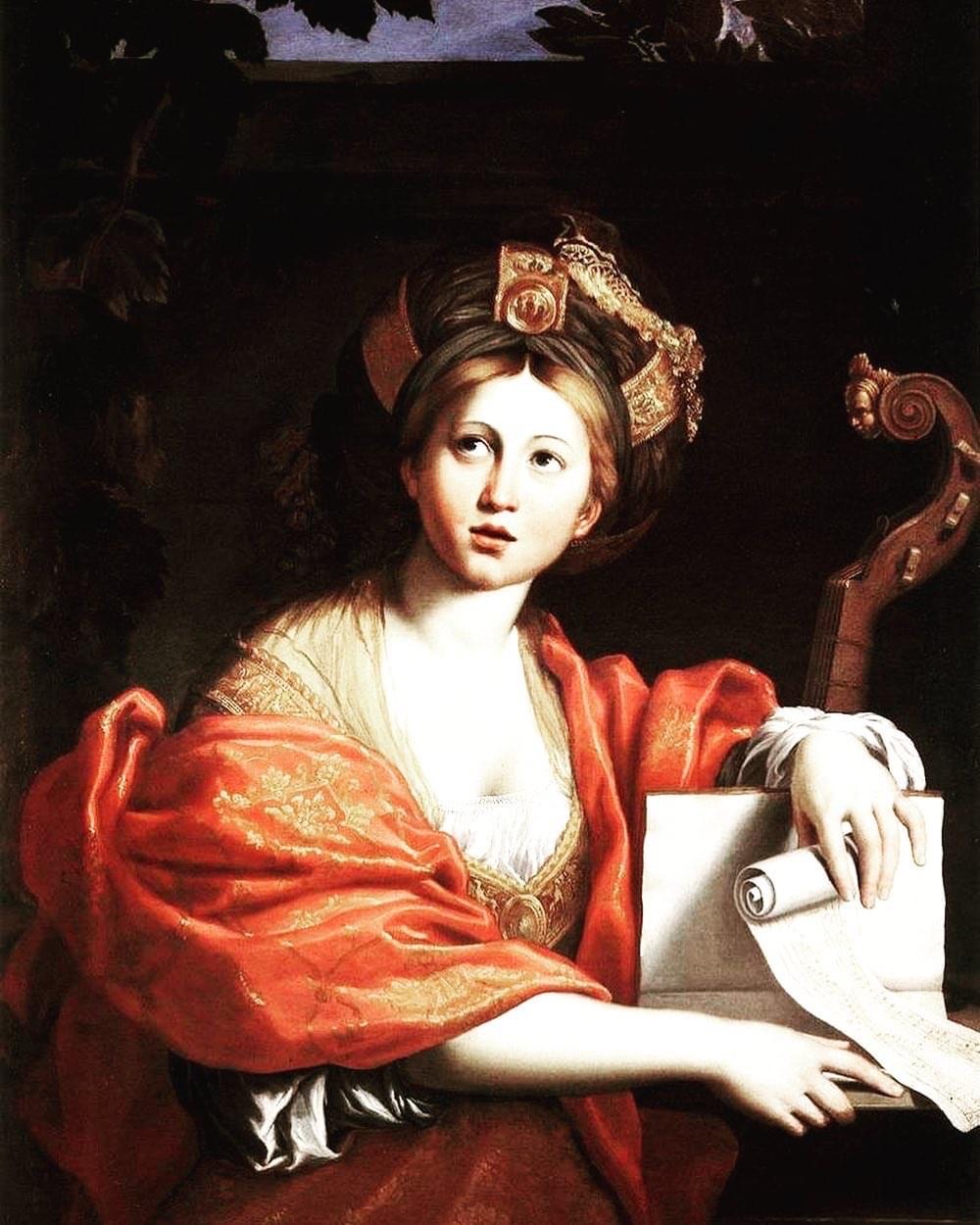
Artwork: The Cumaean Sibyl
Artist: Zampieri Domenico
Medium: Oil on canvas
Created: 1616-17
Dimensions: 123 x 89 cm
Location: Galleria Borghese, Rome, Italy
Zampieri Domenico known as by Domenichino (1581 – 1641) whose Sibyl has all the largeness of from associated with Raphael, but Domenichino developed the landscape interest of Annibale Carracci and was able to produce a charming combination of order and nature. Sibyl is a young virgin inspired by the god Apollo are generally without musical attributes, which are present in this painting. The young virgin keeps in her hand a scroll with musical notes.
I
#sibyl #italian #italianpainter #domenichino #repostlillynisth #lillynisthartistconcept #historyofart #artgallery #virtualmuzeum #webgalleryofvisualart
The Last Supper
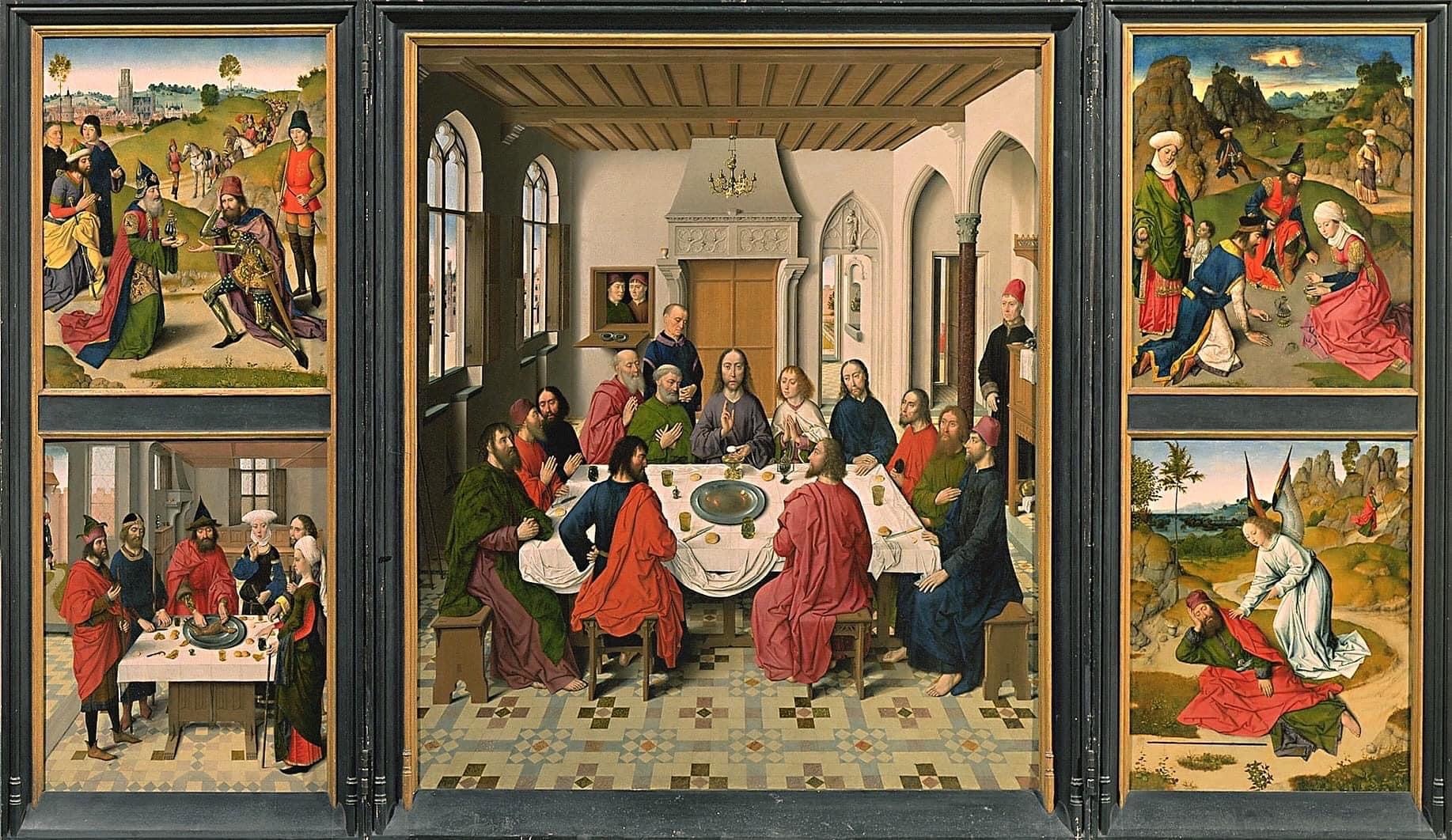
Artwork: Last Supper Altarpiece
Artist: Dierec Bouts
Created: 1467-67
Medium: Oil on wood
Dimensions: 185 x 284 cm
Location: Church of Saint Peter, Leuven, Belgium
Dieric Bouts (c. 1415-75), originally from Haarlem, settled in Leuven around 1444. In 1464, four members of the Brotherhood of the Holy Sacrement of Saint Peter’s Church in Leuven commissioned an altarpiece from Bouts. The contract, which has survived, stipulates that two theologians act as advisers on subject matter. The Last Supper is a rare theme for Netherlandish panel painting. Bouts set the scene in the central panel the moment when Christ announces that the host, or bread, is his body in a Flemish interior. The twelve apostles sît stiffly around a square table that dominates the room. The Christ figure is the exact center of the composition. The angle of vision is high, allowing us to look down on the spacious hall. The windows afford glimpses of city outside, two cooks looking in from the kitchen, and a garden. Bouts was a master of spatial recession, which is particularly evident in the side panels. These wings each depict two relatively obscure scenes from the Old Testament that relate to the Eucharist. Their subjects are the Meeting of Abraham and Melchizedek (Genesis 14) the first offering of bread wine by a priest. … Bouts employed an innovative way of placing figures along diagonal axes that lead the viewer’s eye into distance. (Source from 1001beforeyoudiepaintings by EG)
#1001beforeyoudiecollection #1001beforeyoudiecollections
#arthistory
The Rokeby Venus

Artwork: The Rokeby Venus
Artist: Diego Velázquez
Created: 1647
Medium: Oil on canvas
Dimensions: 122 x 177 cm
Location: National Gallery, London, UK
Movement: Baroque
Photography Credits: @art_love_enjoy_life
A Single Nude by Diego Velasquez
The nude probably represents his mistress, aged 20.
This painting was been painted when he was In Rome between 1649-1651.
With this lively nude, the artist brings Tiziano’s venerable tribute to rich and consistent color freedom.
#photosofcollection #nationalgallery #art #paintersofinstagram #painter #velasquez #london #trafalgarsquare #photographer #photography #travel #londonmuseum #londonmuseums
“The Horse Fair”

Artwork: The Horse Fair
Artist: Rosa Bonheur (1822-1899)
Created: 1855
Medium:Oil on canvas
Dimensions: (no card description for the moment)
Location: National Gallery of Art, London, UK
Photography credit: @1001before_you_die_collection at @nationalgallery
“This is a painting of sheer animal power. Brilliant white light builds up the turbulence and excitement of the scene. Rosa Bonheur has made the convulsion of the muscles and the flying manes almost, tangible, capturing the rearing, plunging animals and the strength and dexterity of their handlers with almost photographic reality. The magnificent white horses in the picture are Percherons, bred for hauling weights. Bonheur has captured their spirit and their world, with her noises, smells and sense of danger, and made them into high art.
The original version of The Horse Fair was four times the size of the National Gallery picture, painted when the work of woman artists was largely disregarded by critics. It caused a sensation at the 1853 Paris Salon, turned Britain and the US and brought Bonheur international fame. This smaller autograph version was painted to facilitate the making of prints for sale during the tour.” (National Gallery)
#1transcribedtext #webgalleryofvisualart
“The Raising of Lazarus”

Artwork: The Raising of Lazarus
Artist: Sebastiano del Piombo
Created: c. 1517-1519
Medium: Oil on wood , transferred to canvas
Period: Mannerism
Dimensions: 381 x 299 cm
Photography credit @constance_lillyanne_essco
The Raising of Lazarus is a large altarpiece of 1517-1519 by the Italian High Renaissance artist Sebastiano del Piombo (b. c. 1485-d. 1547), for which Michelangelo (b. 1475-d. 1564) supplied drawings for some figures. Intended for Narbonne Cathedral in France, is now normally in room 18 of the National Gallery in London where it is “NG1”, the first painting catalogued at the founding of the gallery in 1824.(Wikipedia)
The raising of Lazarus is a miracle of Jesus recounted only in the Gospel of John (John 11:1-44) in the New Testament in which Jesus raises Lazarus of Bethany from the death four days after his entombment. In John, this is the last of the miracles that Jesus performers before the Passion and his own resurrection.(Wikipedia)
#artloveenjoylife #altarpiece #arthistory #historyofart #1essco #1zebraphotography #webgalleryofvisualart #sebastianodelpiombo #italianpainter #nationalgallerylondon #total_art_gallery
“Virgin and Child”
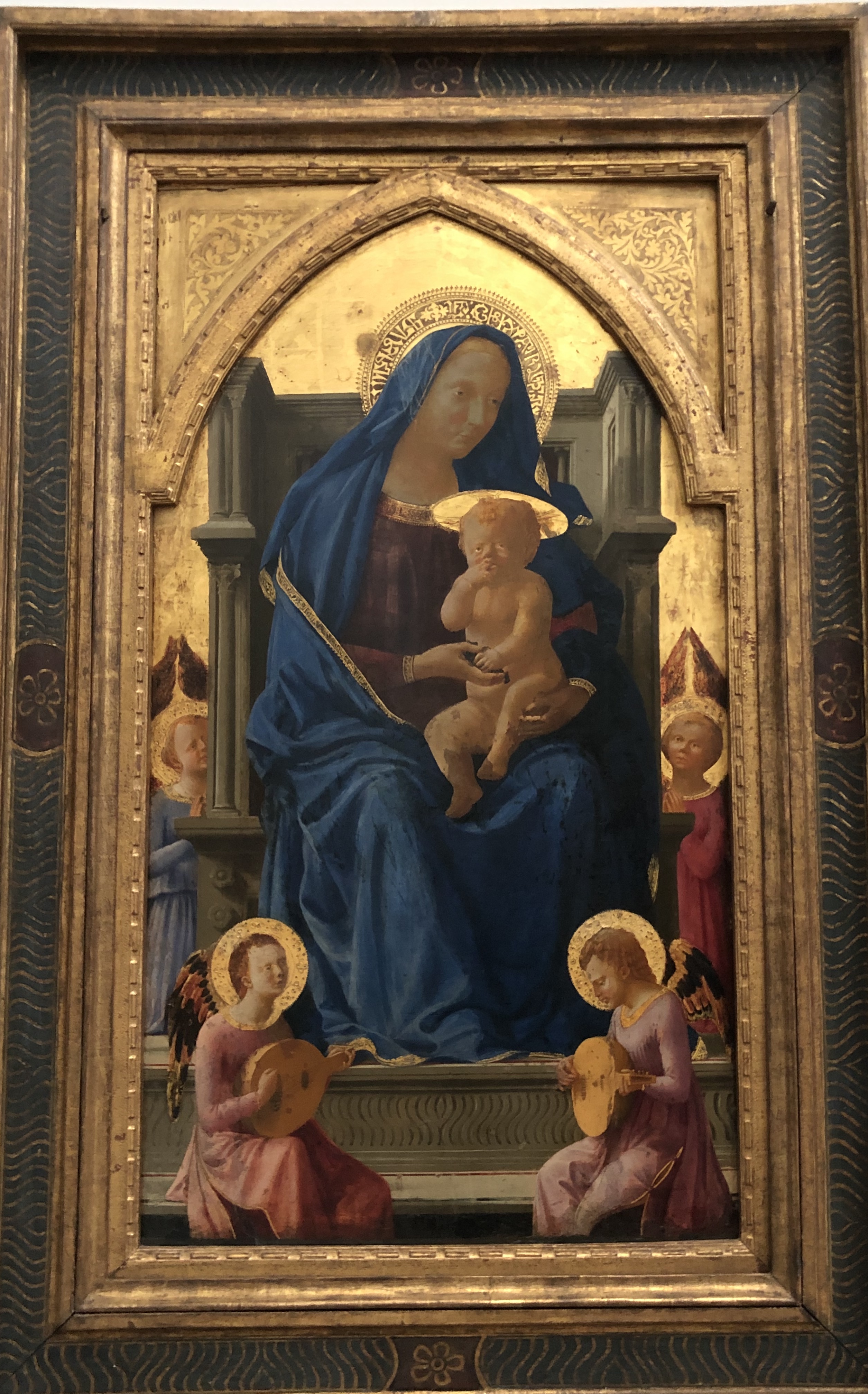
I will talk today about a painter for whom, I have a particular admiration, it is about a painter with the Italian origin named Masaccio.
Although, he lived very little, in his short life he created a lot and was appreciated for his innovation. Tommaso di Ser Giovanni di Simone (1401 – 1428) known as by Masaccio was the first great Italian painter of the Quattrocento period of the Renaissance. The Virgin and Child originally formed the central panel of an altarpiece that had been commissioned by the notary Ser Giuliano degli Scarsi for his family chapel in Santa Maria del Carmine in Pisa.
Artwork: Virgin and Child
Genre: Religions art
Artist: Masaccio
Created: 1426
Medium: Egg tempera on wood
Dimensions: 135 x 73.5 cm
Location: National Gallery, London, UK
Photography by @art_love_enjoy_life at @nationalgallery
#1001beforeyoudiecollection #lillynistartist #repostlillynisth #nationalgallery #arthistory #paintedwood #arthistorian #masaccio #quattrocento #webgalleryofvisualart
Portrait of Hermine Gallia

Artwork: Portrait of Hermine Gallia
Artist: Gustav Klimt
Genre: Portrait
Created: 1904
Medium: Oil on canvas
Dimensions: 170.5 x 96.5 cm
Location: National Gallery, London, UK
Picture credit: @1001before_you_die_collection in 24 January, 2020
Gustav Klimt (b. July 14, 1862 – d. February 6, 1918) was an Austrian painter. He was a Symbolist painter and one of the most prominent members of Vienna Secession movement, Klimt was influenced by Japanese art and its methods. The Portrait of Hermine Gallia was painted during the period when Klimt had showcased his work at the Secession exhibition. The woman is the daughter of Karl Wittgenstein, and is dressed in a piece Klimt had picked out on his own.
#nationalgallerylondon #klimt #historyofart #londonfootwalk #repostlillynisth #lillynisthartistconcept #artloveenjoylife #webgalleryofvisualart
Seaport with the Embarkation of Saint Ursula

Artwork: Seaport with the Embarkation of Saint Ursula
Artist: Claude Lorrain
Movement: Baroque
Date: 1641
Medium: Oil on canvas
Dimensions: 112.9 x 149 cm
Location: National Gallery, London, UK
Photography: @art_love_enjoy_life at @nationalgallery Claude Lorrain (b. 1604/5?-d. 1682) born Claude Gellée was a French painter, draughtsman and etcher of the Baroque era. Seaport with the Embarkation of Saint Ursula, signed and dated by Claude was produced for Fausto Poli (b. 1581-d. 1653) was a Roman Catholic prelate and Cardinal).
#nationalgallery #artloveenjoylife #lillynisthartistconcept #1essco #webgalleryofvisualart
“The Execution of Lady Grey”

Artwork: The Execution of Lady Jane Grey
Genre: Historical
Artist: Paul Delaroche
Periods: Romanticism, Academic art
Created: 1833
Medium: Oil on canvas
Dimensions: 246 x297 cm
Location: National Gallery, London, UK (from 1909)
@nationalgallery Paul Delaroche ( b. 17 July 1797 in Paris, France- d. 4 November 1856 in Paris, France) was a French painter who achieved his greater successes painting historical scenes. The Execution of Lady Jane Grey is considered to be the major work by Paul Delaroche., the painting is based on historical event. The Lady Jane Grey (b. c. 1536-37 – d. 12 February 1554), also known as Lady Jane Dudley (after her marriage) and as “the Nine Days ‘ Queen”, was an English noblewoman and de facto Queen of England and Ireland from 10 until 19 July 1553. (Wikipedia)
Photography by @art_love_enjoy_life
24 February 2020
#nationalgallery #londonfootwalk #repostlillynisth #newconceptofphoto #musee #londonmuseum #pauldelaroche #frenchpainter #ladyjanegrey #arthistory #history #england #historicengland #artloveenjoylife #webgalleryofvisualart
Predella of the Quaranta
 Artwork: Predella of the Quaranta, St. John the Evangelist of Patmos (detail)
Period: Renaissance
Created: c. 1433-35-40
Medium: Tempera on wood
Dimensions: 20 x 178 cm
Location: San Stefano al Ponte, Florence, Italy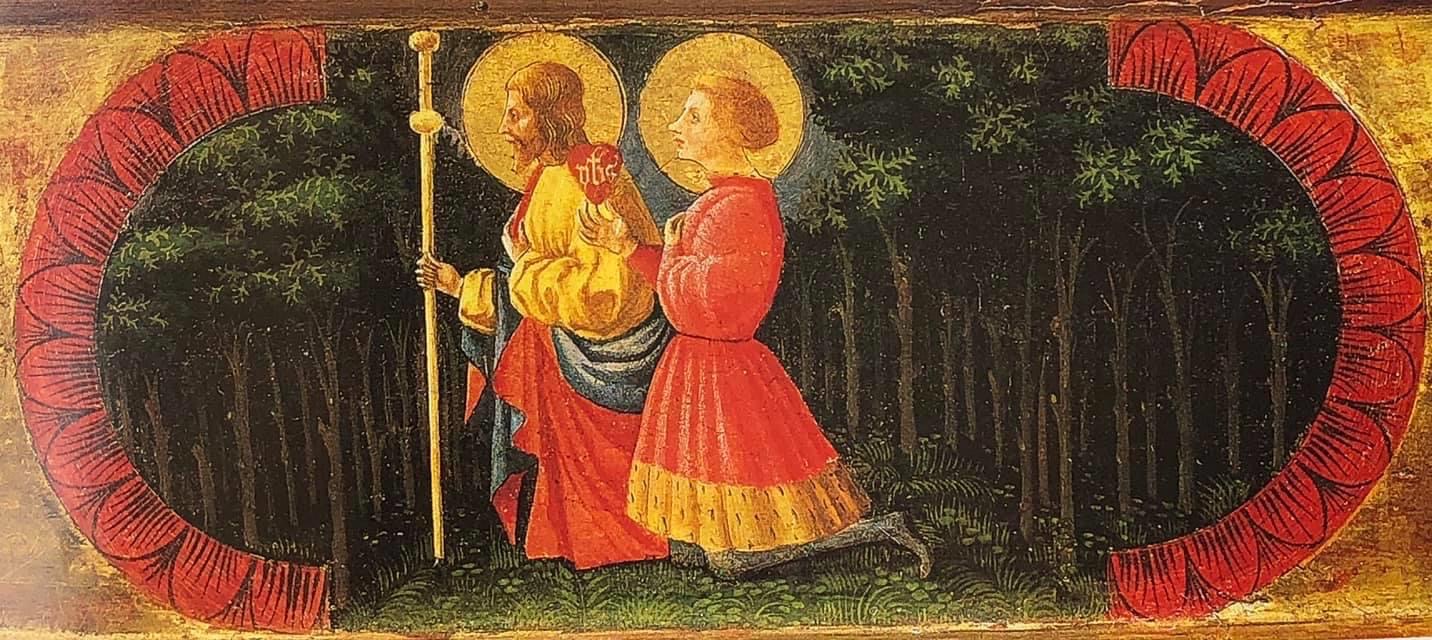 Artwork: Predella of the Quaranta, St. Jacob and St. Anne from Sienna (detail)
Period: Renaissance
Created: c. 1433-35-40
Medium: Tempera on wood
Dimensions: 20 x 178 cm
Location: San Stefano al Ponte, Florence, Italy
Artwork: Predella of the Quaranta , middle panel, scene: Adoration of the Magi (detail)
Period: Renaissance
Created: c. 1433-35-40
Medium: Tempera on wood
Dimensions: 20 x 178 cm
Location: San Stefano al Ponte, Florence, Italy
The Senses of Hearing Taste and Touch

Artwork: THE SENSES of HEARING, TASTE and TOUCH
Artists: Jan Breughel
Created: 1618
Medium: Oil on panel
Dimensions: 176 x 264 cm
“the Velvet “ (1568-1625)
Location: Prado Museum, Madrid, Spain
Source photography/Wikipedia “Peter Brueghel the Elder is undoubtedly the most original master of the 16th century, an his influence on later developments, both in landscape and genre, cannot be denied.
He has been hailed as the founder of a school.
This statement must be qualified. He does not stand out in the 16th century as the Van Eycks stand out in the 15th or Rubens in the 17th. Some of his followers, like his son Pieter Breughel the Younger (1564–c. 1)37), either copied his pictures with remarkable success or provided some valuable work “in the manner” of the Master; but a large number, like his eldest son Jan (1568-1625) (or Velvet Brueghel, owning to the softness of his tone colour), abandoned the archaic style of the old school and joined the new Antwerp School which flourished in the 17th century in the Rubens studio.” Émile L.
Cammaerts
#1transcribedtext #webgalleryofvisualart #repostlillynisth #1essco #pradomuseum
Pentecost

Artwork: Pentecost
Artist: Barnaba da Modena
Created: c. 1377(?)
Medium: and support: Egg tempera on wood
Dimensions: 54.4 x 50 cm
Location: National Gallery, London, UK
Photography credit @constance_lillyanne_essco ( in 2015)
Barnaba da Modena (1361 – 1386) was from Milanese family, settled in Modena. He was mainly active in Genoa, where he is recorded from 1361 until 1386. He visited Pisa in 1379. Several signed works exist, some dated. He was particularly influenced by Bolognese and Sienese painters.(Source National Gallery) #webgalleryofvisualart
#artloveenjoylife #repostlillynisth #nationalgallerylondon #ukfootwalk🇬🇧 #virtualmuzeum #total_art_gallery
The Family of Darius Before Alexander
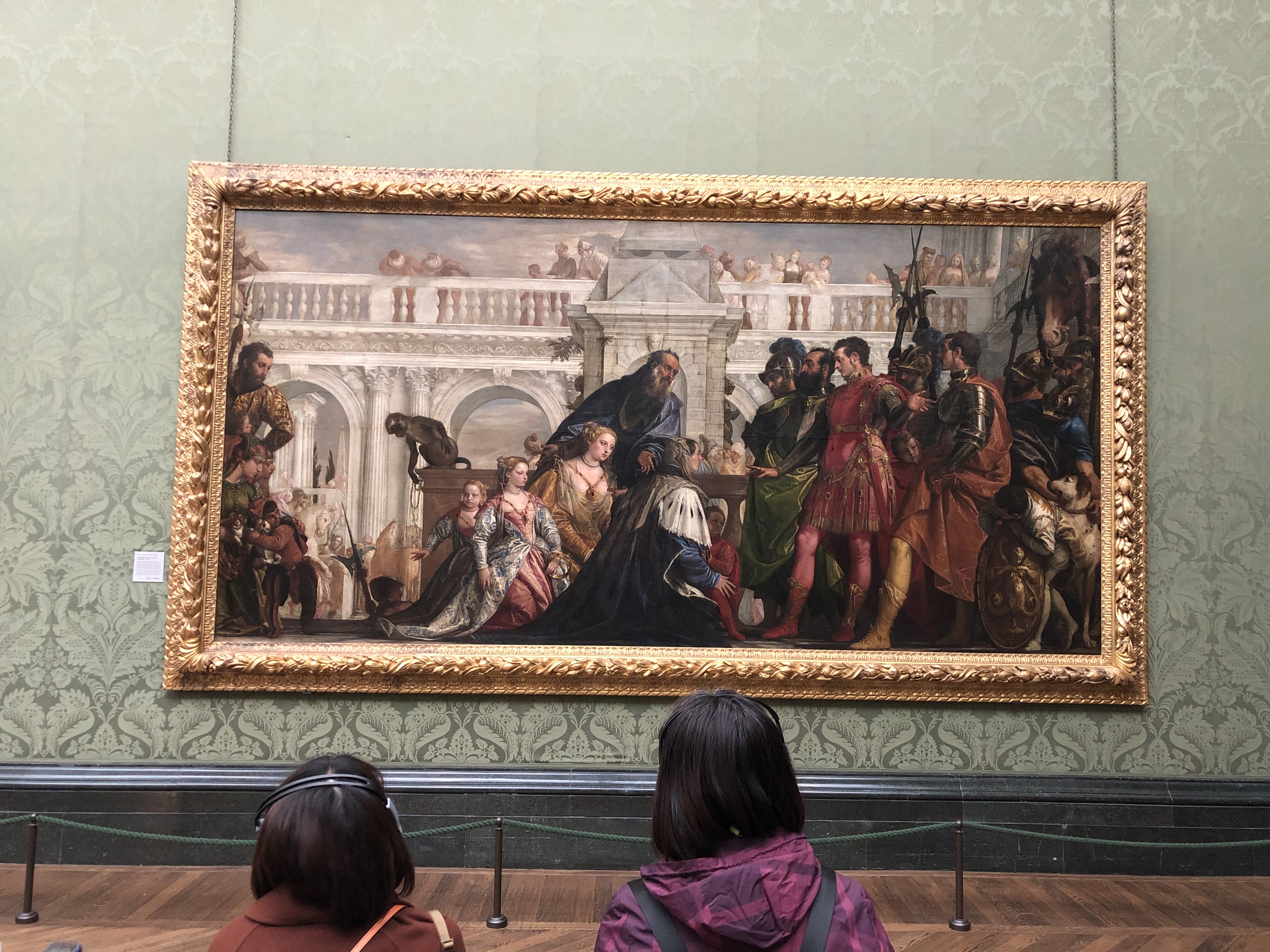
Artwork: The Family of Darius before Alexander
Artist: Paolo Veronese
Created: c. 1565 – 1567
Medium: Oil on canvas
Dimensions: 236 x 475 cm
Location: National Gallery, London, UK
Periods: Renaissance, Italian Renaissance, Venetian painting
Photo credit: @constance_lillyanne_essco
The Family of Darius before Alexander depicts Alexander the Great with the family of Darius III, the Persian king he had defeated in battle. Although Veronese had previously painted a version of the subject, since destroyed, the theme had rarely been depicted by other artists before him. The painting has been in collection of the National Gallery in London since 1857.
#1essco #1zebraphotography #lillynisthartistconcept #repostlillynisth #nationalgallerylondon #veronese #arthistory #londonmuseum #ukfootwalk
PORTRAIT of GIOVANNA SPINOLA PAVESE
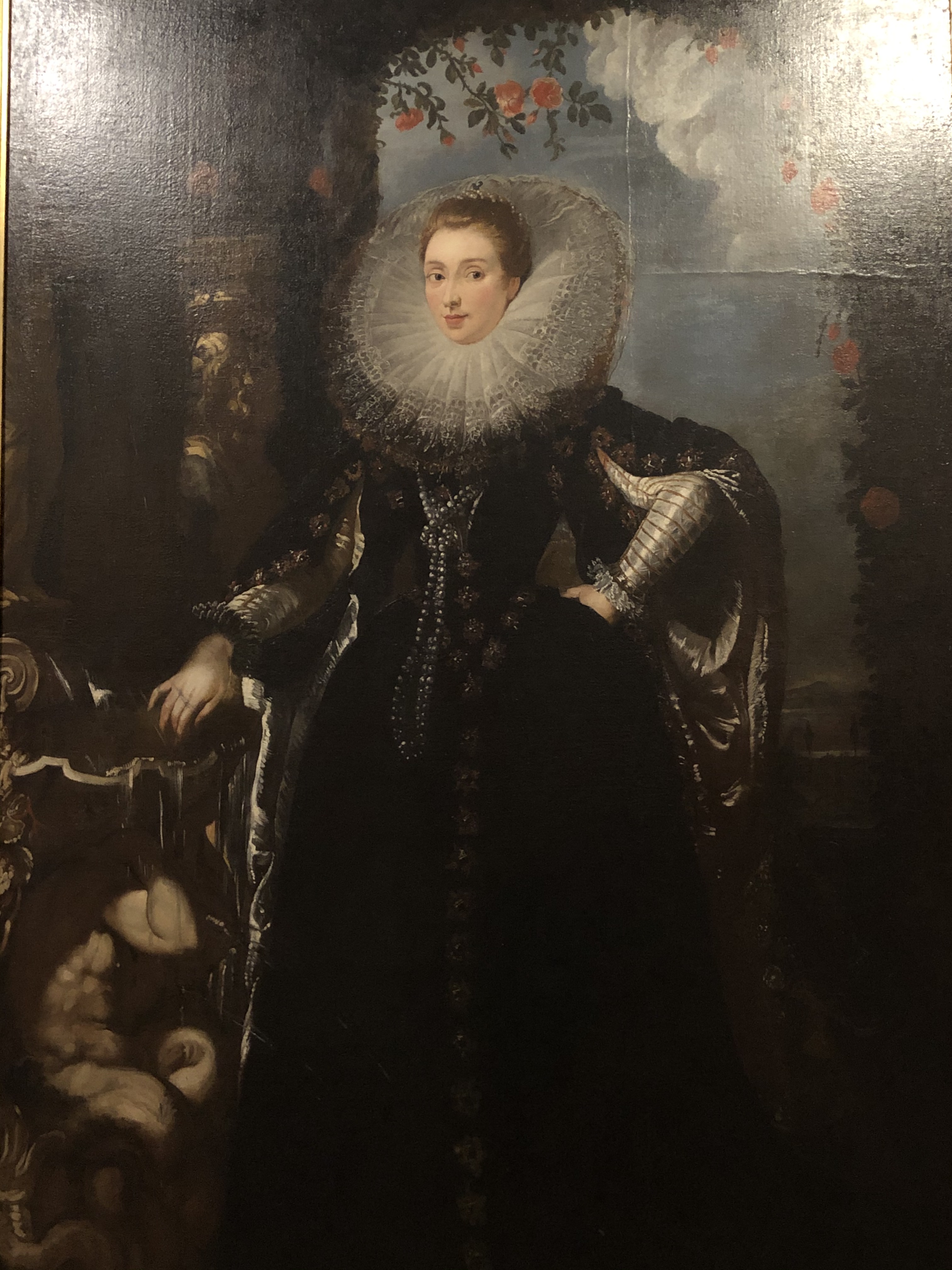
Name work: Portrait of Giovanna Spinola Pavese
Artist: Rubens
Created: 1606
Medium: Oil on canvas
Dimensions: 247 x 147 cm
Location: European Gallery (MNAR)
Photography credit @art_love_enjoy_life Rubens painted the Portrait of Giovanna Spinola Pavese in 1606, during his stay in Genoa. He had been sent there on a mission to portray local aristocracy by the Duke of Mantua. At the time Genoese aristocrats acted as a consortium of bankers for Spanish monarchs.
Portraits were to be used to open the doors of some of the most important people of the day for the Duke of Mantua. The full-length portrait shows Giovanna Spinola Pavese standing in royal pose, her left hand on the hip implying authority and allowing us a notice the length of her sleeve and the glittering grey satin silk of its lining. The black dress, the tight bodice and high, pleated collar betray the strong influence of Spanish court fashion. It is not by chance that Giovanna is placed under a triumphal arch covered by climbing roses, her right hand delicately touching the water that springs from a fountain to her right. Such elements are highly indicative of the preference shown by Genoese aristocracy for gardens as a space of ‘natural’ behaviour.(MNAR)
#lillynisthartistconcept #museum #repostlillynisth #arthistory #total_art_gallery
PORTRAIT of MADAME MOITESSIER

Artwork: Madame Moitessier
Artist: Jean-Auguste-Dominique Ingres
Genre: Portrait
Created: 1844-1856
Medium: Oil on canvas
Dimensions: 120 x 92.1 cm
Location: National Gallery, London, UK
Photography by @art_love_enjoy_life at @nationalgallery Jean-Auguste-Dominique Ingres was a French Neoclassical painter, (b. 29 August 1780 – d. 14 January 1867), he was profundity influenced by past artistic traditions. Madame Moitessier by Ingres is a portrait of Marie-Clotilde-Inès Moitessier. The portrait depicts Madame Moitessier seated. ‘’She is the embodiment of luxury and style during the Second Empire, which saw the restoration of the French imperial throne and the extravagant display of wealth.’’Source Wikipedia)
#repostlillynisth #lillynistartist #artloveenjoylife #1essco #1zebraphotography #nationalgallerylondon #trafalgarsquare #historyofart #arthistorian #ingresospasivos #total_art_gallery
Winged Victory of Samothrace
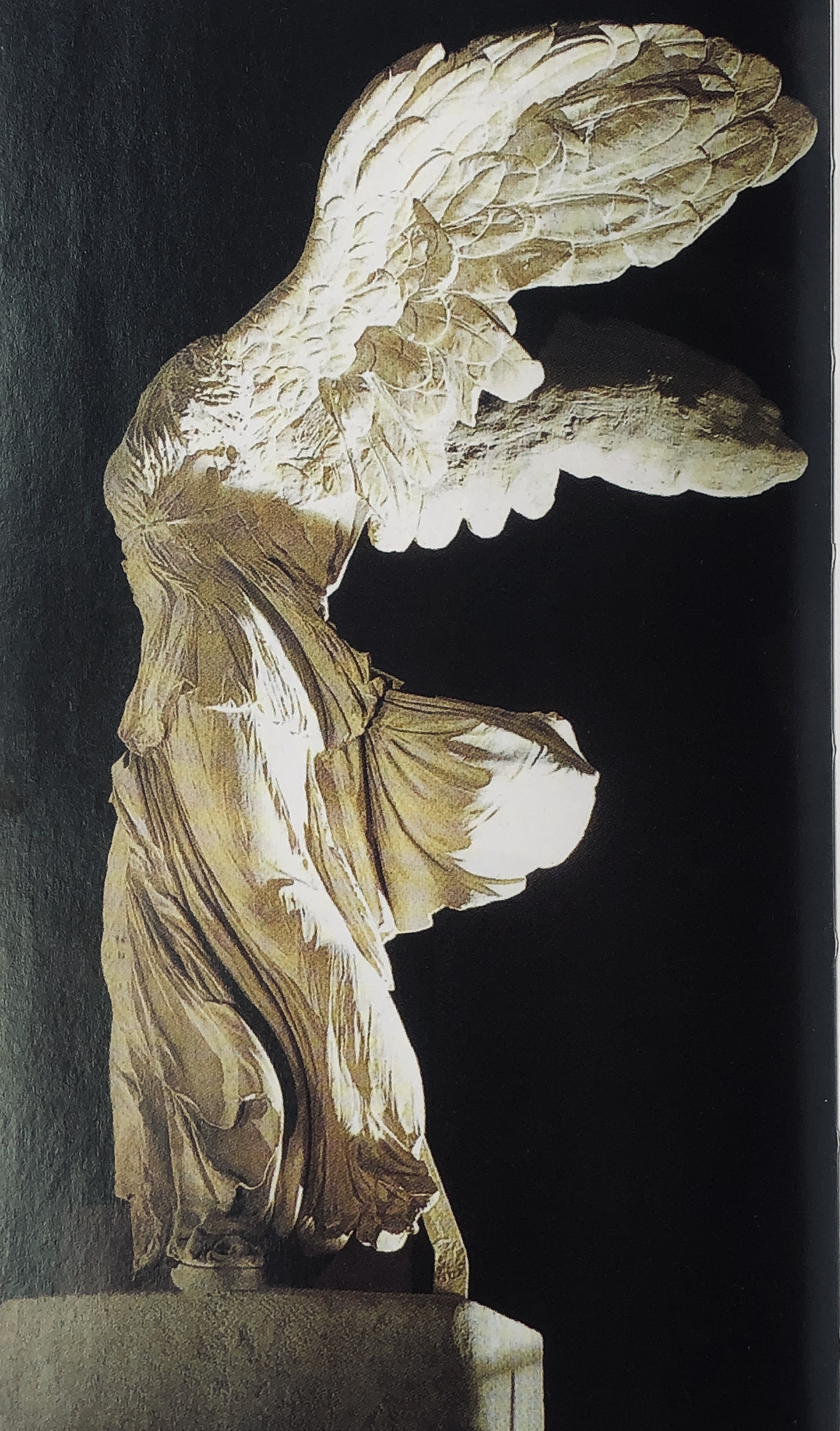
Name: Winged Victory of Samothrace
Date: c. 190 BC
Material: Gray Lartos marble (boat); Parian marble (statue)
Dimension: H. 328 cm
Provenance: Samothraki Island, North Aegean Sea
—————————————————————
“The winged goddess of Victory standing on the prow of a ship overlooked the Sanctuary of the Great Gods on the Island of Samothrace. This monument was probably an ex-voto offered by the people of Rhodes in commemoration of a naval victory in the early second century BC. The theatrical stance, vigorous movement, and billowing drapery of this Hellenistic sculpture are combined with references of the Classical period-prefiguring the baroque aestheticism of the Pergamene sculptors.”
Source: Louvre Museum
#1transcribedtext #webgalleryofvisualart #Repostlillynisth
APHRODITE (Venus de Milo)

Name: Aphrodite or Venus de Milo
Artist: Alexandros of Antioch (2nd-1st century BC) was a Greek sculptor of the Hellenistic age (The Hellenistic period covers the period of the Mediterranean history between the death of Alexander the Great in 323 BC and the emergence of the Roman Empire. …
Genre: Sculpture
Created: Between 130 and 100 BC
Material: Marble
Dimensions: 211 x 44 cm
Location: Louvre Museum (1821)
“The graceful statue of a goddess has intrigued and fascinated since its discovery on the island of Melos in 1820. It is Aphrodite, who was often portrayed half-naked, or the sea goddess Amphitrite, who was venerated on Melos? The statue reflects sculptural research during the late Hellenistic Period: classical in essence, with innovatory features such as the spiral composition, the positioning in space, and the fall of the drapery over the hips.” (Louvre Museum)
#1transcribedtext #webgalleryofvisualart #sculpture #aphrodite #hellenistic
VICTORY STELE OF NARAM-SIN

Name: Victory Stele of Naram-Sin
Genre: Sculpture
Created: c. 2250 BC
Period/culture: Akkadian Empire (was the first ancient empire of Mesopotamia, centered in the city of Akkad
Material: Limestone (Limestone is a carbonate sedimentary rock (Middle Triassic marginal marine (Earth around the begging Triassic period – 250 mya) that is often composed of the skeletal fragments of marine organisms.
Height: 2.0 m
Width: 1.5 m
Location: Musée du Louvre, Paris, France “A Limestone stela, now in the Louvre, of Naram-Sin of Agade (2213-2176 BC) depicting his victory over the Lullubu of the Zagros mountains. Naram-Sin led many successful campaigns in his reign, leaving rock-reliefs commemorating his achievements near Diyarbakir in Turkey and in Zagros.” (Concise History)
#sculpture #ancient #webgalleryofvisualart #1transcribedtext
Photography source Wikipedia
The Card Sharp with the Ace of Diamonds (whole and two detail


Artwork: The Cheat or The Card Sharp with the Ace of Diamonds ( whole and two detail)
Artist: Georges de la Tour
Created: c. 1635
Medium: Oil on canvas
Dimensions: 106 x 146 cm
Location: Louvre Museum, Paris, France ———————————————————————
One of the masterpieces painted by Georges de la Tour and a classic theme, the Cheat is a theme which occupiers a particular place among the artist’s works for several reasons. The painting is purchased in 1926 by Paul Landry from an antique dealer on the Île Saint-Louis. The painting bears the artist’s handsome signature in the lower left corner, but the exact dating of the painting is difficult to decipher it. Four characters are around a table and playing cards. The bright face of the young player, which we see on the right side of the board, he is a symbol of goodness and innocence.
#webgalleryofvisualart #historyofartstudent #repostlillynisth #museedulouvre
The Moneylender and his Wife (whole and detail)


Artwork: The Moneylender and His Wife
Artist: Quentin Metsys
Created: 1514
Medium: Oil on wood
Dimensions: 71 x 67 cm
Location: Louvre Museum, Paris, France
Entered in the collection of the Louvre Museum from 1806, the painting is signed and dated on the parchment above the book, on the top right, this is a cornerstone in the history of laic painting.
The opposition between the sacred and the profane is confirmed by detail like this, a convex mirror on the table – motif also found at van Eyck – reflects a reader sitting by a window in the shape of a cross.
#webgalleryofvisualart
Triumph of the Virtue

Artwork: Triumph of the Virtue
Artist: Andrea Mantegna
Created: 1502
Medium: Tempera on canvas
Dimensions: 160 x 192 cm
Location: Louvre Museum
The Triumph of the Virtue (also known as Minerva Chases the Vices from the Garden of Virtue), is the second picture, painted by the Italian Renaissance painter Andrea Mantegna for Isabella d’Este’s cabinet, after the Parnassus of 1497. The theme of the painting is detailed on the parchment paper, written in Latin, Greek and Hebrew, wrapped around the body of Mater Virtutum. This can be seen on the left side of the painting, the prisoner of an olive tree, invoking the cardinal virtues, three of which appear on the sky. In the upper left we see the eruption of the volcano and anthropomorphic clouds is a sign, that nature wants to contribute to the liberation of the garden from degradation, in which the vices throw humanity. Minerva’s arrival puts the crowd of grotesque characters on the run – laziness is represented by the character without hands, dragged with a rope of inertia.
The naked and quiet woman is Venus, who symbolizes sensual love.
#webgalleryofvisualart #historyofartstudent #andreamantegna
Antea

Artwork: Antea
Artist: Parmigianino
Created: 1520
Period: Mannerism
Genre: Portrait
Medium: Oil on canvas
Dimensions: 139 x 88 cm
Location: Capodimonte, Naples, Italy
“Parmigianino was capable of painting direct portraits, liking often to place the sitter full face in absolute but highly effective simplicity.” M.L.
Photography source(Wikipedia)
 WEB GALLERY OF VISUAL ART

